
The German Revolution’s Bloody End
The decisive battles of the German Revolution ended in March 1919 with the bloody crushing of the workers’ uprising. Why did it meet such a fate?
The decisive battles of the German Revolution ended in March 1919 with the bloody crushing of the workers’ uprising. Why did it meet such a fate?

With the support of the GMB union, British workers at Amazon’s Coventry fulfilment center have turned a wildcat strike into a fight for a collective bargaining agreement.
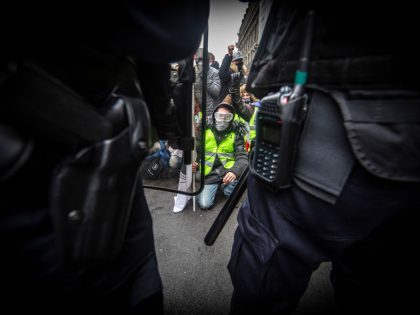
Neoliberal president Macron’s fuel tax hike has sparked six months of protests. But for France Insoumise’s Danièle Obono, the gilets jaunes and climate marchers aren’t on opposing sides: they both want the rich to pay for climate chaos.

Karol Modzelewski emerged in the 1960s as a leading dissident against Poland’s state socialist dictatorship — but he remained a socialist until the very end.

Over 900 died at Jonestown in 1978 in a murder-suicide that shook the world. How did Peoples Temple go from emancipatory project to disaster?
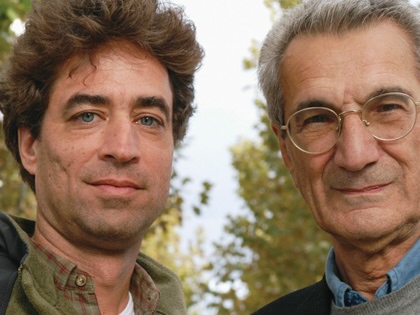
Michael Hardt and Antonio Negri’s Empire became a campus sensation because it offered a master theory for globalization at a moment when old Marxist categories seemed exhausted. But the capitalist internationalism they saw as permanent has now crashed and burned.

To save the planet, a Green New Deal has to transform our entire society. Part of that transformation must include the deconstruction of our system of mass incarceration.

This Easter, we remember the life of Father Luis Olivares, a leader in the sanctuary movement of the 1980s and a proponent of liberation theology. To him, Christianity was a call to stand with the poor and oppressed of the world.

Lula’s release will not change the course of Brazilian politics by itself. But the leftist leader has already said his time in prison further radicalized him — and that can only bode well for the popular movement resisting Bolsonaro’s reactionary politics.

Anxiety that automation is coming for workers’ jobs has reached a fever pitch. But talk of robots replacing humans often conceals a less complicated reality: management uses technology to undemocratically reorganize and intensify labor.

For both the Australian and British Labor Parties, 2019 was a year of defeat. Neoliberals in both countries drew a trite, predictable conclusion: Jeremy Corbyn and Bill Shorten were too radical. Not only are the parties incomparable, but the Australian example proves that a centrist would have lost just as badly.

The uneven geography of economic development and a “winner-take-all” system make our electoral system stacked against left-wing parties. But that doesn’t mean leftists living under that system can’t still win.

Harvard University has always been a key site in which wealthy elites learn how to defend their class. But it has also been home to students who refuse to enroll in that project and opt instead to fight for the ethic of solidarity.

From rent strikes to the fight for DC statehood, Aparna Raj is bringing a movement‑driven socialist politics to a city council race defined by displacement and inequality.

Marcus Garvey rose to prominence during a moment of deep pessimism for African American politics. His brand of racial uplift and black entrepreneurialism accommodated itself to Jim Crow and colonialism but fell out of favor as radical alternatives emerged.

On March 13, 1920, twelve million workers struck across Germany to block an attempted military coup. The successful resistance was organized by the workers’ councils — a form of grassroots democracy that allowed the masses to assert their own power.

An outsider candidate, Peter Obi, is the surprise favorite in this week’s Nigerian presidential election. Obi has attracted support from labor and youth activists, but his neoliberal economic agenda won’t address the dire social conditions afflicting Nigeria.

When the Great Depression sank workers to new depths, craft unions weren’t up to the task. Then, in 1934, a team of revolutionary leftists in Minneapolis organized a brave and bloody strike that reinvigorated labor and changed the course of American history.

As tens of millions of Americans lost their jobs in the coronavirus crisis, the richest Americans saw their wealth rise by hundreds of billions of dollars. It’s not a coincidence.

While educators across the country struggle to support and teach their students during distance learning, state and federal legislators are preparing to slash public education budgets. Defending public education during the coronavirus will require solidarity across the public sector.