Nigeria’s Election Could Break the Political Mold, But It Won’t End the Social Crisis
An outsider candidate, Peter Obi, is the surprise favorite in this week’s Nigerian presidential election. Obi has attracted support from labor and youth activists, but his neoliberal economic agenda won’t address the dire social conditions afflicting Nigeria.
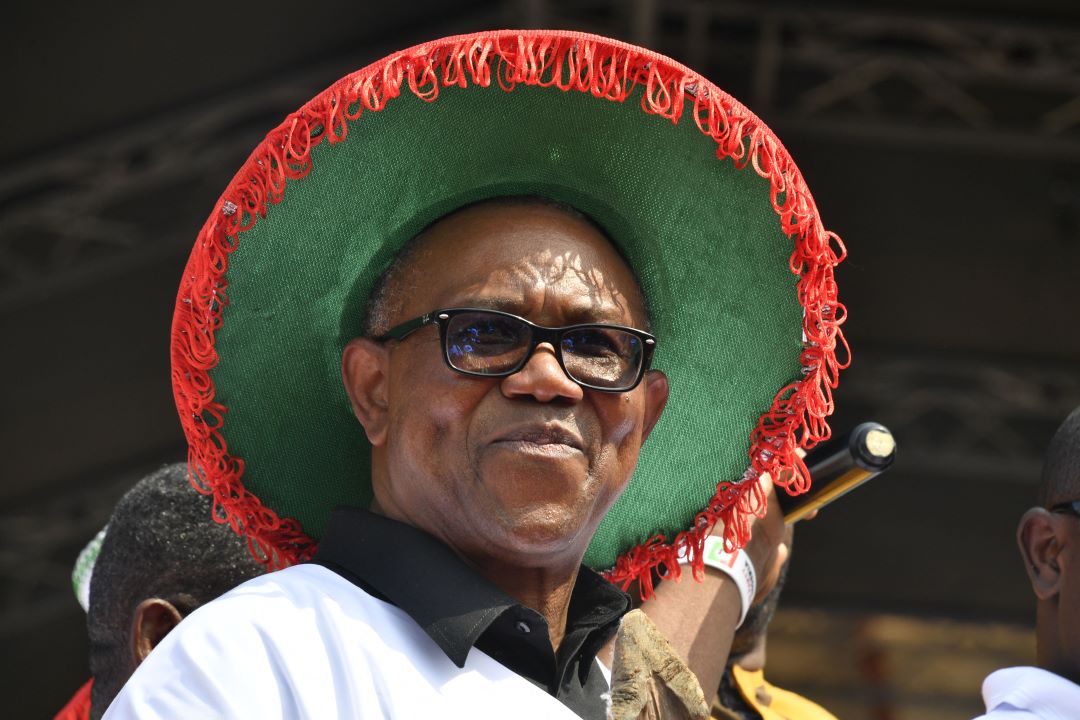
Presidential candidate of the Nigerian Labour Party Peter Obi looks on during the party campaign rally in Lagos, Nigeria, on February 11, 2023. (Pius Utomi Ekpei I / AFP via Getty Images)
Nigeria’s presidential election, due to be held on February 25, appears set for a surprising outcome. Several opinion polls rank Peter Obi, the presidential candidate of Nigeria’s previously marginal Labour Party, ahead of politicians from the ruling All Progressives Congress (APC) and the main opposition force, the Peoples Democratic Party (PDP).
Obi’s popularity rests at least in part on the young voters who have rallied behind him. These supporters, known as “Obidients,” are an important and social-media savvy segment of the layer aged between eighteen and thirty-five that constitute 42 percent of registered voters, with a strong base in the urban middle classes.
At sixty-one years of age, Obi himself may not be young, but he appears youthful in contrast to the other leading candidates who slur and stagger. Bola Tinubu of the APC is seventy, the PDP’s Atiku Abubakar is seventy-six, while the outgoing president Muhammadu Buhari is 80.