Harvard’s Progress Is Not Our Progress
Harvard University has always been a key site in which wealthy elites learn how to defend their class. But it has also been home to students who refuse to enroll in that project and opt instead to fight for the ethic of solidarity.
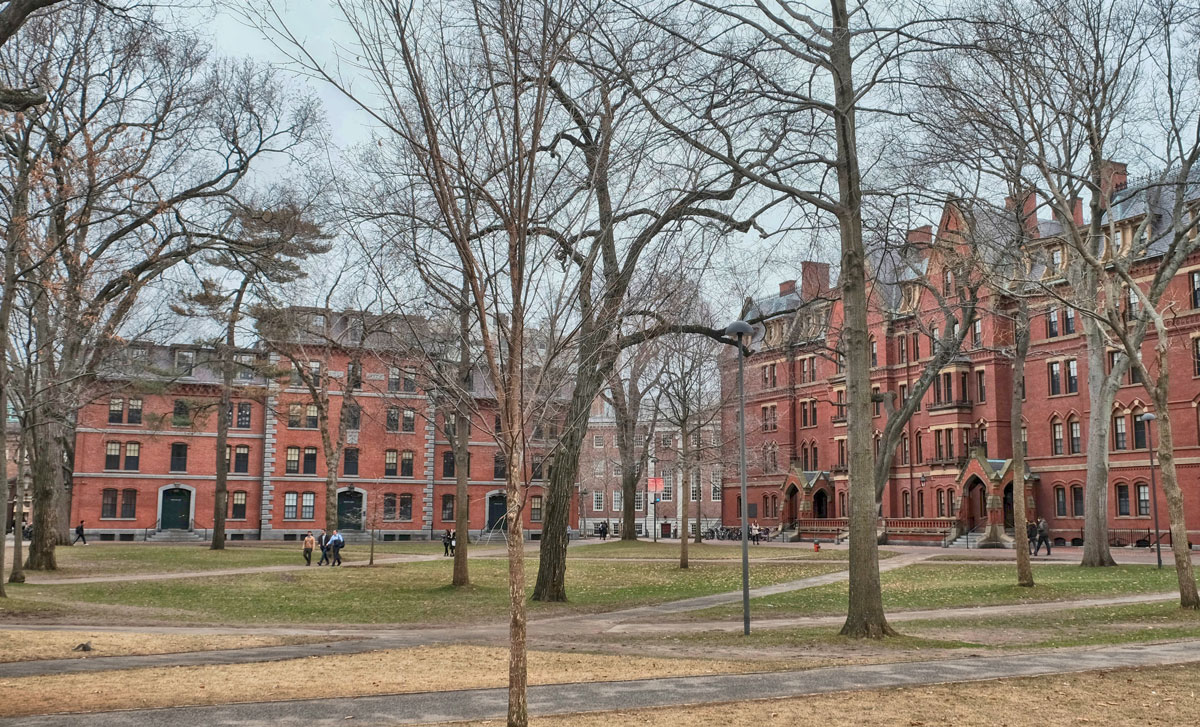
Harvard University’s campus in Cambridge, Massachusetts. (Jonathan E. Shaw / Flickr)
Many of us have come together tonight, some no doubt interested to see how this idea of “class warfare” suits Harvard. Since we announced this event, I have heard and seen people remarking with surprise and irony that Harvard should be the site of anything to do with a class war. But I assure you, Harvard has always played a key role in the class war.
Perhaps you have read an article from one of our panelists, Meagan Day. “Defend Your Class,” which ran in Jacobin last April, is named for the slogan that Harvard deployed to inspire its students to leave the classroom in 1912 and take up arms with the National Guard to break the Lawrence, Massachusetts “Bread and Roses” textile workers’ strike.
What was the threat from which Harvard elites needed defense? It was a movement of the working class, men, women, and children, of thirty countries of origin, speaking forty-five languages, demanding freedom from the daily threats to their lives posed by underpaid and dangerous jobs — and, even more radically, the freedom to exist beyond the value assigned to their labor by the capitalist bosses.