What’s Next After Keystone XL?
The rejection of the Keystone XL is a victory for the planet. But it's also a reminder of how much more needs to be done.
The rejection of the Keystone XL is a victory for the planet. But it's also a reminder of how much more needs to be done.

Despite America’s two-party duopoly, third parties have played a crucial role in shaping US politics for good and ill — from bringing us pro-worker reforms and the welfare state to laying the groundwork for Donald Trump’s right-wing authoritarianism.

The No Kings rallies have evolved beyond basic anti-Trump liberalism. Their messaging is sharply antiwar, anti-oligarchy, and far more substantive than the “resistance” politics of Donald Trump’s first term. The Left should be proud to participate.

Austin, Texas, has been an important front in the battle for housing justice, where efforts to decriminalize homelessness have previously been successful. The city’s voters will soon need to defend those gains from a right wing trying to claw them back.

Average Americans want to cut the military budget, but a constant stream of defense contractor cash to Congress makes such cuts unlikely. Perhaps the best way to argue against the continued expansion of the gargantuan budget for war: insist that we need that money for measures like $2,000 survival checks.

The capitalist system may be turbulent, inequitable, and antisocial. But there is no “iron law” of capital standing in the way of a program of economic planning for sake of the climate.

Governor Andrew Cuomo is threatening retribution against progressive elected officials demanding answers about underreported COVID-19 deaths and his effort to help an industry group shield nursing home executives from liability. Between his cover-ups and his bullying, Cuomo might as well be New York’s Richard Nixon.

Donald Trump is skilled at inflaming culture-war conflicts to distract from the GOP’s shameless class war on behalf of the rich. For Democrats to counter Trump effectively, they need to attack the billionaire class.

The recent leak of Ukraine war documents reveals much about how the US government has been misleading the public. But the corporate media is more concerned with catching and punishing the leaker, all in the name of defending democracy.

Donald Trump’s overtures to the people of Greenland aren’t making a positive impact, even among those who are keen to break ties with Denmark. The island’s new coalition government is doing its best to keep Trump and J. D. Vance at arm’s length.

Federal regulators bailed out Silicon Valley Bank after its historic collapse. But they offered no such rescue to the low-income communities to which the bank had pledged an $11 billion community benefits agreement.

Andrew Yang correctly identifies some of the major problems of American capitalism today. But his solutions span from misguided to deranged.
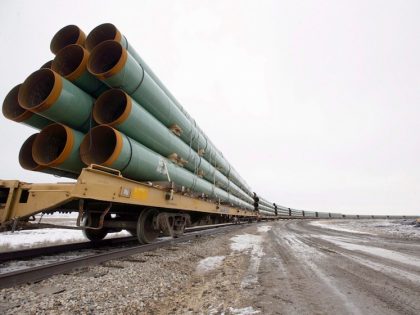
Jason Kenney’s government seems increasingly desperate, conjuring up dark conspiracies to explain its own failures. Beneath the lurid rhetoric, there’s a last-ditch effort to keep the fossil-fuel industry profitable and prop up a conservative “success story” that couldn’t endure.

Media pundits hail the economist Karl Polanyi as a brilliant theorist of capitalism and a thinker for our time. In order to understand Polanyi’s ideas, however, we need to see him in the context of his own time: Europe’s "age of catastrophe" in the early twentieth century.

Michigan’s repeal of its “right-to-work” law could be a huge boon to labor — not because of the technicalities of the law itself, but because the entire country is hearing the message that the state will not tolerate flagrant union busting.

Martin Wolf, chief economics commentator for the Financial Times, recognizes that the neoliberal model he once celebrated is in deep crisis. But Wolf can’t get to the heart of the problems with contemporary capitalism or offer a meaningful solution for them.

New Deal job programs didn't just absorb unemployment but allowed thousands of artists and writers to work on ambitious creative projects. Works Progress Administration funding allowed a golden age in US culture — but drew vicious anti-communist attacks, offering a foretaste of McCarthyism.

How the American political class brought a disaster to the Middle East.

Populist grievances are pushing Alberta, Canada’s most conservative province, further to the right. The activist group Take Back Alberta is working to escalate this trend.
In November, the Right continued to lose wealthy suburbs but made inroads in working-class counties.