The New Deal Put Huge Numbers of Unemployed Artists to Work
New Deal job programs didn't just absorb unemployment but allowed thousands of artists and writers to work on ambitious creative projects. Works Progress Administration funding allowed a golden age in US culture — but drew vicious anti-communist attacks, offering a foretaste of McCarthyism.
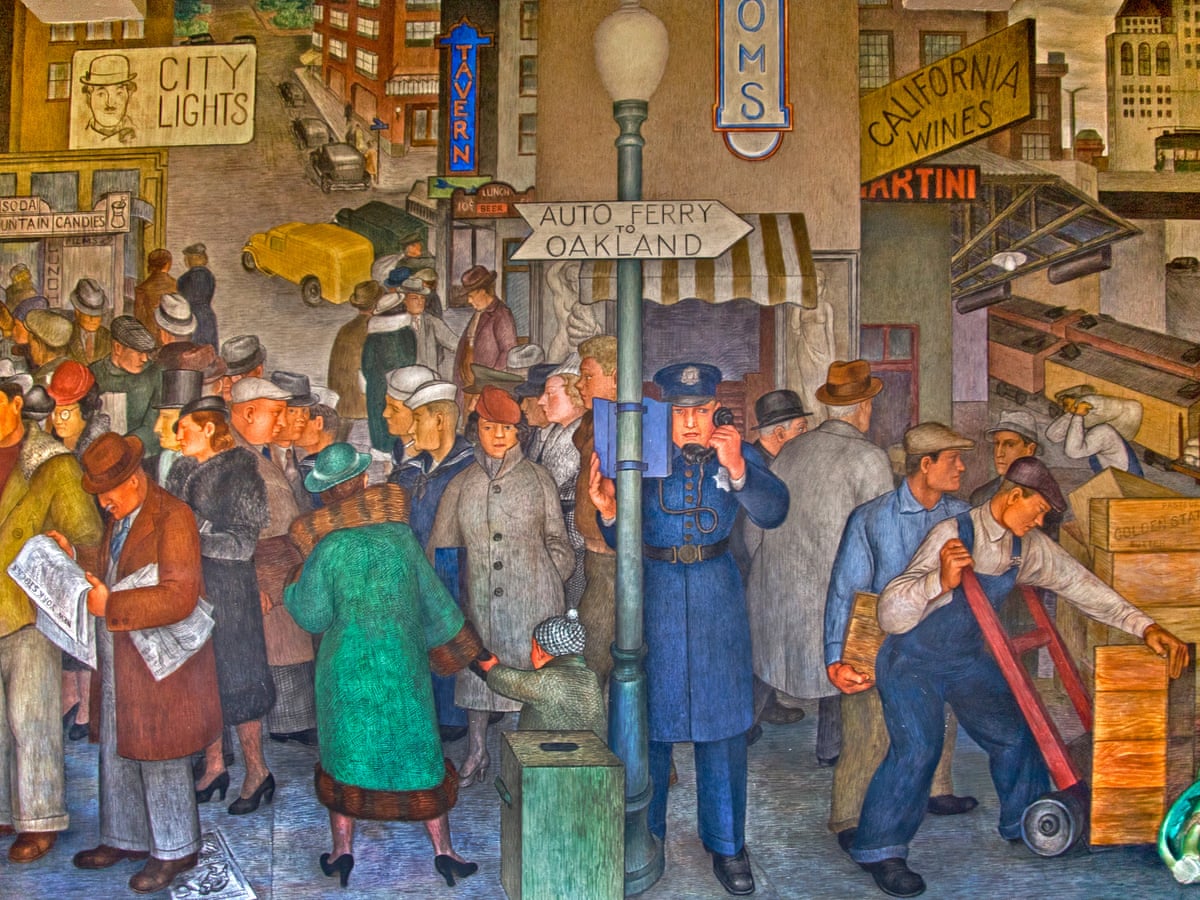
Detail of a fresco by Victor Arnautoff at Coit Tower in San Francisco, California.
After a divisive election, US politics are anything but back to normal. If Joe Biden pursues the same neoliberal policies that we’ve seen these last forty years, there is little chance of him rebuilding trust among working-class voters. Looking to break with this recent history — and confront a fresh Great Depression — it’s no wonder that many on the Left draw inspiration from the social programs of the 1930s, as they advocate a modern Green New Deal.
Franklin D. Roosevelt’s plan to build the country out of the Depression began in 1933, the year he became president, and was rolled out in earnest from 1935 under the Works Progress Administration (WPA). Its job-creation schemes remain well known — as do its programs’ effects in building infrastructure and public works visible around the United States still today.
But perhaps rather less well known are an important part of this period’s political debates: the art programs of the New Deal. Under the same mantra of letting people use their abilities rather than being retrained or go vacant, they put thousands of visual artists, sculptors, writers, actors, musicians, architects, and photographers to work.