A Key Fight Against Criminalizing Homelessness Is Playing Out in Austin, Texas
Austin, Texas, has been an important front in the battle for housing justice, where efforts to decriminalize homelessness have previously been successful. The city’s voters will soon need to defend those gains from a right wing trying to claw them back.
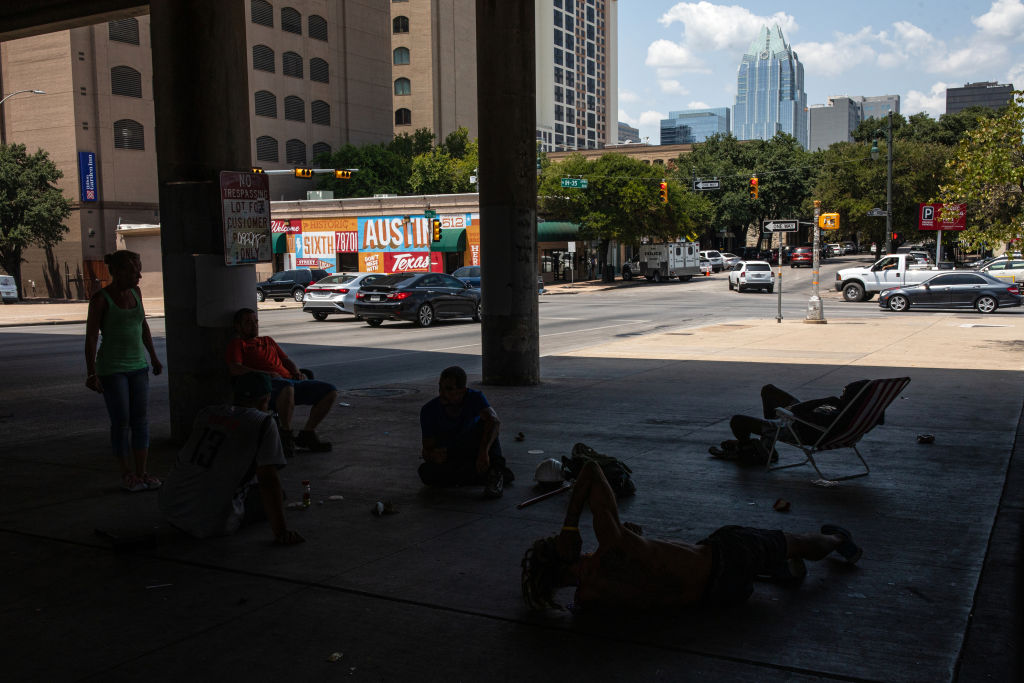
Homeless men and women avoid direct sun by sitting beneath Interstate 35 near downtown Austin, Texas, on August 14, 2019. (Tamir Kalifa / Getty Images)
Last week, Texas captured national attention with the devastating collapse of the state’s deregulated energy grid. Millions of people went without power and water for days, leaving mutual aid networks to compensate for institutional negligence. In the capital city, downtown areas remained lit, and hotel prices surged while East Austin faced severe outages. Meanwhile, as people scrambled to find food, shelter, and heat, no one was more vulnerable than the unhoused.
For decades, Austin has been the site of struggles for homeless rights, the latest wave of which will be coming to a head this May with a ballot measure aiming to recriminalize homelessness citywide. In some ways, Austin has stood out as a bastion of progressive politics in the heart of Texas; most visibly, in recent years, the city passed mandatory paid sick leave and elected city council member Greg Casar and district attorney José Garza, both of whom are members of the Democratic Socialists of America (DSA). Austin’s vicious back-and-forth battle with housing injustice, however, remains ongoing.
Cities across the United States are facing affordable housing crises, and Austin, Texas — growing faster than any other metropolitan area in the country — is no exception. As Austin’s housing costs rise, so does its unhoused population. According to the Ending Community Homelessness Coalition’s 2020 point-in-time count, homelessness in Austin hit a ten-year high last year. Like many municipalities, Austin’s response has generally been to eschew permanent housing solutions and resort to homeless criminalization — prohibiting sitting/lying, camping, and soliciting in public, and forcing these problems out of the public eye.