
Powershop’s Sellout Shows the Free Market Won’t Stop Climate Change
The Australian green energy provider Powershop launched in 2012 with the support of a range of environmental NGOs. Last month, Shell bought the company and took over its clients.
The Australian green energy provider Powershop launched in 2012 with the support of a range of environmental NGOs. Last month, Shell bought the company and took over its clients.

Political elites built the carceral state — and not just white ones.

Alex Brower is a member of the Democratic Socialists of America and a teachers’ union president running for comptroller in Milwaukee. In an interview, Brower explains how he wants to municipalize his city’s energy provider, create a public banking system, divest his city’s pension funds from fossil fuels, and more.
A definitive account of what has transpired over the last few weeks in Greece, and what’s next for Syriza and the European left.

The tendency of some modern-day Marxists to pit reform against revolution is diametrically opposed to the vision of Karl Marx himself.

The rich tradition of Black Marxist thought — one that includes W. E. B. Du Bois, C. L. R. James, and Frantz Fanon, among many others — emphasizes the centrality of capitalism to racial oppression and the destructiveness of that oppression for all workers.

In Thuringia, former East Germany, the far-right AfD has won a state election for the first time. Its success is the product of a low-wage economic model that has itself fed anti-migrant backlash.
The tendency to divorce racial disparities from economic inequality has a long liberal lineage.

Gabriel Rockhill’s polemic against Western Marxism seeks to condemn a set of postwar left-wing intellectuals such as Herbert Marcuse. Heavy on innuendo but light on evidence, the result is more like a show trial than a serious political indictment.

In recent decades, the basis of US hegemony has shifted from domestic industrial strength to its ability to enforce the rules that organize global production, finance, and money. Today this imperial role is now increasingly under strain.

More and more economists agree with Robert Brenner that mature capitalist economies have begun to stagnate. We should not deny this reality but rather think clearly about how it affects our political outlook.

Public education advocates in Los Angeles are running two school board candidates this year in an effort to halt creeping privatization. Their opponents in the charter school lobby are also eyeing the school board — and have millions to spend on their agenda.

In Britain, Thursday’s Gorton and Denton by-election was a historic victory for the Greens. Labour prime minister Keir Starmer chased the Left out of his party, and he is now seeing its voter base collapse.

It's election day for Kaniela Ing in Hawai'i today. His campaign shows that socialism has both deep history and future potential on the islands.

The number of infections and deaths that have swept through US nursing homes is staggering. Organized nursing home workers are crucial to ending this devastation.

Before his assassination in 1978, Henri Curiel organized a solidarity network that supported revolutionary movements around the world. Curiel’s background as a Jewish communist from Egypt illuminates the history of left-wing politics in the Arab world.

Across Melbourne, the Victorian Socialists have knocked on over 180,000 doors and signed up hundreds of volunteers. Their campaign has set its sights on two upper house seats in the coming state election.

If we followed the advice of “slow food” advocates like Alice Water, we’d end up with literally billions hungry and more workers hyperexploited. There’s nothing progressive about the “slow food revolution.”

From California to Greece, teachers are fighting attacks on education. Striking Greek teachers write that they stand with the Los Angeles teachers strike.
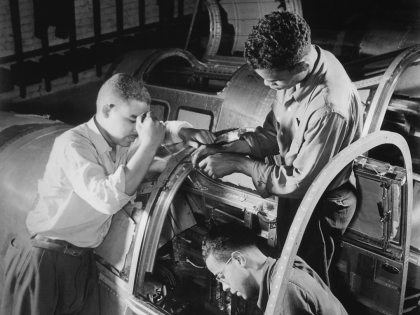
The war industry has become a permanent fixture of US capitalism, channeling massive public subsidies to private corporations. The first writer to analyze this “Permanent War Economy” was Edward Sard, a brilliant Marxist economist working in the 1940s.