The Victory to Come
Bernie critics seem to think they dodged a bullet. They haven’t — the bullet is still on its way.
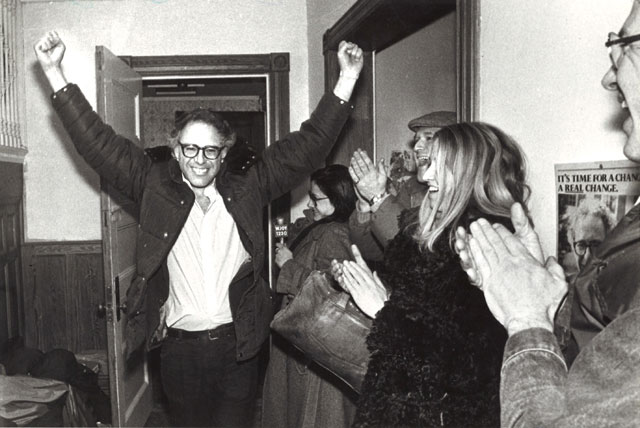
Bernie Sanders celebrates his first electoral victory as mayor of Burlington in 1981.
Imagine a time and place where, to everyone’s astonishment, a “socialist revival” sprouts up, seemingly out of nowhere. At first, it’s not much more than a literary trend, involving writers and intellectuals reading and talking in big cities. But soon, the idea penetrates the official world of politics, where a lone independent socialist — a gruffly earnest politician-activist of working-class stock, who keeps a defiant distance from both major parties — launches an improbable campaign to push socialism into mainstream political life.
This was Britain in the early 1890s. And the gruff politician was Keir Hardie, the secular saint of British socialism and the central figure in the founding of the Labour Party.
In 1892, Hardie left his life as a union agitator in the Scottish coalfields to run for parliament as an independent. In the ebullient atmosphere that surrounded his victory, a meeting of socialist activists convened in Bradford to create an organizational vehicle for their political hopes, which they christened the Independent Labour Party (ILP). Hardie was appointed its chairman, and immediately he and his comrades looked with bullish optimism to the next general election: the first great electoral test of the “socialist revival,” then a decade old. (That phrase, already in use at the time, evoked the near disappearance of English socialism after its tumultuous climax in the 1840s.)