Peace for Whom?
The benefits of peace between FARC and the Colombian government will not be widely felt.

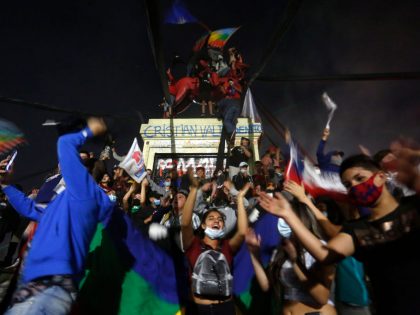
On Sunday, Chileans voted by a huge majority to abandon the Augusto Pinochet-era constitution. Currently first place in polls for next year’s presidential election, Chilean Communist Daniel Jadue told Jacobin how his country can break from Pinochet's neoliberal dogmas.

Firms like OpenAI are developing AI in a way that has deeply ominous implications for workers in many different fields. The current trajectory of AI can only be changed through direct confrontation with the overweening power of the tech giants.

By granting asylum to Julian Assange in 2012, Ecuadorian president Rafael Correa made clear his country would no longer bow to US diktats. The decision this spring to allow Assange's arrest shows how far Ecuador's challenge to empire has faded.

TeleSUR English is a rare voice of dissent to US foreign policy. Is that why Facebook deleted its page?

The recent protests in Nicaragua began as a response to austerity reforms. They've snowballed into something much bigger.

Chile’s socialist leader Salvador Allende became an icon of resistance to oligarchic tyranny after the right-wing coup that began 50 years ago today. His ideas and his sacrifice remain a powerful example for anyone seeking to build a movement for change.

Donald Trump’s push to acquire Greenland has alienated many longtime allies. But it has tantalized a cohort of tech billionaires who see the island as a potential laboratory for “freedom cities,” or privately governed zones without regulation or democracy.
The media is debating food politics — and missing the mark.
Ecuador's minister of culture defends the social and political record of the Correa government.

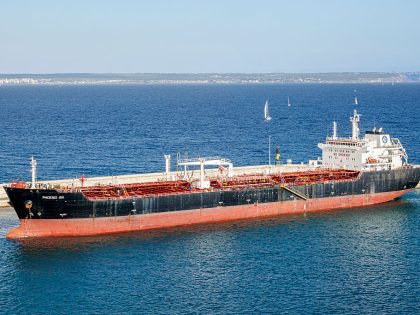
The pandemic caused unprecedented disruption to the global shipping of oil, but the industry survived with the help of massive state intervention. Control over the oil trade is a vital tool of economic power that the US is determined to retain.

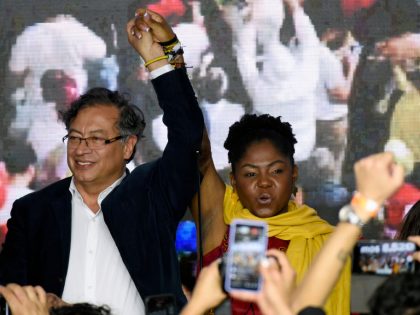
With Gustavo Petro and Francia Márquez’s win in its presidential election, Colombia finally has a chance to roll back its decades of violence and inequality stoked by the country’s status as one of the US’s principal allies in the western hemisphere.

US sanctions are killing ordinary Iranians by the thousands. Through its control over the world banking system, America’s sanctioning power flouts international human rights law and poses a threat to the world.
Today's Sandinista leaders are a far cry from the revolutionaries who once inspired the international left.
As pressure for economic liberalization grows, what would it take to turn Cuba into a socialist democracy?

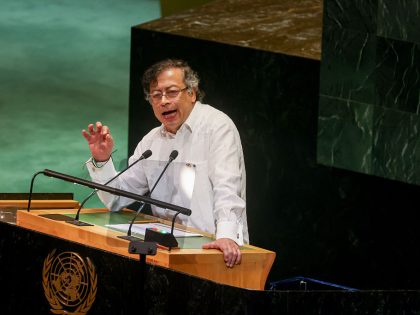
Colombian president Gustavo Petro lambasted Donald Trump’s human rights abuses and Israel’s genocide at the United Nations last week. The US State Department revoked his visa in response.
The failure of Colombia's peace deal will only benefit the forces of violent right-wing repression.

The news of at least 53 deaths of migrants in San Antonio is heartbreaking — particularly because it is the inevitable result of the monstrous immigration policies that Joe Biden has done little to change.
On September 21, 1976, the US-backed Pinochet government assassinated a leftist Chilean dissident on the streets of Washington, DC.

Almost every assassin involved in the murder of Haitian president Jovenel Moïse was Colombian. That’s no coincidence: if you want mercenaries for hire on the cheap, often trained by the US military, you can find them in spades in Colombia.