The Maritime Oil Trade Keeps Global Capitalism Afloat
The pandemic caused unprecedented disruption to the global shipping of oil, but the industry survived with the help of massive state intervention. Control over the oil trade is a vital tool of economic power that the US is determined to retain.
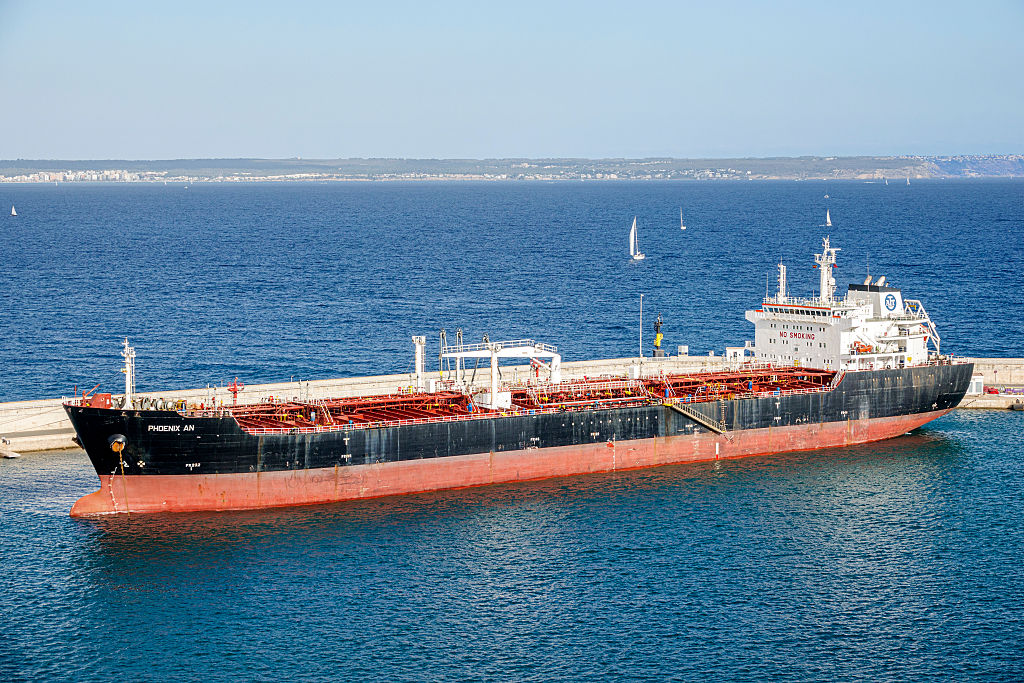
The Phoenix AN tanker ship in Palma de Mallorca, Balearic Islands, Spain. (Jeffrey Greenberg / Universal Images Group via Getty Images)
Fly over ocean anchorages near the world’s largest oil ports, and you’ll see a tangle of cargo ships waiting to refuel and tankers of all sizes radiating out from the loading buoys, queuing to unload or load their cargo.
Oil ports often boast proximity to both tank farms and refineries. These oil facilities are usually visible in their totality only from the air or from the sea, with loading buoys sometimes a mile or more away from the shore itself and the ships anchoring still farther out to sea.
Tank farms tend to be hidden behind layers of barbed wire, and strips of wasteland often separate them from nearby roads, villages, and towns. These interconnected coastal infrastructures reveal the extent to which the extraction, storage, pricing, and sale of petroleum and petrochemical products is not just dependent on how these products are transported across oceans but is fundamentally defined by it.