The Socialist Case for Nuclear Power

Nuclear energy is still regarded with skepticism. But nuclear power’s critics wildly overstate its dangers, and preserving and expanding this energy source is essential to a just green transition.
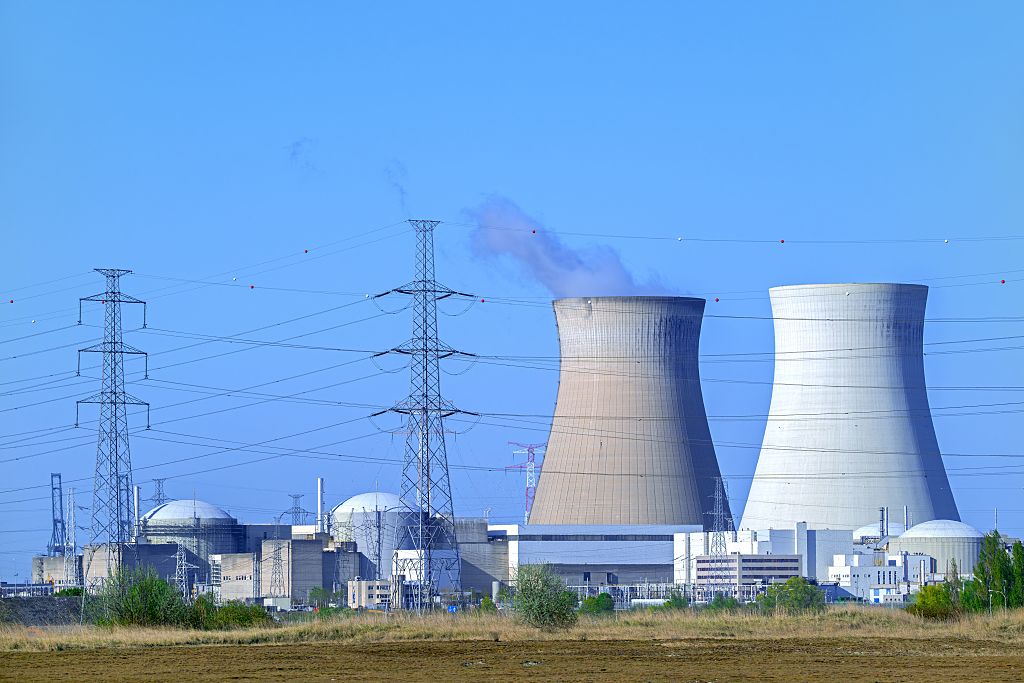
The transition away from fossil fuels cannot be accomplished by renewable energy alone. We need nuclear power. (Arterra / Philippe Clement / Universal Images Group via Getty Images)

The challenge of climate change is aptly called “civilizational.” We live in a world built by fossil fuel energy. The costs of fossil fuels are well documented — not just climate change but also millions of deaths per year from air pollution — but the benefits of fossil fuel–powered modernity are too often ignored. Fossil fuels have powered electrification, industrial mass production, rapid long distance transport, virtually labor-less agriculture, and provided the industrial heat to forge a more-than-50-percent urban world built of steel and cement.

The level of energy needed to replicate this bounty is hard to imagine. Fossil fuels are high in what energy experts call “energy density”: the amount of energy contained per unit of volume or mass. The historian Alfred Crosby explained that this is because these fuels represent “fossilized sunshine,” or the millions of years of solar energy concentrated into condensed plant matter. According to Crosby, a mere gallon of gasoline would need the equivalent of ninety tons of plant matter or forty acres of grain to produce the equivalent energy.

We still live on a planet where roughly 80 percent of the world’s energy is powered by fossil fuel. This means that, in contrast to what many climate activists might suggest, the transition away from fossil fuels is neither technically simple nor just a matter of political will. It is incredibly difficult and requires a serious technical analysis of potential alternatives.

In many ways, this civilizational challenge is a straightforward example of Karl Marx’s thesis that capitalist social relations of production (private property and the profit imperative) will “fetter” the needed development of the productive forces. The transition away from fossil fuels requires new productive forces, but capitalist property relations hold us back. But first, we should be clear on which productive forces are needed in the first place.

Here we have an issue: many on the Left have a simplistic vision of a post–fossil fuel future: it is seen merely as a transition to “renewables,” or more specifically solar and wind energy. But from a technical and engineering standpoint, it is clear that the transition away from fossil fuels cannot be accomplished by variable renewable energy alone.

Nuclear energy is a controversial additional option. Yet when it comes to replicating the energy density of fossil fuels and much more, this energy source has far too many advantages to ignore.

Not Debatable: Keep Nuclear Plants Online

First, if climate change really is a major threat, it ought to be common sense that we should not be shutting down perfectly viable nuclear power plants that now provide zero-carbon power to the grid.

This may seem easy enough to accept — even climate champion Bill McKibben has conceded as much — but the fact is the Left often aligns itself with environmental groups that campaign to do just that: shut down nuclear power plants. In New York state, such groups effectively campaigned for then-governor Andrew Cuomo to shut down the Indian Point nuclear power plant. This shutdown not only took off the power needed for the grid but also destroyed over a thousand well-paying union jobs, deepening a long-standing rift between labor and environmentalists.

The green groups argued we could shut down the plant and easily replace it with renewable energy and batteries, but almost immediately the plant’s lost capacity was instead replaced with fossil fuels. Emissions, predictably, spiked. Similar dynamics can be seen in Germany, where an impressive increase in renewable energy has not been able to compensate for a full shutdown of their nuclear fleet, leading to continued reliance on gas and dirty coal.

The Socialist Case for More Nuclear Energy

The real debate on the Left should be over whether we build new nuclear reactors. When it comes to Big Tech and political elites, the answer is a resounding yes. But socialists have different reasons for supporting nuclear power.

Socialism is ultimately about democratizing production and shifting its focus from market competition and profit toward production for use or social need. While many bemoan how “expensive” nuclear energy is in terms of market costs, it has amazing attributes on the level of use value and the public good.

First, nuclear energy is among the lowest-carbon sources of energy available. It is true you might need to use fossil fuel in the construction of a nuclear power plant, but once built you can rely on that plant to produce zero-carbon power for roughly eighty years.

Second, even more than fossil fuel, nuclear energy has unparalleled energy density. Crosby reports that a pound of uranium can produce the equivalent energy of 2.5 million tons of coal. To be clear, uranium mining can be a dirty business — the practice on Navajo reservations after World War II is a shameful history — but this means very little uranium mining is needed to provide considerable energy abundance.

And today, it is clear that uranium mining can be done safely with unionized labor and adequate regulation. While there is much consternation about the level of “critical minerals” needed for the green transition, few consider how little mining and how few materials would be needed for a largely nuclear-powered future.

Third, nuclear power’s energy density also explains its incredible power density, the term energy experts use to understand how much space or land it takes per unit of energy produced. Many studies confirm that nuclear energy has by far the smallest land footprint of any energy source. This would entail not only less land conflict overall in rural areas, but also that more land can be set aside for biodiversity conservation and other environmental goals. Meanwhile, modeling of what the United States would need to reach net zero-carbon emissions by 2050 suggests a renewables-heavy approach requires massive land use: “utility-scale solar projects that cover an area the size of Massachusetts, Rhode Island, and Connecticut combined, and wind farms that span an area equal to that of Illinois, Indiana, Ohio, Kentucky, and Tennessee.”

An inconvenient truth is the Left’s bias for solar and wind power has already run into political barriers: local opposition to large-scale renewable energy on rural land has been “numerous and widespread,” according to one report, even before the Trump administration launched its culture war against solar and wind power.

Fourth, nuclear energy is the most reliable source of power available. Energy experts have a concept for this too: “capacity factor” — what percent of the time a given energy source can be expected to be available to the grid in relation to its potential maximum capacity. According to the Energy Information Agency, nuclear energy has by far the highest capacity factor at roughly 92 percent. By contrast, photovoltaic (PV) solar is at roughly 23 percent, with wind barely much better at 34 percent. Everyone knows the sun doesn’t always shine and the wind doesn’t always blow, but this means these sources have limited “use value” on physical electricity grids and need costly backup power or storage to maintain reliability.

Fifth, nuclear energy is proven. It is an immense tragedy that our electricity grid continues to rely on fossil fuels when we’ve actually known how to decarbonize it for decades. France reached nearly 75 percent carbon-free electricity in a span of fifteen years. No other country can say it has reached the same level with solar and wind alone. In fact, the most decarbonized grids around the world today are typically a combination of hydro- and nuclear power.

Finally, and crucially for socialists, nuclear energy is widely popular among labor unions within the electricity sector itself. When green NGOs campaign to shut down nuclear plants, unions are out in the streets to fight back. Those concerned about the “risks” of nuclear power (more on that below) should take note that it is the workers themselves who not only see it as safe but also as a source of family-sustaining jobs and tax revenue for local communities.

All these useful properties of nuclear power are public benefits less easily captured by market prices and the short-term profit orientation of capitalist economies. This is why nuclear energy needs socialism — that is, socialization of the costs and long-range planning to deliver wider public benefits. Like in France, building nuclear power plants should be seen as akin to other important public infrastructure projects (e.g., roads, water treatment infrastructure, transit). Oddly, the libertarian right wing has strongly advocated for nuclear energy, and the more socialist left has resisted it given its historical linkages with environmentalism.

Answering the Hard Questions on Nuclear Power

Perhaps the biggest barrier to nuclear energy is the culture of fear around it. Democratic socialists in particular cannot be dismissive of such fears if they believe any energy technology must ultimately be popular with most of the population. So proponents of nuclear energy need clear-eyed responses to the many questions opponents raise.

Above all, there is the question of nuclear waste. It’s true nuclear energy creates a waste product that remains unsafe for centuries (that said, after about five hundred years, it would have to be ground up and inhaled to cause harm). But the waste has not actually caused any harm. According to Madison Hilly, “To date, there have been no deaths, injuries or serious environmental releases of nuclear waste in casks anywhere” (a list of the known incidents of unsafe radiation exposure mostly involve military or medical uses of nuclear technology).

The fact is that given nuclear power’s energy density, the amount of waste produced is tiny:

Every year, a 1000-megawatt nuclear power station generates around 27 [tons] of spent nuclear fuel (unprocessed). The quantity of ash generated by coal power stations in the United States is estimated to be 130,000,000 [tons] per year, with fly ash releasing 100 times more radiation than a comparable nuclear power plant.

In the United States, all the nuclear waste created by all reactors since the 1950s could be stacked in casks and laid in a single football field at the depth of ten yards.

And we actually know how to safely handle the waste. We can easily store it in dry casks on site, and Finland has discovered how to safely bury it underground. The waste can also be reprocessed into new fuel, as is currently done in France, where 17 percent of their electricity comes from this recycled fuel.

Put simply, nuclear waste is a concern, but it is easily handled, and the risks surrounding it tend to be overblown by antinuclear ideologues.

Another concern is that nuclear plants risk “meltdowns” that could expose surrounding regions to harmful radiation. The answer to this is that today we have improved nuclear power plant technology so meltdowns are nearly impossible. But even if we look at the three historical examples (Three Mile Island, Chernobyl, Fukushima), the deaths directly caused by nuclear radiation number roughly between three hundred and five hundred total (roughly 2,314 deaths happened as result of a haphazard evacuation during Fukushima, but only one directly from radiation).

Over 99 percent of all deaths from nuclear energy were because of Chernobyl — an accident caused by a decaying Soviet regime at a plant that lacked something that’s now universal: a containment dome. This is why energy experts assert that, contrary to popular opinion, nuclear energy is one the safest forms of energy available today.

A third concern often raised is that nuclear energy is inherently bound up with the nuclear weapons industry, and so its use raises the prospect of more weapons proliferation and increased existential risk of nuclear war. This is indeed a grave concern, but it would still exist in a world without nuclear power (or even the less controversial and widely deployed nuclear medicine).

The fact is deploying nuclear power does not guarantee you will develop nuclear weapons. Leigh Phillips points out that “out of the thirty-two countries that employ nuclear power, only nine have nuclear weapons programs.” It is a truism in the Marxist tradition that societies can only make history on the basis of existing material conditions, and, whether we like it or not, nuclear technology exists for good and bad. As Phillips says,

Pandora’s Box has been opened. There’s no way that humanity can unlearn what it has learned. If a country really wants to develop the bomb and has wealth enough to do so, it can pursue nuclear weapons regardless of the status of nuclear energy.

A socialist response to the threat of nuclear war is to organize vigorously against nuclear weapons proliferation and call for an immediate drawdown of all weapons programs today. But we can do this without depriving the world of the tremendous benefits of nuclear energy.

In sum, a socialist politics of electricity should prioritize abundant, reliable, and low-carbon power. But the rapid expansion of nuclear power will need socialism — that is, public control and socialized investment.

And this brings us to some good news: the Left should celebrate that today two of the most storied public power institutions in the United States — the Tennessee Valley Authority and the New York Power Authority (set up by president and governor Franklin D. Roosevelt, respectively) — are pushing to invest in the construction of new advanced nuclear reactors. We should hope that these investments come to fruition and demonstrate to the public the positive role public power can play in building a future of abundant clean energy.