In Defense of the Tennessee Valley Authority
The Tennessee Valley Authority was one of the greatest achievements of FDR’s New Deal. But a new generation of liberals and leftists are turning against the dream of “big public power” in America.
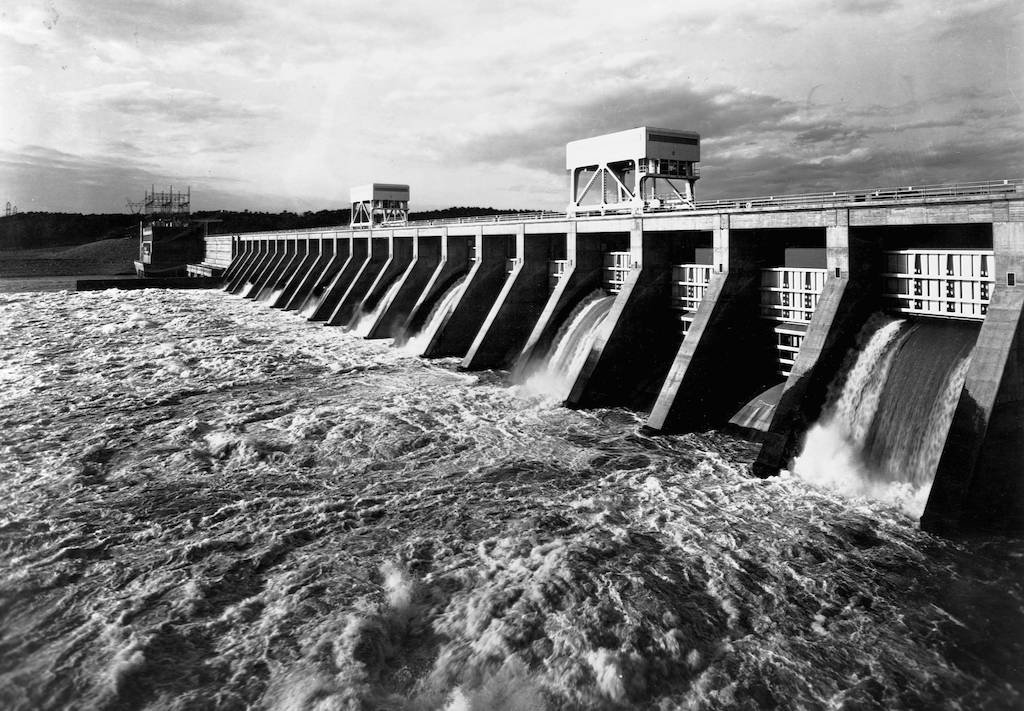
The Pickwick Landing Dam in Hardin County, Tennessee, a project of the Tennessee Valley Authority. (Photo by Library of Congress / Corbis / VCG via Getty Images)
As our largest federal power utility, the Tennessee Valley Authority (TVA) is a lasting testament to the ambitious scale of the New Deal — and to the lost ideal of cheap public power for all. Part of a suite of federal power programs, the TVA still provides not-for-profit power to 10 million customers. It generates over 5 percent of utility-scale electricity in the American grid, behind only a single private company, and that electricity is cleaner than in neighboring private-power grid areas. A full 60 percent of its workforce of ten thousand are represented by unions in a part of the country not known for its union density.
You would think the liberal left’s support for big public power in the TVA would be ironclad. Yet, as a recent New York Times article reveals, the TVA is drawing heavy criticism from the climate movement — mainly for its reluctance to fully switch to renewable energy under the Joe Biden presidency. Some even advocate breaking up the public utility to make way for a mix of private and “community owned” solar and wind projects.
It’s a reminder that climate politics goes through the electricity sector. Indeed, scientists agree any climate strategy starts there. Clean up electricity and then “electrify everything” that runs on other energy sources (e.g. transportation, building heat, industrial processes) and we can halt climate change. A major study from Princeton University estimates we’ll need to double or even quadruple current electricity production to decarbonize the United States economy. It’s a daunting but achievable challenge.