How a Revolutionary Was Born
Carl Skoglund's early life as a militant worker in Sweden prepared him for leadership in the 1934 Teamster Strikes.
Carl Skoglund's early life as a militant worker in Sweden prepared him for leadership in the 1934 Teamster Strikes.
E. P. Thompson brilliantly chronicled the ravages of early capitalism — and the fierce resistance it provoked.

Sociologist Stephanie L. Mudge examines how and why center-left parties across the world swallowed the neoliberal gospel — only to demolish their own social base.
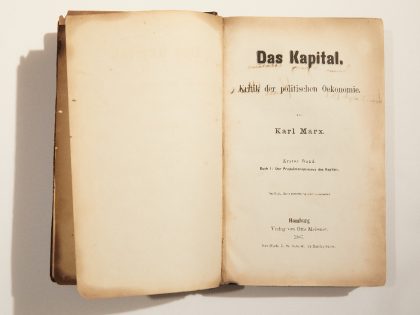
The first edition of Capital, Volume I, was published on this day in 1867. Over the years that followed, Karl Marx and his partner Friedrich Engels continued working on the final text, showing how it remained part of a living critical project.
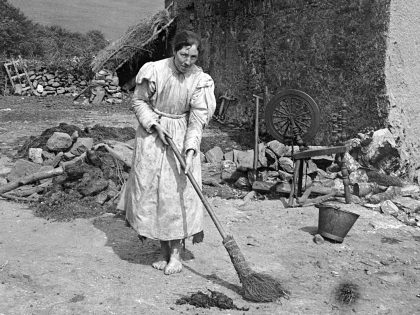
A new book, Remembering Peasants, takes a close look at Europe’s vanished peasantry. Mixing history, personal memoir, and anthropology, it is a vivid reminder of an experience that has only recently disappeared from the European landscape.

Conservatives today often denigrate a concern with economic inequality as a deviant left-wing preoccupation. In fact, from antiquity to the present, canonical thinkers of diverse political orientations have diagnosed economic inequality as a great evil.
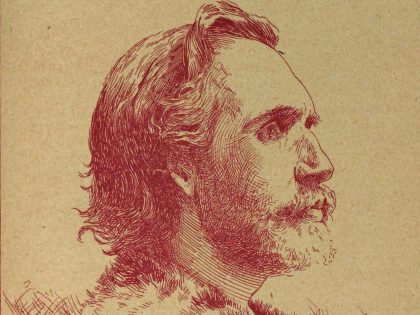
A new biography of Laurence Gronlund, a long-forgotten yet pivotal Marxian propagandist, sheds light on the rich complexities of Gilded Age socialism — one that forces us to consider how we package and present socialist ideas.
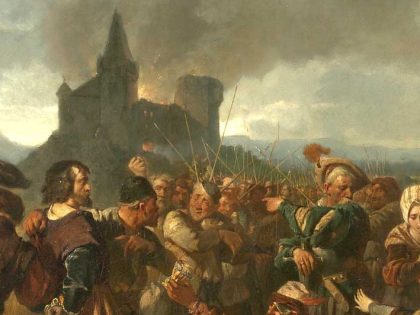
This year marks the 500th anniversary of the German Peasants’ War, the largest European uprising before the French Revolution, in which peasants seized upon the radical implications of Martin Luther’s theology to challenge a hierarchical social order.
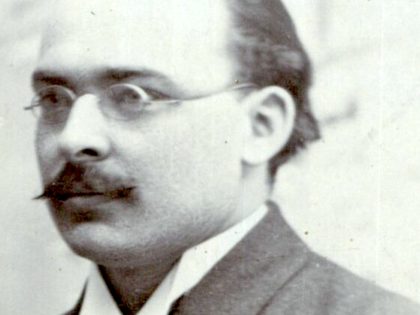
Kazimierz Kelles-Krauz was a remarkably creative Polish Marxist thinker who developed a theory of nationalism that was far ahead of its time.
We should engage with and update the revolutionary Marxist tradition — not reject it.
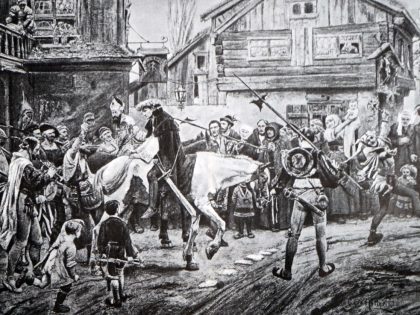
Today marks the 500th anniversary of Thomas Müntzer’s execution after he led a mass revolt that was both religious and social in its content. Müntzer’s complex, contradictory career has long been a source of fascination for historians of class conflict.
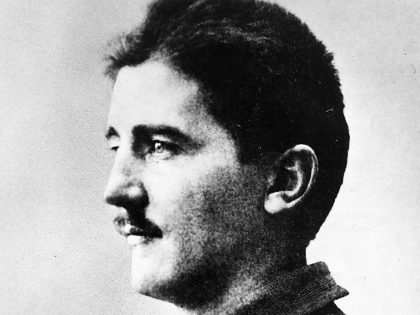
Karl Korsch was one of the most brilliant figures of interwar German Marxist culture before it was shattered by the rise of Nazism. His death in 1961 came just before the New Left began to rediscover his contribution to Marxist theory.
How should we assess the legacy of Leon Trotsky?

Skyrocketing prices and stagnating real wages are forcing more and more pubs to shut their doors. The closing of neighborhood pubs means the loss of leisure space, and of the community built around it.
Lenin and the debates that shaped the Russian Revolution have been misunderstood by friends and foes alike.
This century's LGBTQ liberation movement must be part of a broader project to redefine human freedom.
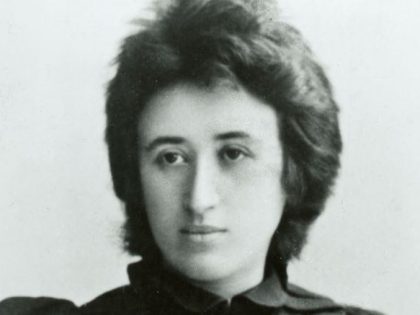
The Letters of Rosa Luxemburg reveal a revolutionary who was deeply committed and defiantly humane.
A review of Eric Hobsbawm's How to Change the World.