Eugene Debs Believed in Socialism Because He Believed in Democracy
Eugene Debs’s unswerving commitment to democracy and internationalism was born out of his revulsion at the tyranny of industrial capitalism. We should carry forth that Debsian vision today — by recognizing that class struggle is the precondition for winning a more democratic world.
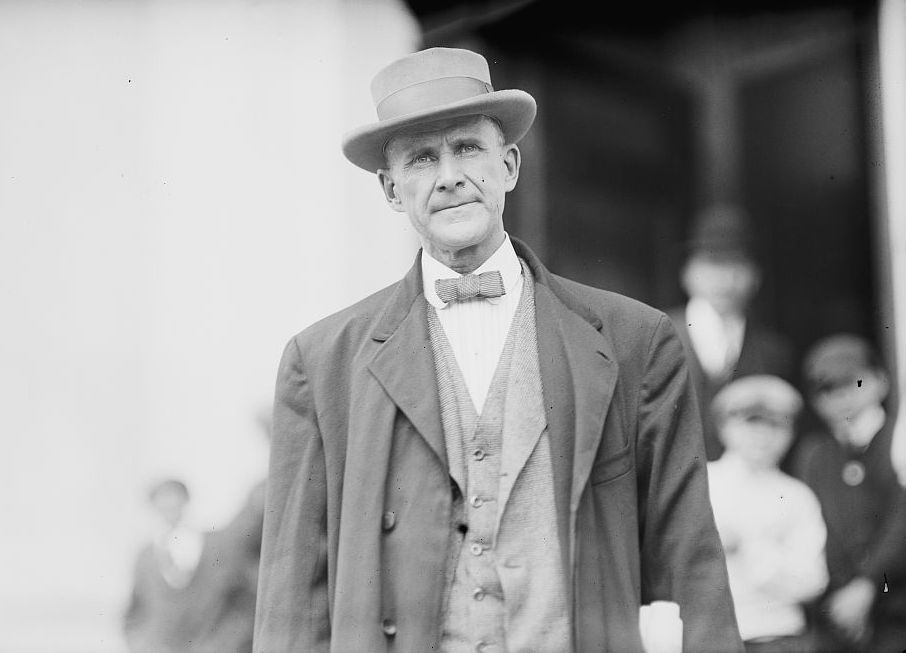
Eugene Debs in 1912. Photo: Library of Congress
In January 1917, John Hays Hammond, a balding, mustachioed mining engineer, appeared before the convention of the National Civic Federation, an alliance of business leaders and conservative unions, to deliver a stark warning: the country’s workers and farmers were dead set against entering World War I.
“Some influence or combination of influences has certainly brought about a weakening of the patriotic sprit in this country,” Hammond lamented. “We find that neither the workingmen nor the farmers . . . are taking any part or interest in . . . movements for national preparedness.”
By the following year, however, a combination of government propaganda, repression, and wartime hysteria had shoved anti-war views out of the political mainstream. President Woodrow Wilson’s declaration of war in April 1917 was the opening shot, and a fusillade of jingoism soon followed: suppression of radical publications, sacking of dissident organizations’ offices, tarring and feathering of war opponents, hyperpatriotic displays at sporting events, a $50 state bounty for draft dodgers, government-financed cartoons comparing Germans to barbarous, rampaging animals.