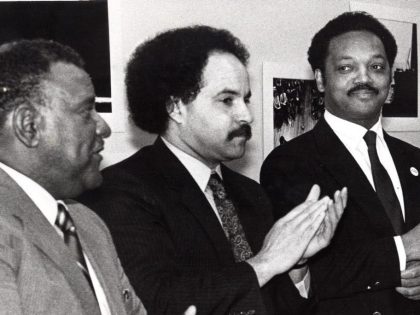
The Birth and Death of Single-Payer in the Democratic Party
In 1988, Jesse Jackson ran for president on a platform of uniting workers and pushing universalist policies like single-payer. His success terrified neoliberals in the Democratic Party.
In 1988, Jesse Jackson ran for president on a platform of uniting workers and pushing universalist policies like single-payer. His success terrified neoliberals in the Democratic Party.

The oil industry, long characterized by boom and bust cycles, has crashed, with prices hitting below zero. The White House will reach for a corporate bailout, but now’s the opportunity to move away from oil extraction and build a rational system of clean energy.

The Biden campaign's decision to forsake door-to-door canvassing may have cost Democrats dearly in down-ballot races. It was emblematic of the party's disastrous abandonment of face-to-face organizing.
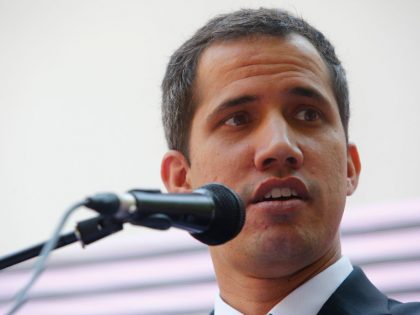
The recent failed invasion of Venezuela by several clown cars worth of idiotic “freedom fighters” is almost too absurd to believe. But the goofballs aside, this misadventure can only be understood in the context of Donald Trump’s increased aggression toward Venezuela and open desire to overthrow its government.

Russiagate looks less like a righteous crusade for truth and justice and more like the typical shenanigans for which the FBI and US security state have long been known: prosecutorial overreach, entrapment, and the criminalization of foreign policy dissent.
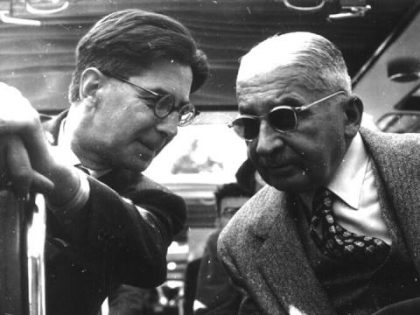
Many observers expected that the 2008 financial crisis would mark the end of neoliberalism. Instead, we saw a wave of privatization and sharp cuts in public services. Today, the forces best placed to exploit the coronavirus pandemic are still those who already have power: the neoliberals who’ve been shaping the economic policy agenda for decades.
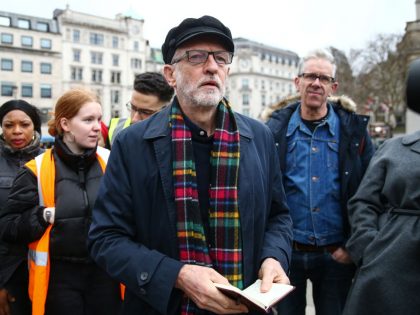
The defeats for Bernie Sanders and Jeremy Corbyn point to the Left’s difficulties in overcoming old party machines. Bottom-up labor organizing may sound like an attractive alternative — but it shouldn’t ignore the power of left populism in uniting people outside the workplace.
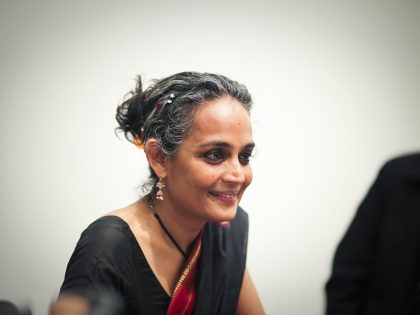
Arundhati Roy has a tendency to rile India’s media and political elites like no one else on the subcontinent. Perhaps that’s because no writer today, in India or anywhere in the world, writes with the kind of beautiful, piercing prose in defense of the wretched of the earth that Roy does.

Amy Cooper’s calling the police on a black man in New York’s Central Park represents an extreme example of racist behavior. But it also offers a window onto the experiences of black Americans that highlights the importance of affirmative action and radical redistributive policies as central to anti-racism today.
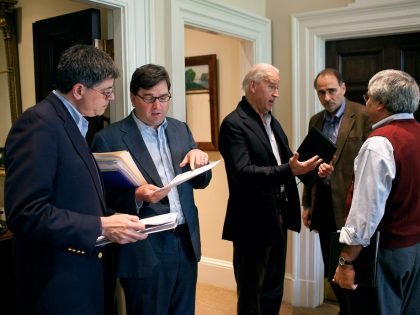
Coronavirus isn’t only exposing Donald Trump’s incompetence. The crisis is laying bare the consequences of the neoliberal economic agenda corporate Democrats have been pushing for decades.

New York City mayor Bill de Blasio claims he wants to change the most unjust policies of American life in the 21 century. The problem is, he is instinctively hostile to the protests and grassroots organizing necessary to win such change.
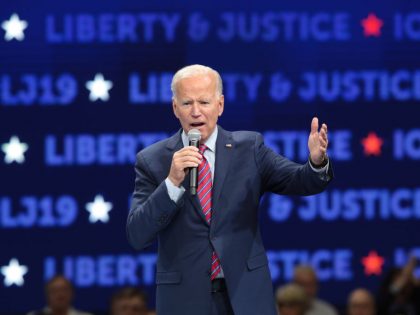
Mass protests across the country have beat back police repression and won public support for scaling back police power. The Democrats who built the overpolicing and mass incarceration regime now feel left out and want to channel that energy back into familiar territory: getting them reelected.
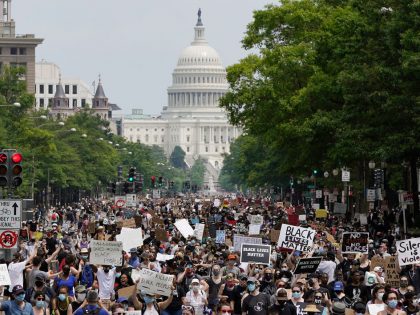
National support for Black Lives Matter has soared — while President Donald Trump’s approval rating has plunged ten points in a single month. The movement for racial justice is more popular than Trump's presidency.
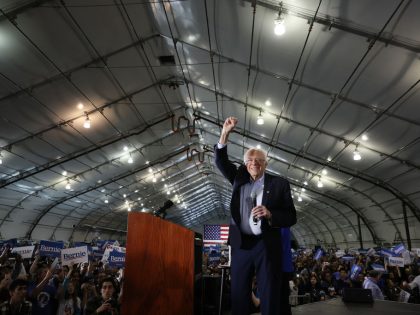
Critics declaring Bernie Sanders’s campaigns a total failure have discounted a basic socialist proposition: our metric for his success should not just be his winning or losing, but the extent to which the working-class movement has advanced.

The United States’ hyper-punitive approach to sexual offenders has fueled mass incarceration while doing little to actually help survivors.

Representative Barbara Lee wants to slash America’s bloated military budget. It’s a necessary move that’s long overdue.
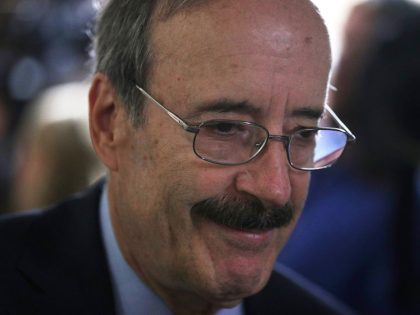
New Yorkers in the sixteenth congressional district will choose today between sixteen-term incumbent Eliot Engel and challenger Jamaal Bowman. The race offers a stark contrast between Bowman, who’s endorsed by Bernie Sanders, AOC, and the Democratic Socialists of America, and Engel, a longtime and steadfast warmonger.
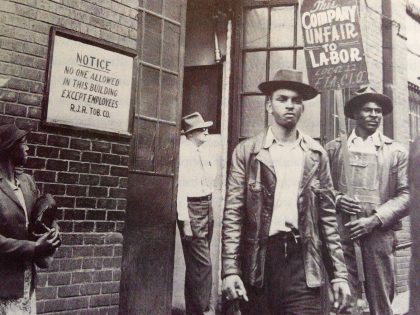
The point of a reading list should be to understand the world in order to change it. Here are ten essential books that can help inform the struggle for racial justice today.

Big business has long held an outsize role in US politics. In a plague year, and as politicians prematurely push to reopen the economy, political scientist Thomas Ferguson argues that its place at the center of American life is more grotesque than ever.