Sex Offender Registries Are Fueling Mass Incarceration — And They Aren’t Helping Survivors
The United States’ hyper-punitive approach to sexual offenders has fueled mass incarceration while doing little to actually help survivors.
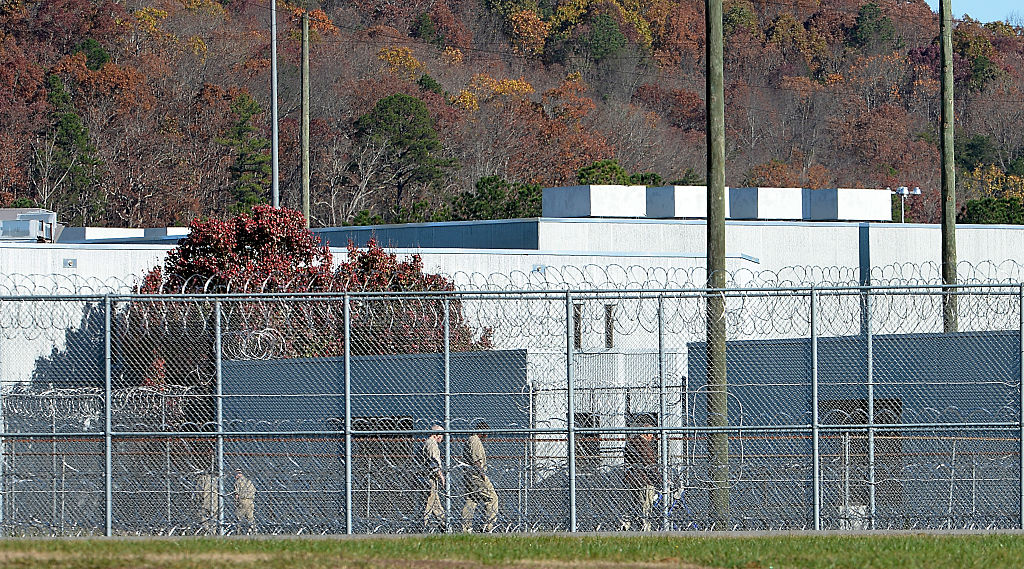
The fence around the federal prison in Butner, North Carolina.
The “sex offense legal regime,” which has developed alongside mass incarceration over the last forty years, has failed.
US sex offender registries now list nearly one million people. Federal, state, and local ordinances prohibit convicted sex offenders from living within a certain distance of schools, parks, day care centers, and other spaces where children might congregate. In places like Miami–Dade County, these restrictions have rendered hundreds of individuals effectively homeless. Only by building and inhabiting makeshift encampments in sparsely populated areas can offenders comply with such residency requirements.
Following the passage of an especially punitive county ordinance — still on the books as of 2020 — a veritable refugee camp of registrants appeared under Miami’s Dolphin Expressway. Facing eviction and possible arrest, residents of the encampment moved to an underpass before encountering similar resistance and decamping in 2014 for an industrial area near Hialeah, a Miami suburb. In the summer of 2018, city and county officials — under pressure from area residents and business owners — applied the same punitive tactics to disband the encampment, once again displacing and dehumanizing its inhabitants. And the cycle remains unbroken: last June, registrants occupying a makeshift “colony” in Miami’s Brownsville neighborhood were forced to vacate.