This Isn’t Work, It’s Exploitation
Italian workers occupy an ever-lower place in the European division of labor.
Italian workers occupy an ever-lower place in the European division of labor.

Uber and Lyft said that California's Proposition 22 would help their drivers. We now have proof they were lying.

The dysfunctions of modern capitalism have left us perilously exposed to a public health catastrophe. We must build on the solidarity engendered by this crisis to fight for a different world.
A titanic struggle is brewing in California between Silicon Valley capitalists and workers. Democratic Party elites will have to pick a side.

The Facebook founder intends to usher in a new era of the internet where there’s no distinction between the virtual and the real — and no logging off.
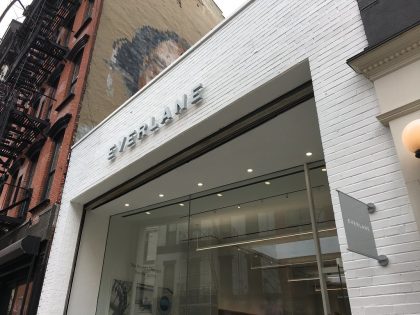
When the COVID-19 pandemic first hit and workers at the online clothing company Everlane faced layoffs, they decided to organize. One laid-off Everlane worker describes the difficulties of remote service work in the 21 century, building solidarity among coworkers who never meet in person, and why other online service workers should get organized.
The BBC reality show Victorian Slum House demonstrates just how far our society has slid back into Dickensian misery.
The new economy makes it harder than ever to untangle capitalism from our daily lives.

The only just future is one in which every person is given the chance to flourish — without exploiting other people or the planet.
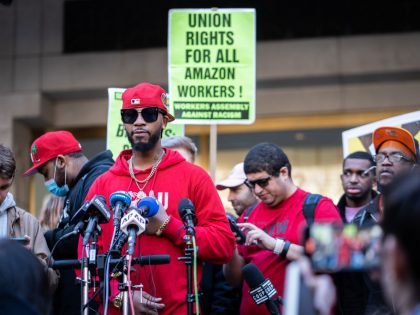
The establishment of the first Amazon union in the US is a historic breakthrough for organized labor. The successful union drive shows how the Left can best build real grassroots power: by organizing in the workplace.
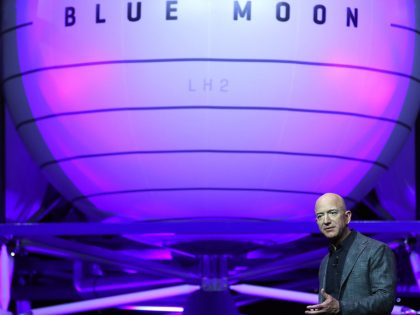
Jeff Bezos says his space colonies will produce “a thousand Mozarts and a thousand Einsteins.” But we already have millions of talented people here on Earth — the problem is, they’re toiling in obscurity for people like Bezos.
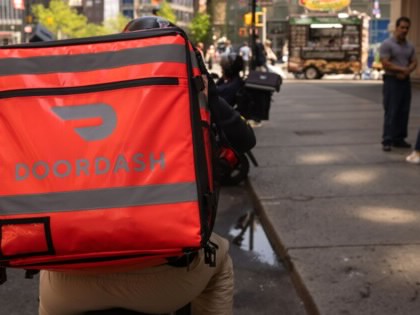
We can’t let gig-worker protections remain dependent on each new administration’s priorities. We need to experiment with new approaches, from passing strong state classification laws to scaling employer-of-record systems that give gig workers stability.

In an interview with Jacobin, Jeremy Corbyn talks about the need to rebuild the trade unions, internationalism, and why socialists can’t afford to be on the defensive.

Historically, Romania has had more emigration than immigration. Yet nationalist parties are now importing US Republicans’ anti-immigrant talking points, using culture-war rhetoric to distract from bigger economic questions.
Coupang is South Korea’s answer to Amazon. Just like the American retail behemoth, Coupang’s business model depends on abusing its workers.
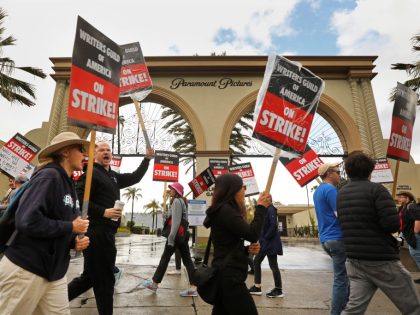
If the ongoing film and TV writers strike is successful, the Writers Guild of America could establish a model for how service sector, app-based gig workers can take on Silicon Valley.
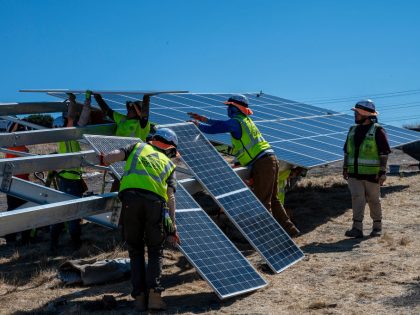
As trade tensions rise and industrial policies are reshaped, labor faces critical decisions in a world plagued by economic nationalism and climate change.
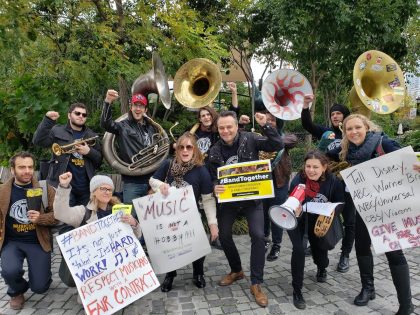
Like every other industry under capitalism, the music industry is currently organized to make a small handful of people very rich while the vast majority of working musicians benefit little from their recordings and performances. The only way to change that is through collective action.

Long working hours kill more than 700,000 people per year, even as millions are unable to find enough work to survive. The irrationality of capitalism has a human price.
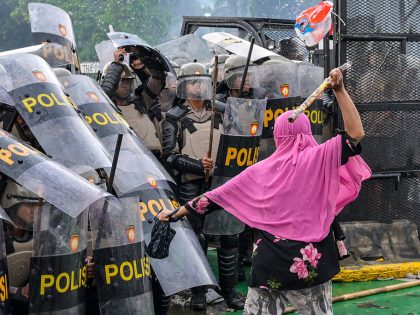
The Indonesian president, Prabowo, would like to turn the clock back to the dark days of the Suharto dictatorship. But he’s been confronted with an unexpected wave of protest after the killing of a young man by police in Jakarta, the country’s capital.