Gig Workers Need a Solid Floor and Portable Benefits

We can’t let gig-worker protections remain dependent on each new administration’s priorities. We need to experiment with new approaches, from passing strong state classification laws to scaling employer-of-record systems that give gig workers stability.
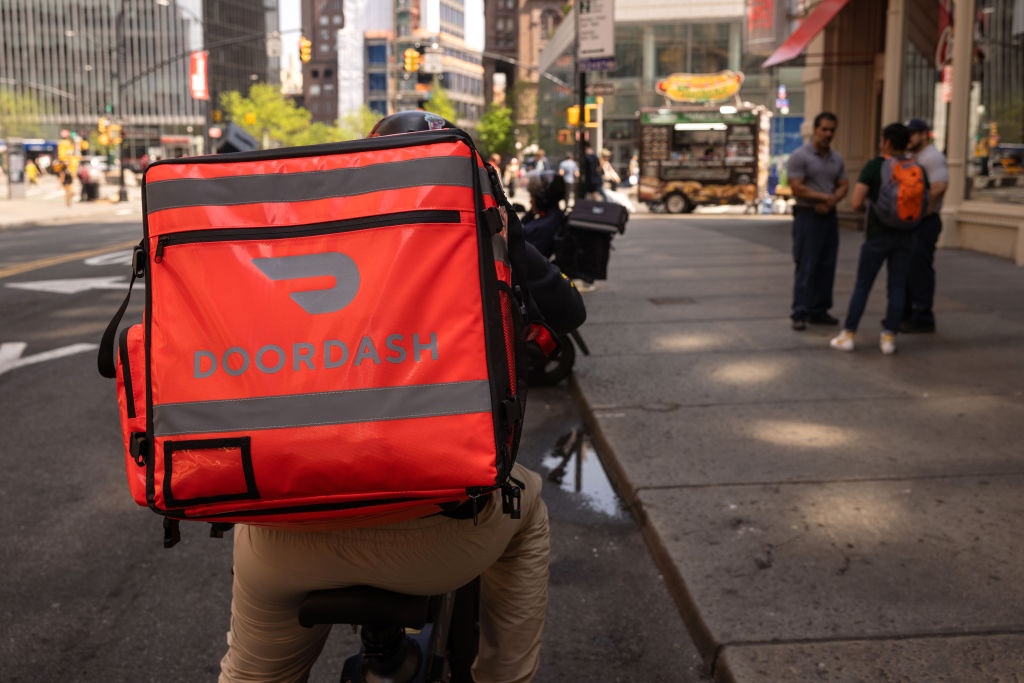
A delivery driver biking on a street with a DoorDash bag on his back.

Platform companies have found novel ways to unravel the sophisticated system of worker protections that American workers spent 80 years building. (Yuki Iwamura / Bloomberg via Getty Images)


Gig-economy workers have very few legal rights or protections at the federal level due to a single, endlessly contested question: How do courts and regulators define a gig worker on any given day?

In most states, without their own strong worker classification rules or gig-worker protections, the answer depends heavily on who is in the White House.

Since the rise of platform work in the 2010s, the Department of Labor's definition of gig worker status has shifted with each new administration. The Trump administration has made that pattern explicit again, moving to reinstate and expand its 2021 rules with new provisions that could strip protections from millions of workers, including a new group of workers covered by the Migrant and Seasonal Agricultural Worker Protection Act. The proposed changes would also have consequences for Family and Medical Leave Act coverage.

As protections strengthen and weaken with each reclassification, gig workers face unpredictable gaps in wages, benefits, and workplace safety. One new regulatory reversal and the floor drops out, leaving workers classified as contractors without basic rights. Shifts in how courts interpret gig-worker status can weaken or unravel protections associated with the label of employee, like minimum wage and overtime, child labor prohibitions, and protected family and medical leave.

Over the past eighty years, American workers fought for and secured one of the world's most sophisticated systems of worker protections. These were the foundation on which millions of middle-class families were built. While platform companies presented their primary innovation as technological, it was really a novel way to circumvent this system. Workers who desired flexibility — often people unable to make ends meet with one job, paying off debt, or caring for family members — could become users of apps like Uber and DoorDash. This allowed the companies to treat these workers as contractors, avoiding the obligations to their employees that had been formalized over nearly a century of struggle.

The exclusion of gig workers from our system of formal labor protections hurts not only gig workers but all workers who rely on that system. But it’s not sustainable to devote our energies to fighting each subsequent legal battle only for the next administration to reverse course. We need durable policy architecture that protects workers regardless of how they are labeled. States can and should be working to create such frameworks within their own jurisdictions.

Experimental Approaches

Part of the problem is outright misclassification. Employers classify workers performing what amounts to full- or part-time employment as independent contractors when they should be employees. They lack the ability to autonomously set their own wages or hours (the hallmarks of genuine contract work), yet they also lack the benefits of traditional employment, including minimum wage, health insurance, retirement contributions, and paid leave. They end up falling through a gap that is actively maintained by legal ambiguity.

Cracking down on misclassification is essential. But given the volatility of classification standards themselves, it is not enough. Even workers who genuinely prefer flexible, nonstandard arrangements deserve modernized protections that do not evaporate at the whims of a judge or labor secretary. The goal must be a system durable enough to survive the political and legal cycles that have made the current framework so dangerously unstable.

The good news is that solutions already exist. We just need the political will to scale them. Several models have shown how to provide workers with the flexibility some of them want while also providing the core protections and benefits traditional workers enjoy.

One experimental program funded by the Workers Lab, in partnership with the workforce development board in Long Beach, California, demonstrated that flexibility and security are not mutually exclusive. Drawing on a model first developed in the United Kingdom, the program used local workforce boards as an “employer of record”: a single entity that connected workers to multiple employers through a phone-based app, like a digital hiring hall, allowing workers to select jobs based on their skills and schedules and providing portable benefits across multiple gigs. Workers received a single W-2 form, making it far easier to file taxes accurately, claim the Earned Income Tax Credit and Child Tax Credit, and qualify for a mortgage.

A model like this could enable gig workers to access paid leave or unemployment insurance, providing them with greater financial security when something goes wrong. The approach creates a structure that combines the benefits of flexible work with the financial security of traditional work, regardless of how any given administration or judge defines a gig worker. An employer-of-record system will be used to support FIFA World Cup workers in Seattle this year.

In 2024, Massachusetts voters passed a ballot initiative allowing rideshare drivers — a quintessential type of gig worker — to work together regardless of platform and to bargain at the sector level rather than the employer level. This promising approach, historically more popular in Europe, allows the union (with some adjusted processes for driver approval) to bargain on behalf of all drivers to raise industry standards.

Most importantly for today's volatile legal environment, these models do not depend on winning a classification battle in court. In the current climate, that may be everything.

A National Baseline

To build on this momentum and create an architecture of support for gig workers and independent contractors, Congress should establish protections that do not depend on classification. Workers deserve a national baseline for compensation, legal recourse if mistreated, and portable benefits that apply regardless of whether they’re classified as employees or contractors. The current patchwork of federal, state, and court definitions leaves workers perpetually one legal ruling away from losing what little they have.

Congress should also modernize the Workforce Innovation and Opportunity Act (WIOA), updating its performance metrics to recognize nonstandard work as legitimate, set expectations for quality nonstandard work, and designate gig workers as a priority population for services. WIOA should empower and encourage workforce boards to act as employers of record, using existing federal funds to give nonstandard workers access to health insurance, paid leave, and workers' compensation, independent of how those workers are classified elsewhere in the law.

And critically, the safety net beneath these worker benefits must be strengthened, not cut. Medicaid, SNAP, and childcare assistance are the last line of defense for nonstandard workers in an environment where classification-based protections can disappear overnight. Weakening these programs does not build a stronger workforce. It simply shifts the cost of instability onto the workers least able to bear it.

The Trump administration's latest move to redefine gig-worker classification is only the most recent reminder of how exposed millions of workers are to political winds and legal battles. And traditional workers have faced an erosion of rights and protections as the president has severely weakened protective institutions like the Equal Employment Opportunity Commission and the National Labor Relations Board, rolling back child labor regulations, rescinding the rights of thousands of federal employees to collectively bargain, and more. States have a responsibility to step up to protect all workers regardless of classification.

The workers building their lives around flexible arrangements don’t need special treatment. They need what every American worker is promised: basic protections that do not depend on the outcome of the next election or the next case before the Ninth Circuit. A floor that can be yanked away by the stroke of a labor secretary’s pen is not a floor at all.