“Living Together Shouldn’t Put Us at War With One Another or With the Earth”
The only just future is one in which every person is given the chance to flourish — without exploiting other people or the planet.
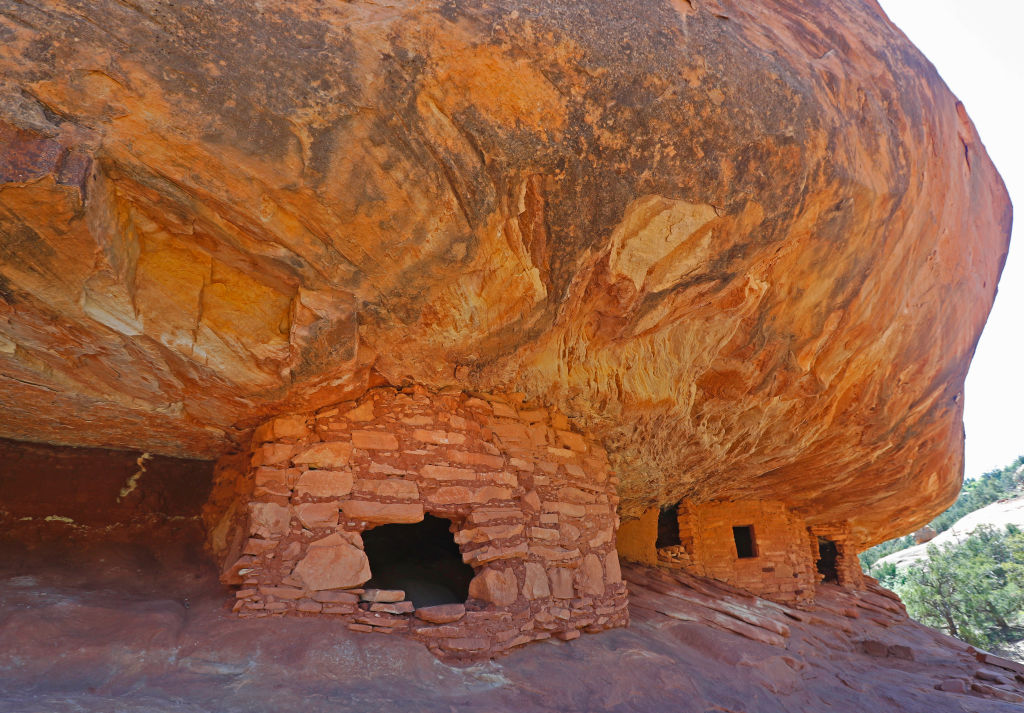
Ancient granaries, part of the House on Fire ruins, are shown here in the South Fork of Mule Canyon in the Bears Ears National Monument on May 12, 2017 outside Blanding, Utah. The newly created Bears Ears National Monument and the Grand Staircase-Escalante National Monument are under review by the Trump administration to help determine their future status. (George Frey / Getty Images)
Nature is often treated as separate from politics — as something we can take for granted while we struggle over human affairs. Climate change has suddenly made nature political — or so it seems.
But in fact, Jedediah Purdy reminds us, it has been that way all along. For two decades, Purdy, a law professor at Columbia, has investigated the political beliefs that shape our understandings of nature, the struggles that play out on the literal terrain of the earth, and the human politics that remake the nonhuman world around us. His new book, This Land Is Our Land: The Struggle for a New Commonwealth, takes up the question of what it means to belong to a land — a country, a nation, a place — and what it means to live with others on it at a time of renewed nationalism and nativism.
Jacobin’s Alyssa Battistoni recently spoke with Purdy about capitalism and ecology, commonwealth and care, and the meaning of work in the face of ecological crisis.