How China’s Counterculture Went Online
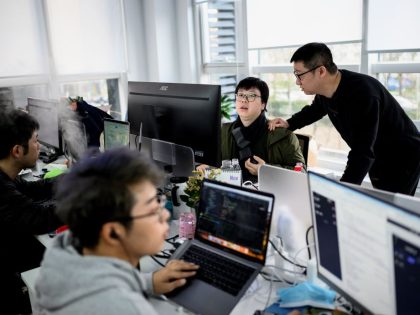
A new book by the journalist Yi-Ling Liu documents the rise and fall of emancipatory politics on China’s internet and offers insights into the limitations of struggling for change online.

A new book by the journalist Yi-Ling Liu documents the rise and fall of emancipatory politics on China’s internet and offers insights into the limitations of struggling for change online.

The opioid crisis in the US is ravaging the country, leaving an enormous human toll in its wake. But rather than dealing with the root causes, the US establishment is using the crisis as a weapon in its conflict with China.
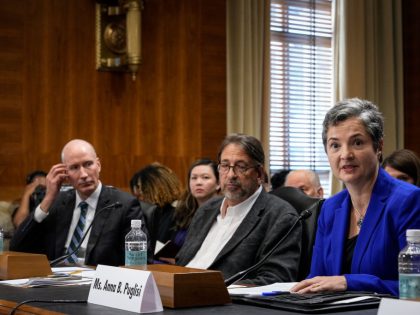
The US government is launching investigations of US academics with ties to Chinese research institutes. It’s a dangerous escalation of anti-China surveillance, which threatens civil liberties while doing little to help those it is supposed to protect.

Paul Keating’s fiery attacks on the AUKUS nuclear-powered submarine deal last week drew attention to Australia’s uncritical support for the US in its China containment policy. This drive for war has been years in the making.

China’s response to the pandemic has sharply contrasted with Trump’s, with a far stronger public health response in China but little aid for the poorest. Both countries’ responses to the crisis show that a strong state doesn’t stand in contradiction with neoliberalism — rather, it’s a key element of it.
Framing China as an environmental villain only serves to excuse American inaction.

Emmanuel Macron’s relatively measured stance on Taiwan should embarrass Canada’s New Democratic Party. Sinophobia in Canadian media has pushed the party to forgo objections to the threat of war and back Washington’s rhetoric in US-China tensions.

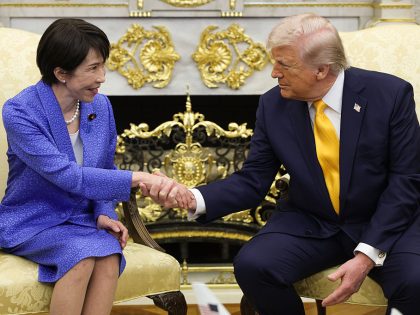
Japan’s conservative leader, Takaichi Sanae, won a supermajority of seats in this year’s general election. Takaichi and her allies are using this position of strength to advance a dangerous militarist agenda as part of Washington’s anti-China front.

Tom Friedman and Steve Bannon are, as usual, wrong. Hardship in the United States can’t be blamed on China’s “economic war” on democracy. It’s the fault of American corporations and elites.

Last last month, dramatic images of Chinese workers jumping over fences at the electronics giant Foxconn’s factories and walking home grabbed headlines. Despite China’s lack of independent trade unions, the workers took collective action and refused to work.

Last week, China responded to new US tariffs with a ban on exporting rare earth minerals. While both countries’ leaders engage in great power rivalry, they risk imperiling the green transition, which will rely on the trade of technology between nations.

Although China now has an urban majority, the key to its development since 1949 lies in the vast countryside. Maoist land reform redistributed land on a huge scale, but the country’s rulers are still reluctant to discuss the darker side of its history.
Few in the West are aware of the drama unfolding in today’s “epicenter of global labor unrest.” A scholar of China exposes its tumultuous labor politics and their lessons for the Left.

Japan’s Liberal Democratic Party has chosen a new leader to boost its chances of retaining power in this month’s election. But the LDP is still fully committed to the militarization of Japanese foreign policy as part of Washington’s anti-China alliance.

The Biden administration has had an open-door policy for effective altruist think tanks in the White House — who have in turn used their influence to push a hawkish anti-China agenda by casting the development of AI as the new arms race.

British literary magazine Granta has focused its latest issue on China during a time of growing geopolitical tensions. It introduces a contemporary Chinese literature written in the minor key by writers driven by political ennui.
There's been a lot of speculation about China's recent currency moves, but it's business as usual for global capitalism.

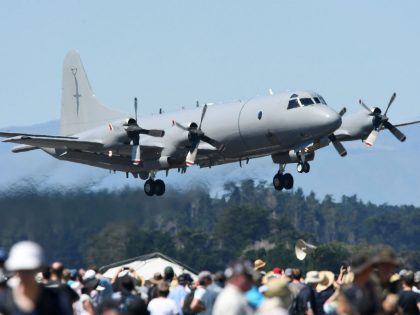
In recent years, New Zealand has massively increased its defense budget and strengthened military ties to the US to ward off what hawks see as Chinese aggression. These moves have only worsened relations between the West and China.

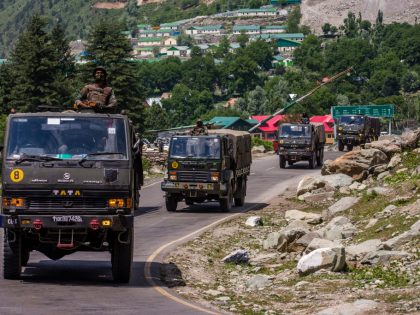
A key challenge for the Left in the coming years will be to reject attempts to stoke tensions with China — tensions the Biden administration has made worse in its early months.

Motivated by fears of the existential risks posed by advanced AI falling into the hands of authoritarian regimes, longtermists have for years been quietly pressing the White House to pursue a more aggressive policy toward China.