The Escalating Crisis on the India-China Border
In the last week, simmering tensions on the Indian-Chinese border in the Himalayas have escalated to open conflict, with fatalities on both sides. India's foreign policy, and not just China, deserves much blame for the escalation.
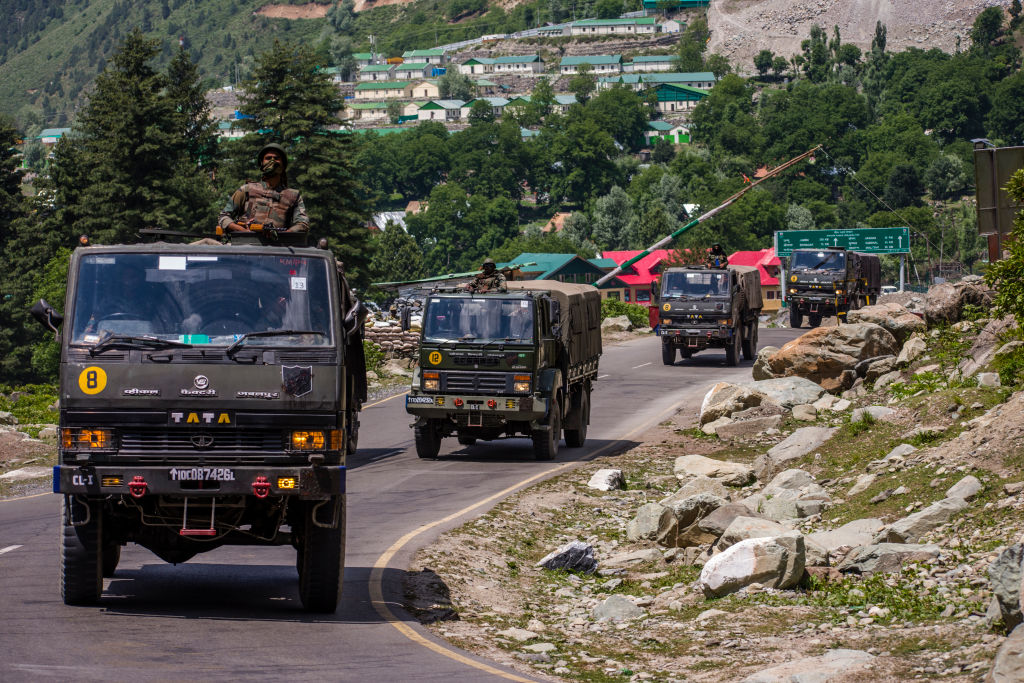
As many as twenty Indian soldiers were killed in a “violent face-off” with Chinese troops on Tuesday in the Galwan Valley along the Himalayas. Photo by Yawar Nazir / Getty
Tensions have been simmering on the border between India and China since early May, with each side accusing the other of incursions into their territory. On June 15, however, in subzero temperatures, face-to-face fighting between both sides’ patrol units broke out in the Galwan Valley, where the Galwan River (a tributary of the Indus River) flows.
A 1996 agreement had prohibited the use of firearms or explosives along this stretch of the border, but iron rods and batons were reportedly used by both sides, and the dangerous conditions of steep terrain and icy cold waters caused several deaths. India has reported twenty deaths — either immediately or from injuries later on — with around twice that number hospitalized; China has not yet disclosed its casualty figures. Not since 1975 have such fatal clashes taken place on this border, making this month’s fighting the most serious face-off between the two countries in decades.
To understand why these hostilities have broken out now, one must look beyond the immediate conditions on the border to the shifting bilateral relations between the two countries. This, in turn, cannot be separated from a survey of the historically evolving geopolitical ambitions of the two countries, and their respective ties and arrangements with other powerful states.