How China’s Counterculture Went Online
A new book by the journalist Yi-Ling Liu documents the rise and fall of emancipatory politics on China’s internet and offers insights into the limitations of struggling for change online.
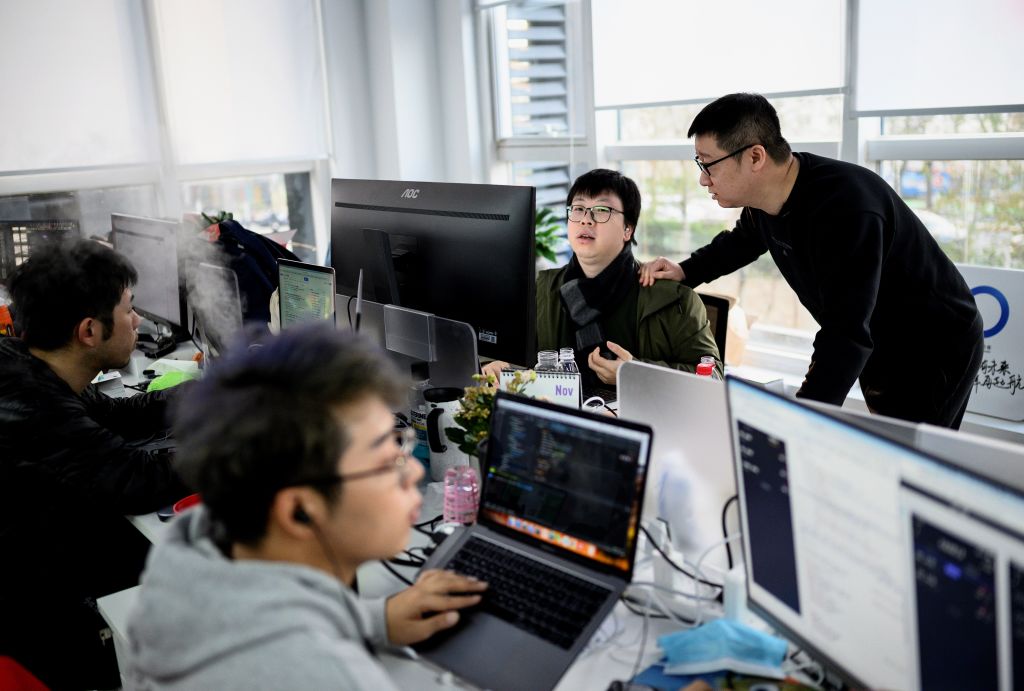
Bill Clinton once quipped that China’s attempt to censor the internet would be as successful as “nailing Jello to the wall.” He was wrong: the Communist Party of China has imposed a censorship regime that governments around the world are copying. (Noel Celis / AFP via Getty Images)
In 2000, Bill Clinton famously quipped that China’s attempts to control the internet were akin to trying to “nail Jello to the wall.” Twenty-six years later, it’s clear that China has succeeded in doing just that. Social media apps and news outlets used universally outside of the People’s Republic are almost nowhere to be found within the country; 1.4 billion people in China have eschewed Instagram, Twitter, and Reddit for WeChat, Weibo, and Rednote. The Communist Party of China has succeeded in creating a digital parallel universe shielded behind “The Great Firewall,” a vast system of online censorship and surveillance meant to clamp down on public dissent and filter out “dangerous” foreign ideas.
But even though China’s internet is today the world’s most ambitious mass censorship project, it was once considered a possible site of emancipation. In The Wall Dancers: Searching for Freedom and Connection on the Chinese Internet, Yi-Ling Liu documents the promises and perils of the Chinese internet from its hopeful beginnings in the 1990s to its present-day seclusion. Liu recounts the stories of five individuals in China, each of whom initially finds in the internet an opportunity for community and creative expression. From LGBTQ rights advocates and feminists to aspiring hip-hop artists, the internet became a place where minority views and subcultures could flourish free from China’s rigid cultural norms.
But The Wall Dancers is more than just a series of biographies. Liu weaves these personal narratives into the broader background of intensifying authoritarianism and censorship, demonstrating the impact of seemingly abstract political shifts on real individuals’ lives. While none of Liu’s characters initially see themselves as anti-government dissidents, they all come to learn that searching for self-realization through the internet will involve an unavoidable encounter with the state.