50 Years After Mao’s Death, China Has Left His Legacy Behind
China’s rulers will pay tribute to Mao Zedong’s role as founder of their state 50 years after his death. But they’ve long since dismantled the economic system he created, swapping Maoist slogans for neo-Confucian rhetoric about a “harmonious society.”
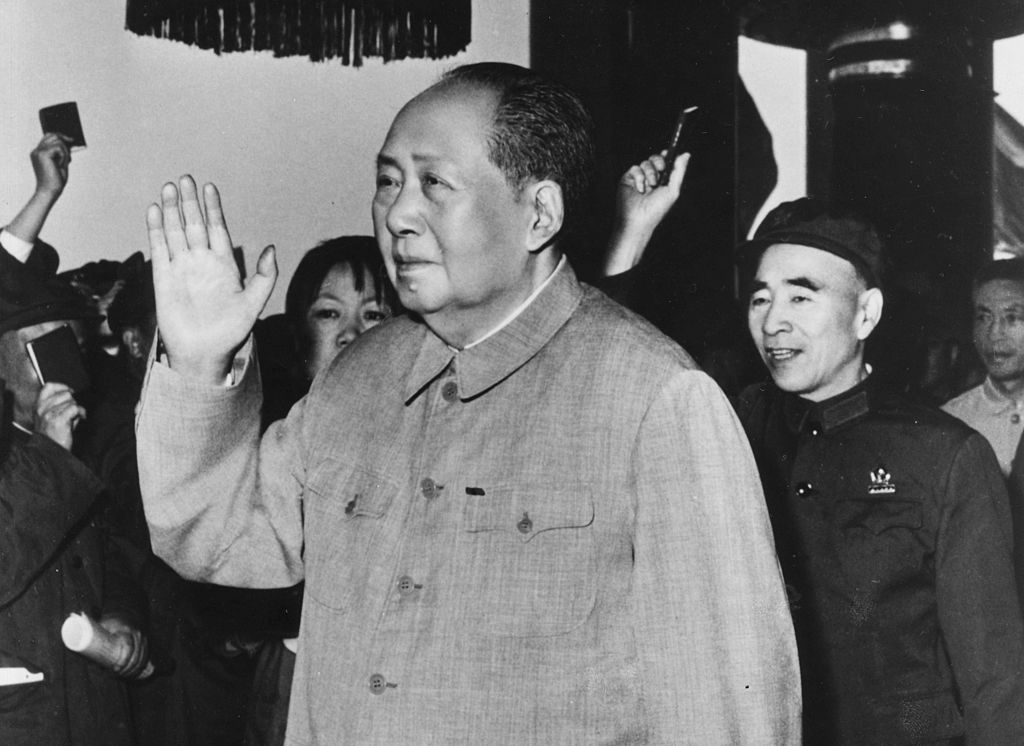
Chairman Mao Zedong, in failing health, waves to a crowd in the final year of his life, 1976. (Keystone / Hulton Archive via Getty Images)
China has created one of the largest working classes in the world — twice. The first time was in the framework of a socialist economic system, fashioned by Mao Zedong after the revolution of 1949. The second time was under a form of state-directed capitalism following Mao’s death, fifty years ago today.
The second transformation is in effect the story of Mao’s legacy undone. The fate of the Chinese peasantry has unfolded in tandem with that of the working class, with a growing number of landless peasants joining the ranks of the urban proletariat.
The Iron Rice Bowl
On October 1, 1949, Mao Zedong stood on top of the Tiananmen Gate in Beijing and proclaimed the establishment of the People’s Republic of China. The dynastic system that had endured for two millennia had come to an end in 1911, but it was far from clear what should replace it.