
The Crimes of Others
Noam Chomsky on Russia, the US media, and the stories told to justify American militarism.
Noam Chomsky on Russia, the US media, and the stories told to justify American militarism.

In the Vietnam War era, radical psychiatrists and antiwar veterans developed a concept of trauma stemming from perpetrating acts of violence. Over the next decade, the idea of soldier trauma was depoliticized and put at odds with antiwar critique.

The war in Ukraine has given new prominence to Russia’s neo-Nazis, as official media echo their xenophobic claims. No longer afraid of repression, such groups circulate videos of spectacular street violence among hundreds of thousands of followers.

US officials suggested that Israel would have to shift to a “lower-intensity” campaign in Gaza from the new year. But Joe Biden is still unwilling to apply any serious pressure, even if his support for Israel’s war threatens to hand victory to Donald Trump.

From the rate and scale of civilian slaughter to the killing of protected groups and the type of munitions, Israel’s war on Gaza is an exceptionally brutal campaign unlike almost anything we’ve seen.

In Romania’s integration into European capitalism, the tough years after the 2008 crisis broke the illusion of continuous progress. The losers of that period are today swinging to far-right parties who tell a story of national victimhood.

As Washington scales down its US defense commitment to Europe, many of the continent’s leaders are talking of making the EU a military superpower. It’s an unrealistic prospect, but it risks becoming the key focus of EU spending.

The International Criminal Court has issued arrest warrants for Benjamin Netanyahu and his former defense minister Yoav Gallant. The hostile response to the warrants from Israel’s Western allies is a calculated assault on international law.
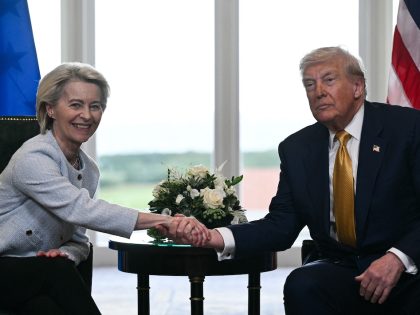
EU chief Ursula von der Leyen has signed Europe up to a humiliating, unequal trade deal with the United States. The terms dictated by Donald Trump reflect Europe’s vassal status as an increasingly junior partner to US empire.

Joseph Stalin died 70 years ago today, having stamped his indelible mark upon the Soviet system. Stalin’s legacy continues to haunt the post-Soviet landscape, right up to the present war with Ukraine.

Last week's shooting of Slovakia’s prime minister, Robert Fico, is the product of a long intensification of political conflict. But beneath Slovakia’s overheated politics is a fundamental hollowness — and an impasse in the neoliberal order built in the 2000s.

We spoke to some of the Democratic Socialists of America members deciding the future of the country’s largest socialist organization this weekend.

Donald Trump’s efforts to claim Greenland for the US is part of a wider push toward militarization of the Arctic. Conflicts thousands of miles away, like the Russian war in Ukraine, are already having an impact on the peoples of the region.

Azerbaijan’s brutal offensive in Karabakh has killed hundreds and forced countless Armenians to flee their homes. And its expansionist agenda isn’t over yet.

From autoworkers in the US to railworkers in the UK, organized labor is enjoying a new lease on life. In an interview, former Labour leader Jeremy Corbyn explains why he thinks militant organizing represents the trade unions’ future.

The media cheered Moderna’s pledge not to enforce the patents on its COVID-19 vaccine. But vaccines like theirs are still protected by intellectual property laws designed to keep medical knowledge out of the public’s hands.

Three states in former East Germany face elections in September, with the far-right Alternative für Deutschland leading polls. The party is exploiting voter discontent with the fallout of reunification — and the Left’s lack of a convincing alternative.

Statues of Lenin, once ubiquitous in Communist countries, now cast shadows across the capitalist world.

In 2019, a coalition of conservative forces responded to Nicolás Maduro’s authoritarian turn and Venezuela’s ongoing economic crisis by launching a coup. Despite backing from the US and Venezuelan capital, the conspirators failed. A new book explains why.

As wars ratchet up across the globe and the ecological crisis wreaks widespread havoc, internationalist politics is more necessary than ever. Cornel West explains why the fight for climate justice must join with an anti-militarist movement now.