Instability Comes Home
Here's what's behind the turbulence shaking US politics — and why it will likely only get worse.
Here's what's behind the turbulence shaking US politics — and why it will likely only get worse.

Rather than benefiting workers in the US and elsewhere, US foreign policy enriches corporate elites and the national security state. Our task is to rebuild the left institutions that bind workers together across borders and fight for a more just world order.

Bernie Sanders has been able to withstand Donald Trump's onslaught of attacks even as Joe Biden, like Hillary Clinton before him, is watching his lead collapse.

Despite its lofty rhetoric about sovereignty and human rights, the Biden administration has been working overtime to kill a congressional attempt from Bernie Sanders to end US support for the Saudi war on Yemen.

Israel has made no secret of it: it has embarked on a genocidal plan to “create conditions where life in Gaza becomes unsustainable.” And Joe Biden is its accomplice.

The last big energy crisis in the 1970s helped trigger a drastic shift from Keynesianism to neoliberalism. Today, we need to move in the opposite direction, away from the carbon-fueled neoliberal order responsible for another outbreak of economic chaos.

Given its powerful oil oligarchs, it’s easy to assume Russia is the quintessential climate denier. Yet the rise of corporate ESG policies in the country suggests Russian capital wants to greenwash just as much as its Western peers.
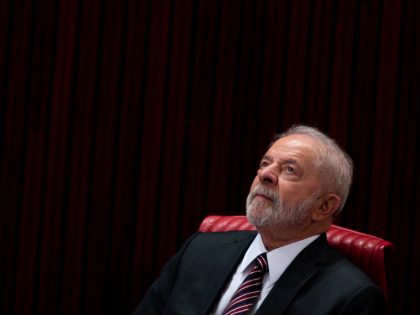
Brazil’s president-elect, Lula da Silva, appears eager to challenge Western dominance. But instead of siding with China against the US in a new cold war, he’s likely to pursue a sovereign third path in the vein of the 20th century’s Non-Aligned Movement.
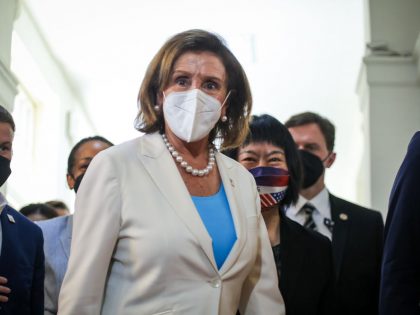
Nancy Pelosi is in Taiwan. The trip will accomplish nothing except ratcheting up tensions with one nuclear-armed superpower while the United States is already in a proxy war with another.

A group of Communist Party–aligned Yiddish poets in the 1930s sought to bridge national and cultural divides through language. Their poetry remains a milestone of internationalism in the arts.

The protests in Belarus have widely been painted as a pro-Western “color revolution” or “Minsk Maidan,” ignoring the deeper reasons for popular discontent with president Alexander Lukashenko. Jacobin spoke to left-wingers in Belarus about the forces behind the protests and the prospects of organized labor asserting its own agenda.

On Friday, Moroccan police murdered at least 37 migrants at the border with Spain. The massacre shows how the European Union relies on authoritarian regimes to police its borders — and the shallowness of the Spanish government’s “progressive” image.

For a brief period after World War II, Third World nations played an active role in shaping the world economic order and fostering development. For all its promises and a few success stories, neoliberalism hasn’t done the same.

In Russia, Vladimir Putin’s evil genius matters less than pressures from the ultrarich, US foreign policy, and the ravages of the neoliberal Yeltsin years.
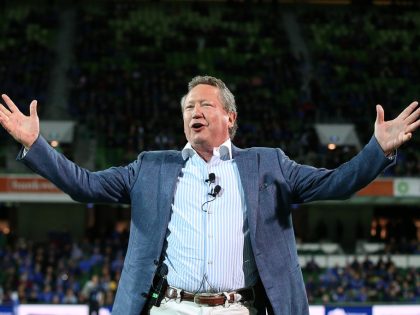
Australian billionaire Andrew “Twiggy” Forrest has been hailed as a climate messiah for his pursuit of green energy. But his vision has nothing to do with improving human lives and shows why the green transition can’t be handled by the elite.

Leading French automaker Renault is reportedly converting some production sites to make military drones. It’s stirred discontent among car workers in France, who say they didn’t sign up for Europe’s rearmament push.

Fear of killer robots has obscured a deeper shift in warfare: The fetish of automation masks the commodification of combat judgment. Corporate software reshapes war while preserving just enough procedural “human control” to deflect responsibility.

European states have armed Israel through almost two years of genocide in Gaza. While the European Union’s trade deal with Israel is meant to be conditional on human rights, in practice EU leaders have turned a blind eye to its crimes.

The lack of popular rebellion in Russia is often cast in terms of mass depoliticization. Yet working-class Russians do express political attitudes, often voicing a familiar frustration that the future has been taken from them.

Polish president Karol Nawrocki is shutting off welfare benefits for Ukrainians in Poland. Earlier welcomed as refugees, Ukrainians are now pushed into a role as second-class guestworkers in their host country.