The Ban on Russian Oil Is Another Way for Germany to Assert Its Power
Europe’s partial ban on Russian oil is forcing states to look for alternative energy sources. But Berlin’s shifting positions show that Germany's concern is its own power on the world market — with green issues little more than a fig leaf.
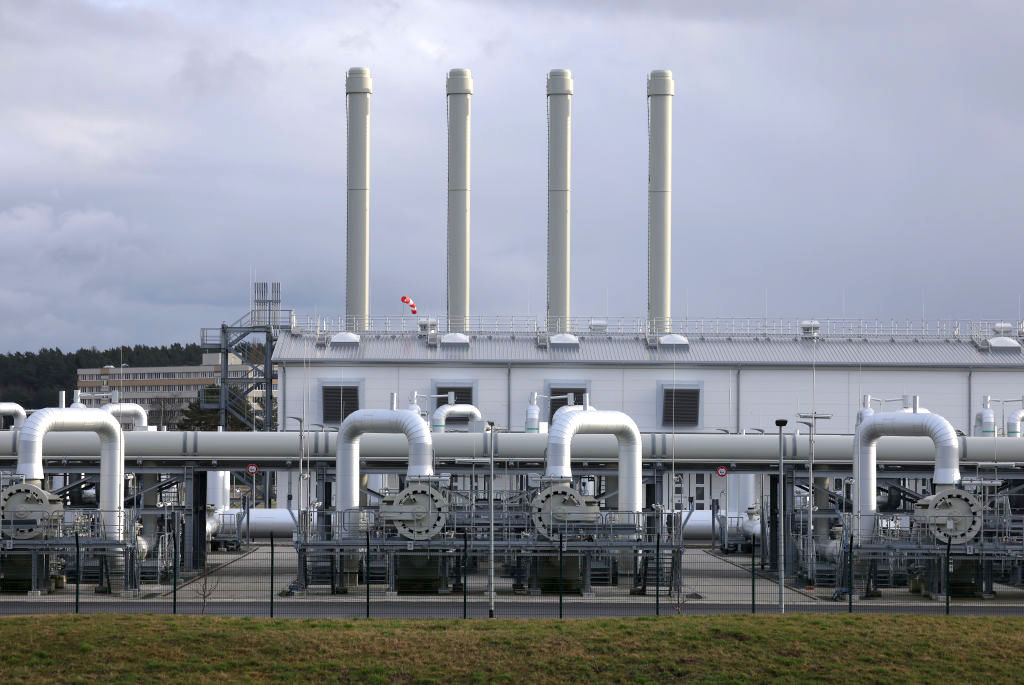
The receiving station of the Nord Stream 2 gas pipeline near Lubmin, Germany. (Sean Gallup / Getty Images)
An oil embargo against Russia is coming, after an agreement by ministers from across the European Union on Tuesday night. An earlier proposal for a comprehensive ban on Russian oil imports failed due to resistance from Viktor Orbán’s Hungary, long close to Vladimir Putin. The twenty-seven heads of government instead decided to ban tanker oil specifically — currently representing around two-thirds of current imports from Russia.
Plans for a broader embargo had been unveiled already one month ago. According to the plan, imports of Russian crude oil would be phased out completely within six months, and of petroleum products within eight. In Germany — a key Russian customer — Chancellor Olaf Scholz declared his country well-prepared for this embargo, with only one refinery in Schwedt, Brandenburg, still completely dependent on Russian imports. His economics minister, Robert Habeck, added that the transition period would be “sufficiently long that we can take all precautions to create alternatives to Russian oil.” The exception of Schwedt is mentioned because Germany’s government admitted the conversion of the energy supply could be somewhat “halting” at the regional scale.
So, what of Germany’s widely discussed “dependence” on Russian imports? A recent report in the Süddeutsche Zeitung adds important context. It explains that “according to the economics ministry, Germany’s dependence on Russian gas has indeed fallen since the beginning of the war from 55 percent previously to about 35 percent. By summer 2024, a gradual reduction to ten percent of gas consumption was possible, it said. The German government had warned of severe damage to the German economy in the event of a gas embargo against Russia.”