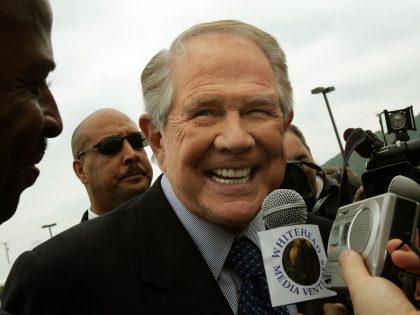
Learning From Pat Robertson
Once marginal and reviled, evangelical Christians became a vital political bloc in the 1980s thanks to resolute organizing.

Once marginal and reviled, evangelical Christians became a vital political bloc in the 1980s thanks to resolute organizing.

Put the mainstream Democrats aside. After the midterms, more left-wing insurgents are going to the House, Bernie Sanders has two strong allies in the Senate, and progressive ballot measures passed everywhere. Election night was a good night for the Left.

Progressive and leftist voters are always told we’re too extreme. The midterm results should quash that narrative.

If Democrats survived this week’s midterms because they increased their share of wealthier voters, it’s a bad omen for building a working-class coalition around left-wing politics. Something needs to change.

Ted Byfield, the founder of the far-right Alberta Report, left an indelible mark on Canadian conservatism. He was responsible for emboldening the most racist and anti-worker elements of the Right.
In 1996, thousands of trade unionists and activists decided to build an independent party. Why did the effort fail?
The political economy of Marissa Mayer.

Pedro Carrizales — “El Mijis” — came to Mexican politics by an unconventional route: a former gang member from the barrios of San Luis Potosí, he is now a left-wing state legislator, dedicated to the plight of Mexico’s poor young people, collateral damage of the war on drugs.

Florida governor Ron DeSantis is sometimes presented as a “normal” Republican who doesn’t share the antidemocratic impulses of Donald Trump. His crusade to erode the freedom of the press makes a mockery of that assessment.

Mrs. America, the new miniseries about Phyllis Schlafly, doesn’t want us to come away with a harsh view of its subject. But we should: Schlafly’s right-wing views were consistently monstrous, doing untold damage to the country.
By fixating on the Supreme Court, liberals have inherited the framers’ skepticism of popular sovereignty and mass politics.

Right-wing legal interests funded by the megawealthy are routinely feting lower-court judges and treating them to all-expenses-paid trips, which effectively function as a reward system for judges who espouse and maintain hard-line conservative legal views.
Three socialist feminists reflect on the Women's March and what comes next in the movement to resist Trump.

Argentina goes to the polls today to decide between the centrist candidate Sergio Massa and far-right libertarian Javier Milei. The stakes could not be higher.

Once marginal and reviled, evangelical Christians became a vital political bloc in the 1980s thanks to resolute organizing.

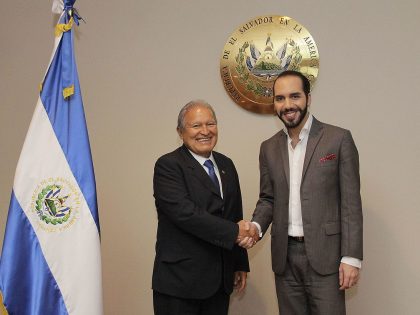
In the wake of an electoral rout and growing internal divisions, El Salvador’s left is facing its starkest crisis in decades.

There aren’t many European presidents who’d quote Marxist economists or praise Fidel Castro. But Ireland’s Michael D. Higgins is widely backed across the political spectrum.

On October 24, 1975 over 90 percent of Icelandic women refused to work. The aim: to show how much society depended on women’s labor, from farms and factories to the home.

Diane di Prima’s political poetry took on America’s oppressive power structures while her activism made her a target for the FBI. A new edition of her work shows that we are still fighting the same battles as di Prima.

Poland’s right-wing Law and Justice Party is promising a “Polish version of the welfare state.” Liberals are promising more austerity. Guess who’s going to win today’s general election.