
Russia’s War Machine Is Creaking
Russia’s war economy has this year suffered some of its worst setbacks since the invasion of Ukraine. An under-strain Russian society isn’t revolting yet. But Russians’ doubts about the war are growing.
Russia’s war economy has this year suffered some of its worst setbacks since the invasion of Ukraine. An under-strain Russian society isn’t revolting yet. But Russians’ doubts about the war are growing.

In his first one hundred days as mayor, Zohran Mamdani has realized that New Yorkers — and all Americans — need to see the government working for them.

A new federal proposal would punish banks that have committed crimes by preventing them from managing retirement funds. Wall Street disagrees — and is deploying an army of lobbyists to block the proposal.

Hillary and Chelsea Clinton are producing a new TV series about female Kurdish fighters. We can expect a sanitized production that somehow fails to mention that YPJ forces in Rojava are leftists who oppose everything the Clintons represent.

Protesters against a massive police militarization complex in Atlanta have been slapped with domestic terrorism charges for throwing bottles and breaking windows. That should be deeply worrisome for anyone who values the right to dissent.

By calling for a ban on for-profit charter schools, Bernie Sanders has gone further than any other candidate to confront the privatization of our schools. But we can’t fully defend public schools if we let nonprofit charters off the hook.

Tech workers occupy a contradictory location in the American class structure. On the one hand, many are well paid and identify both as professionals and with management. On the other, the proletarianized aspects of their work can offer opportunities to seize for organizing as workers.

Workers in India last week launched a general strike that brought out an estimated 250 million people, arguably the largest in human history. Now, they’re joining hands with farmers to protest Narendra Modi’s pro-corporate, far-right agenda.

A strategic focus on uniting the working class doesn’t mean marginalizing the struggle against racism and sexism.

In 2024, the Scottish National Party suffered its worst election setback for decades at Labour’s hands. But the calamitous record of Keir Starmer’s government has given the party and its leader John Swinney the chance to recover its dominant position.

Under the short-lived Medevac Legislation, 192 refugees were transported from offshore detention to Australia for medical treatment. Today, most of them are still imprisoned in hotels around the country, where they have to endure a total, indefinite lockdown.

Barack Obama thinks Medicare for All is a good idea. His support is welcome — but this time, we won’t accept any compromises on a universal, free public health program.

Combating the nationalism of right-wingers like Giorgia Meloni shouldn’t mean defending the neoliberal consensus.
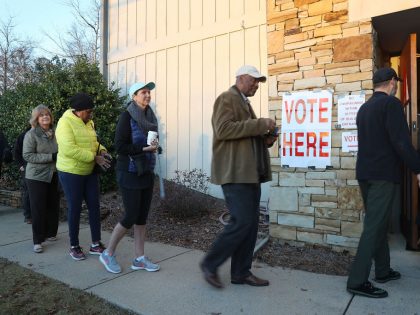
Republicans captured the South through racist “dog-whistle” appeals and by exploiting the deindustrialization that ravaged the region after NAFTA. But we can't write off the South as hopelessly reactionary — there’s a base for progressive politics that speaks to workers of all races.

A dive into mid-century American history uncovers how a strong labor movement was pivotal in building social unity, equality, and advancing civil rights. While nostalgia might seem like a dead end, the past holds valuable lessons for shaping a better future.

For years, Joe Biden was determined to make Democrats the tough-on-crime party. The 1994 Crime Bill and its expansion of mass incarceration was his crowning achievement.

Billionaire Harlan Crow’s firm advocated for rolling back the very wetland protections the Supreme Court just gutted. The obvious conflict of interest raises questions about not just the ruling’s legitimacy but the entire court’s.

The Food and Drug Administration has approved controversial drug treatments for Alzheimer’s disease amid excess deaths, questionable efficacy, and conflicts of interest between regulators, patient advocates, and Big Pharma.

Born at the height of the Clinton era, the Working Families Party thought it had found a way to build a labor party in America. Today, it’s advancing progressive politics with a far narrower base than it expected.

Reforms instituted by the US–Mexico–Canada Agreement have been critical to enforcing labor rights and supporting independent unions in Mexico. Protecting and expanding these measures can help to improve pay and working conditions across the continent.