Theater for the Many
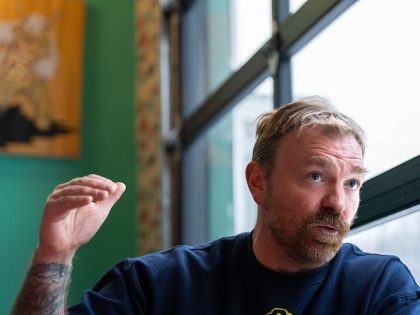
At a time when theater is prohibitively expensive for the vast majority, the theater company Working Theater partners with labor unions to recreate a working-class theater for the 21st century.
Page 1 of 1015Next
Opal Lee is a writer.

At a time when theater is prohibitively expensive for the vast majority, the theater company Working Theater partners with labor unions to recreate a working-class theater for the 21st century.

A century ago, the Brotherhood of Sleeping Car Porters launched a union drive against a railroad giant, changing the course of the twentieth century and forever entwining the causes of labor and black civil rights.

Nuclear energy is still regarded with skepticism. But nuclear power’s critics wildly overstate its dangers, and preserving and expanding this energy source is essential to a just green transition.

Because capitalism orients people toward profit rather than allowing us to pursue our interests freely, it inevitably separates humans from the creative act. AI art is just the slop frothing up from that gap.

Europe’s conservative politicians are increasingly obsessed with online culture wars rather than broad projects for society. It reflects a postmodern shift in which once deep-rooted party organizations are replaced by skirmishes on social media.

FIFA’s newly announced peace prize for Donald Trump is a craven act of stroking his ego. The 2026 World Cup is shaping up to be among the worst cases yet of sports bending to politics.

President Gustavo Petro’s efforts to halt the genocide in Gaza have brought Colombia into conflict with the neoliberal order. To hold Israel accountable, nations will have to challenge their free-trade agreements and reclaim their economic sovereignty.

Critics of crime fiction dismiss the genre as hopelessly reactionary, but its history tells a different story. From hard-boiled American detective novels to the explosion of Scandi-noir, crime fiction has been deeply influenced by socialist writers.

The Trump administration is working to privatize a legal defense program for tens of thousands of unaccompanied immigrant children, opening the door for a for-profit ICE technology contractor to take over in partnership with Angelina Jolie’s NGO.

Time and again, New York City’s dependence on the rich and private corporations has led it into fiscal crisis. As mayor, Zohran Mamdani has the opportunity to start building an economic base that better serves the needs of the city’s working class.

Frustrated with the state of America, some on the Right have come to embrace postliberalism, an ideology that seeks to invigorate conservative politics by rejecting equality.

The launch of a new party was meant to reenergize the British left. But Your Party’s founding conference showed a Left that had forgotten the outward-facing mass politics of the Corbyn-era Labour Party.

Janet Mills, the governor of Maine, is Democratic Party leaders’ choice for the state’s key 2026 Senate race. She has spent her time in office vetoing protections for workers and tenants and taxes on the wealthy.

Capitalism is a global economic system, so a proper chronicle of its rise to dominance has to examine the entire world, as historian Sven Beckert does in his massive new book, Capitalism: A Global History.

As private health insurers jack up premiums for tens of millions, a majority of Americans now want Medicare for All — even if it entails eliminating private health insurers and raising taxes.

Authoritarian leaders like to rally their populations against external threats, and Donald Trump has decided that Venezuela is a perfect candidate. So far, though, the public isn’t buying it.

For America’s VC-dominated tech industry, AI hype isn’t just a crazy by-product — it’s a structural part of the US economy in which capital tries to write our destinies. We shouldn’t let it.

The Trump administration’s proposals for peace in Ukraine sound like a real estate deal, where the United States gets a payoff for handing over Ukrainian land. But with Kyiv’s leverage shrinking, the country may be forced to swallow a grim deal.

The shah of Iran faced a secular opposition that wanted to restore constitutional government. Washington continued to back his dictatorship as it faced mass protests, paving the way for Ruhollah Khomeini to establish a theocratic system after its fall.

Despite the inherent contradiction between liberalism and extreme ethnic nationalism, many people still refer to themselves as “liberal Zionists.” But when liberal principles come under attack by Israel, they’re nowhere to be found.