Unable to Accept Defeat, Donald Trump Presses On in Iran
Iran has destroyed much of the US’s military infrastructure across West Asia and strengthened its position by controlling the Strait of Hormuz — yet Trump has learned nothing from his defeat.
Arron Reza Merat was a correspondent in Tehran. He writes about religion and politics.

Iran has destroyed much of the US’s military infrastructure across West Asia and strengthened its position by controlling the Strait of Hormuz — yet Trump has learned nothing from his defeat.

Neither the US nor its allies are ready to deal with the consequences of an escalation of their war with Iran. Yet Donald Trump has painted himself into a corner, and it’s unclear whether he has a face-saving way out.

A new book defends a Marxist theory of the origins of capitalism. Along the way it shows why understanding the transition from feudalism can help us make sense of the present.

Panicked, Donald Trump has threatened to destroy Iran’s energy infrastructure by 8 p.m. today unless concessions are made. But Iran’s position is stronger than the president is willing to admit.

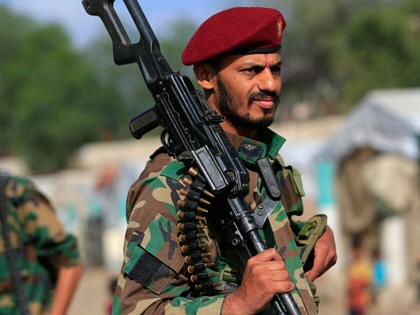
Pushed by Tehran and domestic pressure, Yemen’s Houthis attacked Israel and joined the regional conflict. But they remain wary of reigniting their costly war with Saudi Arabia.

There is little sign that Israel is achieving its war aims against Iran. But Israel is the only state in the region with nuclear weapons — and it may use them if it feels like it has run out of options.

The US’s bad faith engagement in its negotiations with Iran have undermined any chance of a quick deescalation of the war. Fighting for its survival, Iran will give Israel the regional war it craves.

Framed as a strike on “evil,” Washington and Tel Aviv’s attacks leave Iran with few off-ramps. Tehran’s incentives now point toward escalation as a matter of survival.

Amid an internet blackout, reports describe waves of catastrophic violence across Iran. Yet the ruling order remains firmly in control, even as an economic crisis erodes the welfare systems that once underpinned its legitimacy.

The protests sweeping through Iran are not the first of their kind. But the threat of a continuation of the Israel-US war has led Tehran to see them as an existential threat.

Donald Trump is once again threatening war with Iran just six months after bombing the Islamic Republic in June. Part of the reason for his hawkishness is his closeness to Israel, whose increasingly reckless actions threaten the whole Middle East.

Evangelical Christian Zionism used to be one of the most coherent voting blocs in the US. But cracks are starting to appear in this coalition as its members grow disillusioned with Israel and enamored by Christian nationalism.

Iran has long held that conflict with Israel can be managed by limiting its retaliation within clearly defined parameters. But through its preemptive attack, Israel has revealed that it is not a rational actor and upended the rules of war.

Sanctioned, isolated, and living under a neoliberal state seemingly out of options, Iranians go to the polls today.