When Rank-and-File Unionists Took On the Mob
In the 1970s and ’80s, rank-and-file workers often took great risks to attack a culture of corruption in the labor movement — including Mafia-controlled union locals.
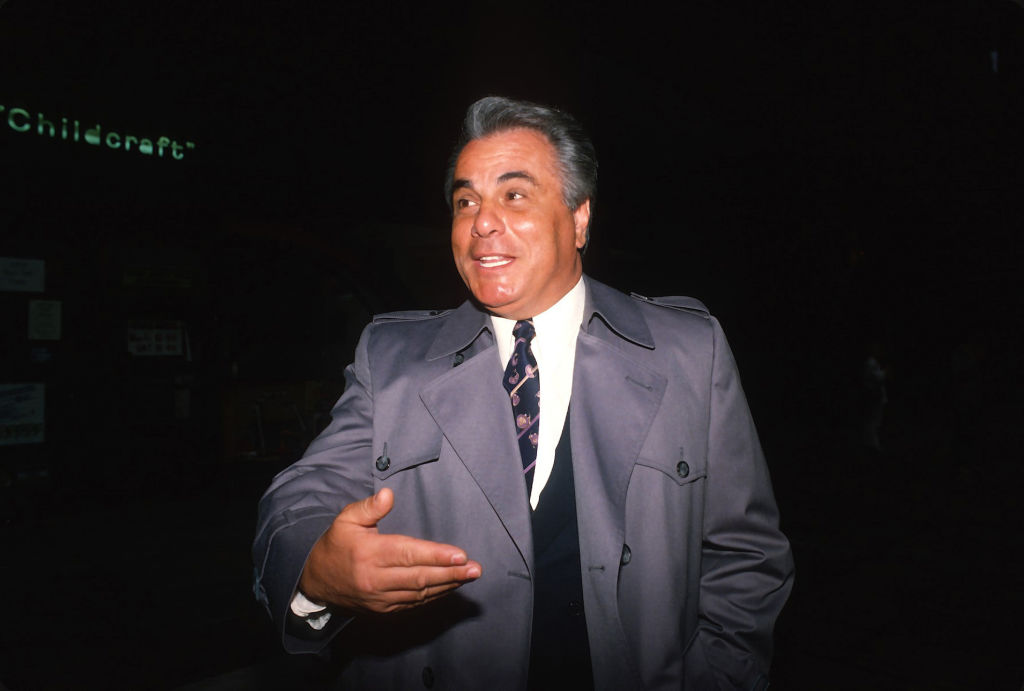
As head the Gambino crime family, John Gotti siphoned hundreds of thousands of dollars from Teamsters Local 282. (Yvonne Hemsey / Getty Images)
My first contact with labor reformers in New York City was nearly fifty years ago. Like many rank-and-file dissidents before and since, these critics of union corruption were prophets without honor in their own union local.
Teamsters Local 282 was at the time one of the most mobbed-up affiliates of a national union, then rightly notorious for its organized crime ties. Its members drove trucks full of cement or other building materials to local construction sites, while Local 282 leaders like Bobby Sasso extorted bribes to insure labor peace or allow nonunion operations.
Sasso held various union jobs for twenty-five years, but his real boss was not the drivers, whose dues paid his salary. It was a wise guy from Howard Beach in Queens named John Gotti. As head the Gambino family, Gotti siphoned hundreds of thousands of dollars from the local, until a hit man responsible for nineteen murders — Salvatore “Sammy the Bull” Gravano — became an FBI informant and helped put the “Teflon Don” behind bars for the rest of his life.
Rank-and-filers critical of employer shakedowns, no-show jobs for mob associates, and other crooked schemes in Local 282 exhibited enormous courage in the 1970s and ’80s. They called their dissident caucus “Fear of Reprisal Ends” (FORE) — and suffered retaliation in multiple forms for organizing it. FORE was affiliated with the Professional Drivers Council (PROD), a Ralph Nader–inspired advocacy group that I worked for at the time and helped merge with Teamsters for a Democratic Union (TDU) in 1979.
Most of the five thousand “ready-mix” drivers in 282 steered clear of FORE, because its key activists were so regularly threatened, harassed, or blacklisted. Nevertheless, a FORE candidate who ran for local union president in 1978 got 42 percent of the vote in a low-turnout election — before being fired along with his running mate. The 282 president reelected that year was John Cody, convicted of labor racketeering just a few years later by a US attorney who described the local as “a candy store for the mob.”
Some deeply cynical Local 282 members continued to view FORE as a bunch of “Boy Scouts.” Or worse yet, “Teamster enemies” working for “the feds,” as local officials like Cody and Sasso always claimed — until Sammy the Bull actually took that route to the federal witness protection program in 1991. Gravano’s trial testimony against Gotti included this proud underboss boast about who was really in charge of Local 282: “I had control of the whole thing. The president [Sasso], the vice president, the secretary-treasurer, delegates, foreman. . . . If I wanted a foreman in there, I’d tell Bobby, ‘Put this guy to work.’”
A Changing Blue-Collar Union Culture
In the last half-century, the culture of blue-collar unionism in the Big Apple has become far less Mafia-influenced, due in large part to successful union democracy and reform struggles. In the 1990s, a longtime leader of Teamsters Local 804 in Queens, Ron Carey, became the international union president, with the backing of the Teamsters for a Democratic Union (TDU) reform caucus and its chapters around the country.
Under Carey’s leadership, the Teamsters conducted a successful nationwide strike at United Parcel Service (UPS), the union’s largest employer, in 1997. Local 804 continues to be a model Teamster local today, nurturing rank-file-activists like Anthony Rosario, a UPS veteran named “2025 Labor Organizer of the Year” by In These Times, because of his efforts to organize nonunion Amazon workers.
The changes, made possible when IBT rank-and-filers won the right to vote on their top officers, became an inspiration for union reformers elsewhere. Just three years ago, United Auto Workers members — long dominated by the corrupt and undemocratic Administration Caucus — used referendum voting to put opposition candidates like now-President Shawn Fain in office, after decades of tightly controlled convention elections that favored the incumbents.
But in old-fashioned business unions — still run from the top down, nationally or locally — institutional loyalty runs deep. Where grifters and goons still hold power in New York City, they’re usually savvy enough to deflect criticism of themselves by claiming that internal dissent threatens the very existence of trade unionism itself. In the Trump era, rank-and-file defeatism — about the inevitability of corruption in politics, big business, and organized labor — is even easier for incumbents to exploit.
This is the local labor terrain explored by the late Jane LaTour, a much-beloved labor organizer, journalist, and advocate for women in the building trades, in Backroom Bargaining: Racketeering and Rebellion in New York City’s Labor Unions. Her previous book, Sisters Inside the Brotherhoods, was an outgrowth of her work for the Women’s Project of the Brooklyn-based Association for Union Democracy (AUD). Her new volume again utilizes oral history interviews, this time with predominantly male building service employees, painters, carpenters, utility workers, maritime union members, and Teamsters who joined FORE to fight labor-management corruption in the construction industry.
The Law and Union Reform
Backroom Bargaining also profiles two of the most important late twentieth-century helpers of union dissidents. They were Herman Benson, the socialist founder and longtime director of the AUD, and Burton Hall, a Yale Law School graduate and former public defender who helped his labor clients utilize the “membership bill of rights” created by the Landrum–Griffin Act of 1959. As LaTour recounts, it was Benson “who built a network of lawyers, scholars, and public intellectuals willing to aid the cause of often ostracized union rebels” and Hall who waged “tenacious court battles to force the union establishment to respect their hard-to-enforce rights.”
One of the most interesting chapters in the book deals with the limitations of legal remedies, as necessary as their pursuit has been in countless union democracy and reform struggles over the last sixty-five years. In a chapter entitled “We’re from the Government and We’re Here to Help You,” LaTour recounts the debates that have engaged several generations of union members and officials about varying forms of “government interference” in union affairs.
These have ranged from US Department of Labor investigations leading to mandated reruns of improperly conducted union elections to longer-lasting judicial oversight resulting from Justice Department lawsuits filed under the Racketeer Influenced and Corrupt Organizations (RICO) Act. On the question of the law’s usefulness to reformers, LaTour quotes Ken Paff, a cofounder of TDU still involved with the group today: “We don’t rely on the government or the law. We use the government and the laws, and we rely on the rank and file.”
All the workers who figure in LaTour’s book, who experienced “the gap between the ideal and the disheartening reality of the U.S. labor movement,” were dead or long retired before Labor Notes developed one of its most popular current training sessions. That workshop addresses a still-relevant question: “What to Do When Your Union Breaks Your Heart?” According to former teachers’ union organizer and Labor Notes board member Ellen David Friedman, the target audience is workers “wondering how it is that their union, an organization that exists to make work life better, is in the hands of people who are not doing that?”
As Backroom Bargaining reminds us, the struggle to hold union leaders accountable — and replace them, when necessary, with workers more committed to union democracy and reform — is often difficult and frustrating. But it has rarely been as risky as challenging the mob associates who bullied and betrayed the hard-working members of Teamsters Local 282 long ago.
Fortunately, groups like Labor Notes and the AUD both remain on duty as essential allies of such efforts. And readers of LaTour’s account of labor “racketeering and rebellion” in the past will find it to be a useful “road map for the fight against autocracy and corruption” everywhere either exists in our country today.