Alexander Kluge Fought and Won Against the Culture Industry

The death of the filmmaker and Marxist theorist Alexander Kluge marks the loss of a voice that insisted the horrors of the last century were not confined to the past. They live on in the continued existence of imperialist wars.
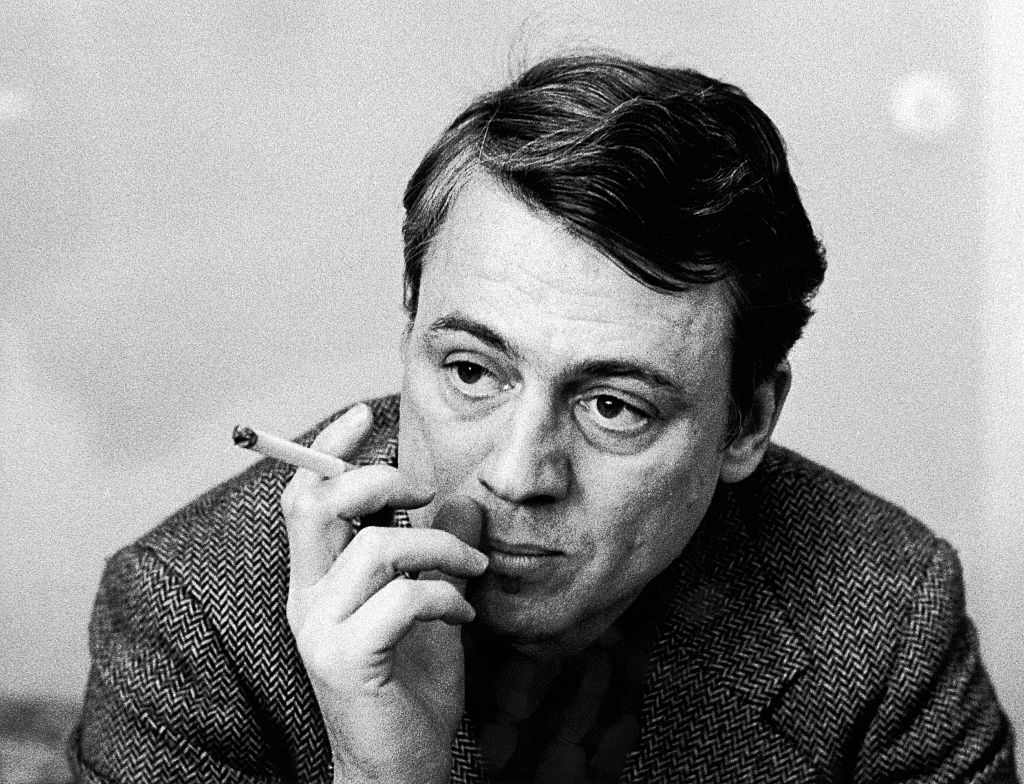
The filmmaker, novelist, and Marxist theorist Alexander Kluge set out to show that art, freed from commercial constraints, could offer a vision of what a life without capitalist domination could look like. (Rudolf Dietrich / ullstein bild via Getty Images)

When I found out that Alexander Kluge had died at age ninety-four on March 25, I picked up my copy of Case Histories, his first short story collection. Kluge was a postwar polymath: an innovative filmmaker, television producer, Marxist theorist, lawyer, and a writer of provocative and political fiction.

He wrote Case Histories, so the story goes, in the cafeteria of a West Berlin film studio in 1959. His mentor, Theodor Adorno, had arranged for Kluge, at that time the Frankfurt School’s young lawyer, to help the exiled German director Fritz Lang make his return to filmmaking in his home country.

Kluge found the experience of watching the great auteur wrangle with German movie executives depressing. Lang was, he felt, disrespected by producers who constantly overruled him. But the episode had some value for Kluge. It helped inspire a deep suspicion of the commercial aspects of cinema and pushed him to guard his artistic practice against submission to a system that turned a work of art into formula.

How did the fiction he wrote in that West Berlin cafeteria protect itself from subordination to the commercial interests of the market? The narrator in Case Histories follows German protagonists and the paths they took from 1933 through World War II in what would become Kluge’s trademark, sometimes grating, sometimes nauseating, almost cryptic fictive voice. This was a style that was impersonal yet morally concerned, a stickler for process, eager to juxtapose (sometimes comically), unafraid to plow forward against worries that the irony may be too heavy-handed. Read one Kluge short story, and it’s clear that he is hostile to the idea of a smooth reading experience.

A representative example is the beginning of “Anita G.”:

The girl Anita G., crouching under the staircase, saw the boots when her grandparents were taken away. After the capitulation her parents returned from Theresienstadt, something no one would have believed possible, and founded factories in the vicinity of Leipzig. The girl attended school, looked forward to a normal life. Suddenly she became frightened and fled to the Western zones. Of course she committed thefts. The judge, who was seriously concerned about her, gave her four months. She only had to serve two, the rest she spent on probation in the care of a probation officer. This woman was overzealous in her duties — the girl fled to Wiesbaden. From Wiesbaden, where she found peace and quiet, to Karlsruhe, where she was pursued, to Fulda, where she was pursued, to Kassel, where she was not pursued, to Frankfurt. She was apprehended and (there being a warrant out for breach of probation) transferred to Hanover. She escaped to Mainz.

Why does she constantly infringe on private property as she travels?

So much of the writing here slows down the reader. Each new sentence requires reorientation from the past one. Phrases draw attention to themselves — why did she “of course” commit thefts? — and omissions in detail and characterization mean we’ll have to infer why Anita was “frightened” or how the probation officer was “overzealous.” There’s even a queasy lull near the end of the paragraph as the narrator becomes coolly occupied with a description of Anita’s exact movements, an awful doubling of her wartime experience of surveillance, which we are forced to imagine because of the breakneck concision of the first sentence.

Then there’s the rather bathetic question to start the next paragraph. A question like this is pure Kluge. Soon others follow: “Why doesn’t she behave sensibly? Why doesn’t she stay with the man who is making a play for her? Why doesn’t she face facts? Doesn’t she want to?” There are some grim, obvious words one can say in answer. Kluge is surely making everyone, especially his early German readers, think about the Nazi terror and its reverberations. But because of the story’s gaps, a full accounting of any of these questions remains out of reach to the reader.

Kluge soon used “Anita G.” as the basis for his first feature film, Yesterday Girl (1966). That film, with its unusual, conspicuous editing and frank discussion of sex and the Nazi regime’s involvement in the war, won Kluge the prestigious Silver Lion for best director at the Venice Film Festival. He gave an interview shortly before the film premiered in which he explained that his jarring cuts were intended to encourage the viewer’s imagination, an explanation which applied just as well to his attitude toward organizing sentences.

Over the decades, Kluge’s stories would become shorter and less linear. A single one might seem like a ponderous cluster of associations, such as the story he wrote in reaction to the results of the 2016 US presidential election. In three short paragraphs, he covers Max Weber, elephant metabolism, generational trauma, patriarchy, the presidential debates, and the imagery of Nazi officialdom. Kluge wrote thousands of these stories, each in response to a single theme or event but stretching out far beyond it. Some of them are published in collections organized topically: Kong’s Finest Hour reflects on animal life; Cinema Stories the film industry; Temple of the Scapegoat the opera; and Russia Container turns to the history of Russia and Germany, particularly during the Cold War.

In the late 1980s, Kluge generally put aside feature filmmaking and founded a television production company to develop avant-garde-leaning “non-program” programs for German television. The programs often consisted of interviews that he conducted. They were as you might expect, more ponderous, static, and unnervingly edited than regular television. In a 1989 interview with Gary Indiana, Kluge explained why reaching the public in this way was so important to him:

You only need one percent of alternative television, of calmness within the television set. If you have it, people will accept that this TV world isn’t the only one. One percent is enough to disturb the principle of programming. You have a little hit of non-program.

A Kluge story can be a little hit of nonstory story, a whiff of what’s outside the world of mass-produced capitalist-dominated commercial culture.

One collection of his writing, originally published in 1977 but most recently reissued as Air Raid in a 2022 English translation, speaks presciently to the current world. Air Raid is a series of vignettes of real and imagined incidents that occurred on April 8, 1945, the day Kluge, then thirteen, survived the Allied bombing that destroyed more than three-fourths of his hometown, Halberstadt.

The civilian collateral of the Allied bombing campaign is often a cause of anxiety in Germany, where the historical memory of the evils of the Nazi regime dominates the country’s understanding of its past. This makes it an especially captivating theme for Kluge, notwithstanding his personal experience, which appears nowhere in these stories. In Air Raid, he examines the suffering and destruction on the ground but also the dizzying bureaucracy of the Allied military decision-making structure that made it possible.

Fifty years on, it’s hard not to see alarming parallels in photos of Gaza, Tehran, or Kharkiv, and the blithe embrace of aerial bombardment led by Donald Trump’s administration. “We don’t want to have to do more militarily than we have to, but I didn’t mean it flippantly when I said in the meantime we’ll negotiate with bombs,” US Defense Secretary Pete Hegseth said on March 31. Listening to the secretary of war, as he likes to be known, make this statement, I found myself thinking of an especially painful scene in Air Raid where an Allied officer makes clear to a reporter that even if the largest cathedral in the town had been flying a white flag, the bombing still would’ve taken place. “But a large white flag is internationally recognized, as surrender,” argues the interviewer. “To an airplane?” answers the officer.

Kluge’s sensory description of the bombings and their aftermath for those on the ground is stirring, though Katie Trumpener, in her review of the book, notes that he does not mention the hundreds of forced laborers who toiled making the Nazi planes that fought to push back the Allied offensive. These forced laborers would not have had access, like so many in Halberstadt, to a bomb shelter. Halberstadt’s Jewish community had been deported to camps three years earlier, and it’s mentioned only once in Air Raid. After the raid, a military doctor walks through the “old Jewish cemetery,” stepping carefully so as to avoid unexploded ordnance. Rereading this, I found myself asking, which gaps are intentional, and which are more worrying acts of omission?

During a lull, a woman protecting her three children vows to organize others to prevent such horrors from happening in the future. The narrator immediately deadpans, “But the past was not over yet,” as another wave of bombs fell. Kluge’s stylistic program, by withholding conclusion or completion, whatever its risks, brings the past into the present.

This story, and the hundreds of others he authored, add up to a body of work that thought through problems that are inherently unresolvable because they continue to be posed by the present. In a time of ongoing genocide and other escalating barbarisms, Kluge’s unanswered questions, posed by someone hostile to the constraints of commercial entertainment, deserve revisiting now more than ever.