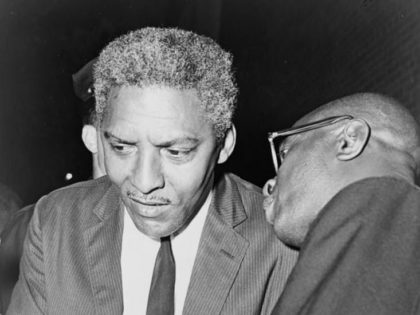
It’s Their Party
A generation ago, socialists and civil rights activists tried to transform the Democratic Party. Why did they fail?
A generation ago, socialists and civil rights activists tried to transform the Democratic Party. Why did they fail?
Childhood has become a period of high-stakes preparation for life in a stratified economy.
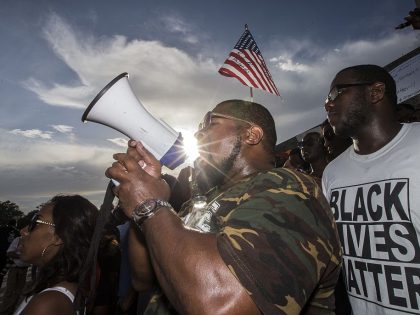
For too long, the Left has organized based on caricatures of black political life. If it wants to win, it needs to start recognizing the role of class in black America.
In the midst of a right-wing onslaught, Indian workers carried out one of the largest strike in world history.
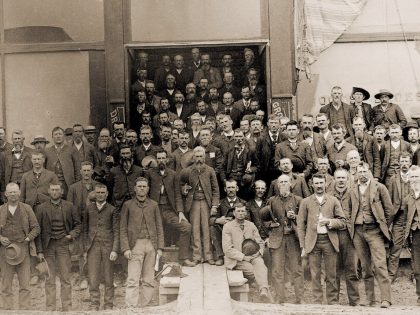
In an interview, writer Thomas Frank discusses how populism brought together workers, farmers, and all those struggling against the wealthy for a more egalitarian society — and why that’s made it a dirty word for the elite, both in the 1890s and today.

A new book offers a flawed road map for rebuilding the Left.
A debate between Seth Ackerman and Aaron Benanav on the prognosis for capitalism: Is it experiencing the kind of long-run stagnation that many Marxists have long regarded as its destiny? And what does the answer mean for socialist political strategy today?

Both parties aren't addressing our health care needs — now is the time for socialists to lead a national Medicare for All campaign.

Across Western countries, the decline in class-based voting isn’t inevitable: it results from political choices.
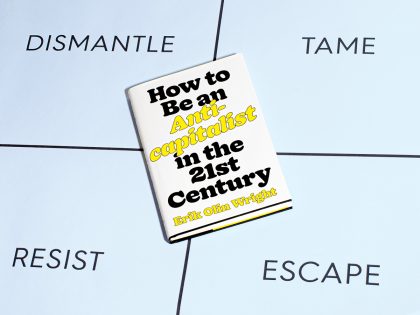
Erik Olin Wright devoted his life to figuring out ways the world could finally leave capitalism behind. His final book holds crucial lessons about which strategies belong to the past and which ones can build the bridge to a socialist future.

Unions are schools of workers’ struggle — that’s why socialists talk so much about them. But they’re also contradictory institutions that often become complacent and bureaucratic. That’s why the rank-and-file strategy is so important.
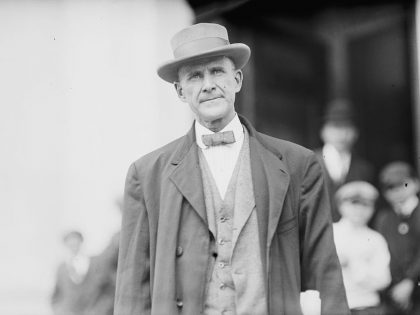
Eugene Debs’s unswerving commitment to democracy and internationalism was born out of his revulsion at the tyranny of industrial capitalism. We should carry forth that Debsian vision today — by recognizing that class struggle is the precondition for winning a more democratic world.

Since inflation started rising, British capitalists have been raking in massive profits while workers have suffered a disastrous wage slump. Yet the Bank of England still wants to boost unemployment in case workers develop their fighting strength.
The struggle against Trump must be powered by the fight for generous, universal, and visible social programs.
For too long, speculative fiction has been hostile to emancipatory politics. That's finally starting to change.
It's about more than fast-food workers. Fight for 15 is taking on an economic model built off poverty wages.
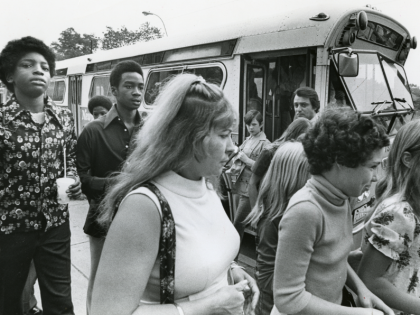
Busing wasn't an experiment imposed by elites; it was part of a grassroots movement demanding quality education for all.
The Left needs a more coherent vision for its work inside the labor movement.
Chaos reigns . . . fascist stooge finds his balcony . . . the resistible rise of Donald Trump . . . bomb crater America finds its Dauphin . . . Hillary Clinton: 10.0 Richter scale failure. . . . the pinko revolt begins. . . . digging ourselves out of the collapsed gold mine. . . .

We’re seeing an alarming revival of archaic gender role ideas, from the manosphere’s remasculinization crusade to trad wives’ rejection of public life. Veteran historian of gender roles Stephanie Coontz explains the moment’s deep economic undercurrents.