
How to Be a Marxist
Blending Kierkegaard with Hegel and Marx, Martin Hägglund’s This Life offers a new generation of socialists a guide to living a life of radical political commitment.
Blending Kierkegaard with Hegel and Marx, Martin Hägglund’s This Life offers a new generation of socialists a guide to living a life of radical political commitment.

In his book The Origins of the Family, Private Property and the State, Friedrich Engels linked the “world-historical defeat of the female sex” to the rise of class exploitation. Engels helped lay the foundations for a Marxist understanding of women's oppression.

The German socialist philosopher Erich Fromm sought to explain the social psychology of right-wing authoritarianism after the Nazis drove him into exile. His work is full of valuable insights that can inform struggles for political and economic freedom today.

Published this day in 1848, The Communist Manifesto didn’t offer blueprints for a communist future. But in showing that capitalism is not eternal or natural, Marx and Engels explained how the crises of the present prepare the way for our future liberation.

The Communist International’s history is often told in terms of polemics among its leaders. But studying the biographies of lesser-known militants who came to Moscow gives a more real sense of the movement’s internal life and what it was like to belong to it.

The theorists of the Frankfurt School wanted to promote a critical Marxism that wasn’t hobbled by one-dimensional economic determinism. In doing so, they also drew on the thinking of Friedrich Nietzsche and Sigmund Freud.

Georgii Plekhanov did more than anyone to popularize Marxist ideas in Russia from the late nineteenth century. While he fell out with the Bolsheviks and condemned the October revolution, Plekhanov had a huge influence over the development of Soviet Marxism.

Karl Marx saw how presidential systems with strong executives threatened to eclipse the democratic power of the legislature.

In the late nineteenth century, French Marxist Paul Lafargue put forward a demand that still resonates nearly a century and a half later: workers have a right to be lazy.

Analytic philosophy, a branch of the discipline that emphasizes rigorous argumentation, is often dismissed as a set of abstract puzzle games. But analytic philosophers have reinterpreted Marxism to provide a radical critique of capitalist society.

The best of Marx is full of life, full of joy — and above all, deeply human.

Denounced and then lost to history, the radical Karl Kautsky's thought still offers a compelling vision of how to democratize all aspects of our lives.

Class societies didn’t begin with capitalism: the ancient and medieval worlds had their own systems of exploitation. Marxist historians have set out to explain how those systems worked — and what their eventual demise tells us about what might lie ahead.

French socialist leader Jules Guesde established the first working-class party in modern history and popularized the ideas of Karl Marx at a crucial time. It’s impossible to imagine the subsequent history of Marxism and the French left without Guesde.

Harry Braverman’s arguments in his classic book Labor and Monopoly Capital presciently forecasted much of our present labor regime — and can help us move beyond it.

We’ve got some bad news for you on Labor Day: your boss is exploiting you. Karl Marx explains how.

The US Supreme Court is on the rampage, rolling back progressive gains from abortion rights to climate action. To stop conservative judges, we need to recognize that the law is a product of social struggle and shift the balance of forces outside the courts.
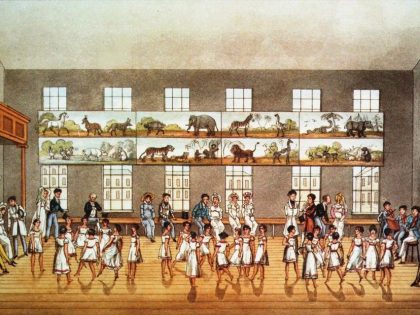
Conservative apologists for the status quo often stigmatize their opponents as “utopian.” But socialists and feminists shouldn’t be afraid of the term, since utopian thought can play an important role in helping us develop practical alternatives.

The year 2023 marks a century since the founding of the Institute for Social Research, better known as the Frankfurt School. Its story is that of a long challenge to the status quo — and a refusal to accept that capitalism is the only possible reality.

Joan Robinson established herself as one of the world’s leading economists in a deeply sexist field. Drawing on the work of Karl Marx and John Maynard Keynes alike, she left us with a vital legacy for the critical study of capitalism.