How the Frankfurt School Used Marx, Nietzsche, and Freud
The theorists of the Frankfurt School wanted to promote a critical Marxism that wasn’t hobbled by one-dimensional economic determinism. In doing so, they also drew on the thinking of Friedrich Nietzsche and Sigmund Freud.
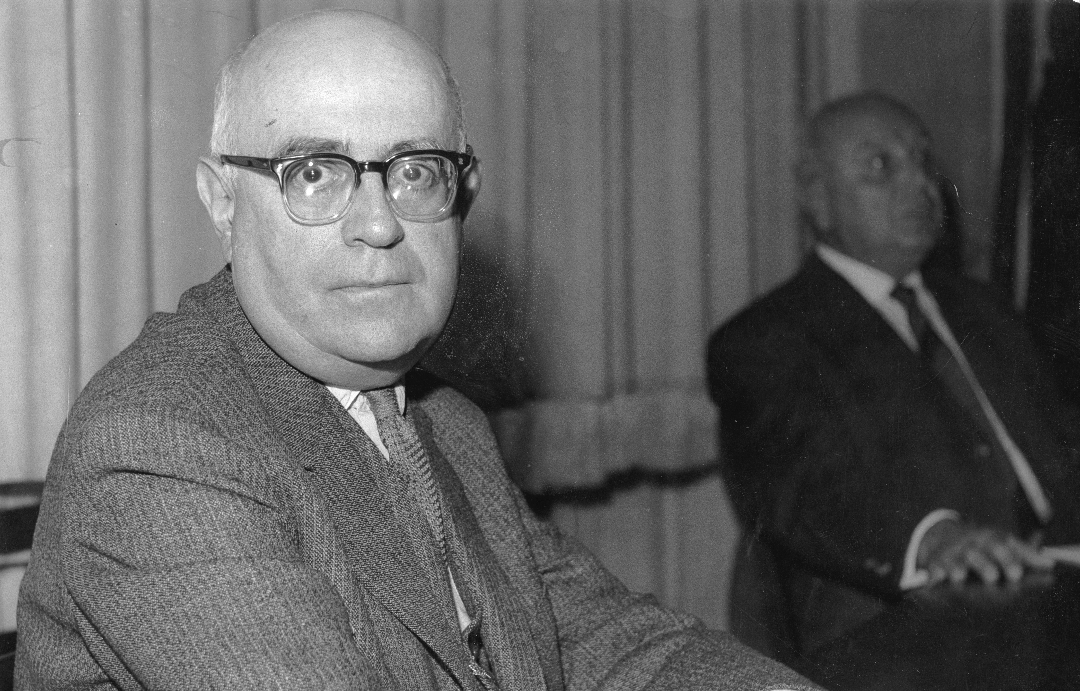
Frankfurt School theorist Theodor Adorno photographed in 1964. (Harry Croner / ullstein bild via Getty Images)
It is often remarked that Gillian Rose (1947–1995) is a difficult thinker. She certainly makes few concessions to her reader. Not only do her major works often engage with a prodigious range of disciplines and traditions — from philosophy to theology, legal theory, Judaica, literary modernism, political theory, sociology, even architecture — her style of writing is also variously esoteric, ironic, poetic, and characterized by an almost paradoxical tone of both levity and severity.
This commitment to difficulty is perhaps a major reason why her writing remains comparatively understudied by wider audiences. A new volume titled Marxist Modernism, however, comprises a series of introductory lectures that Rose delivered to undergraduates at the University of Sussex in 1979 on Frankfurt School critical theory. While they exhibit her commitment to the aporia of political and ethical life, they do so in a conversational and accessible pedagogic style.
Deftly explaining the positions of Georg Lukács, Ernst Bloch, Walter Benjamin, Bertolt Brecht, Max Horkheimer, and Theodor Adorno, Rose provides a way into the difficulties they present. It is at once an introduction to Frankfurt School critical theory and also an introduction to the questions and concerns that would go on to animate her whole oeuvre.