Joan Robinson Changed the Way We Think About Capitalism
Joan Robinson established herself as one of the world’s leading economists in a deeply sexist field. Drawing on the work of Karl Marx and John Maynard Keynes alike, she left us with a vital legacy for the critical study of capitalism.
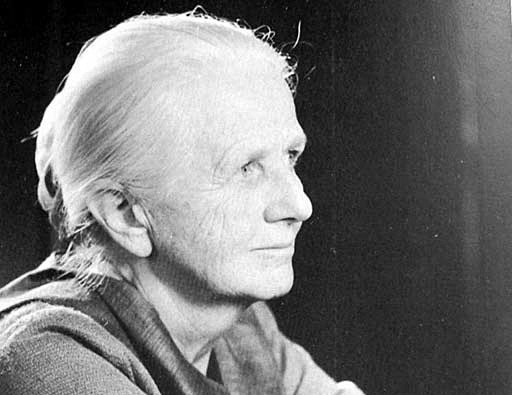
Economist Joan Robinson (1903–1983) was an early disciple of John Maynard Keynes. (Public Domain)
Joan Robinson was one of the most remarkable figures in the world of economics during the twentieth century. She fought to establish herself in a profoundly sexist British university culture and rose to the summit of her field. An early disciple of John Maynard Keynes, she also engaged sympathetically with the economic theories of Karl Marx and Rosa Luxemburg at a time when academic economists largely ignored such figures. In a world where the ideas of Keynes and Marx still dominate critical approaches to capitalism, Robinson’s creative and heterodox thinking has much to offer us.
Breaking the Mold
Joan Violet Robinson was born in Camberley, Surrey, on October 31, 1903, into an upper-class English family. Her father was a major-general in the British Army, and her maternal grandfather had been a professor of surgery at Cambridge University. She was educated at St Paul’s Girls’ School in London and at Girton College, Cambridge, where she studied economics, graduating with an upper second-class degree in 1925 — although she only received the actual degree in 1948, when the university recognized female graduates for the first time.
In 1926, she married the economist E. A. G. (Austin) Robinson, with whom she had two daughters. She accompanied him to India soon after the marriage, where he was employed as tutor to the son of a maharajah. On their return to Cambridge in 1929, Austin was appointed to a university lectureship in economics and soon became a college fellow.