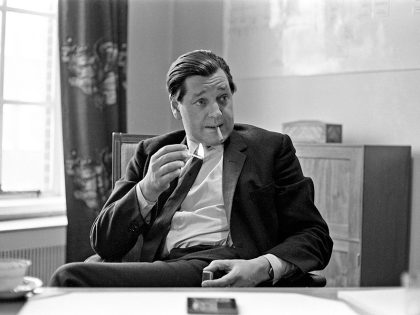
The Lost Future of Socialism
British Labour politician Anthony Crosland’s The Future of Socialism was once the bible of revisionist social democracy. Looked at today, it is far from prescient but surprisingly compelling.
British Labour politician Anthony Crosland’s The Future of Socialism was once the bible of revisionist social democracy. Looked at today, it is far from prescient but surprisingly compelling.
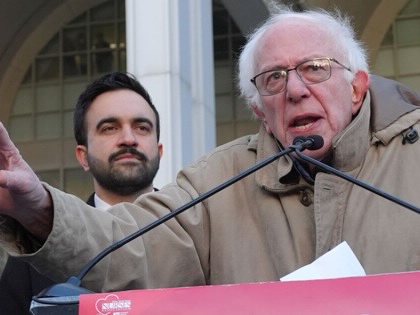
Krystal Ball, Vivek Chibber, and Matt Karp discuss how class politics stalled after the Bernie Sanders campaigns — and why a new political opening is finally emerging.
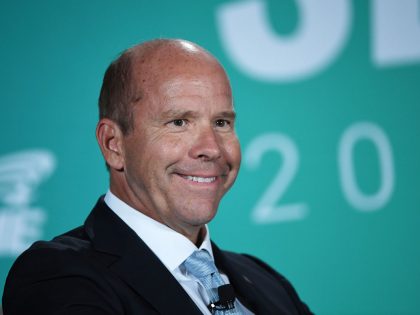
John Delaney is completely insignificant. But he’s echoing common talking points about the Green New Deal. They’re all lies.
The super-rich talk to one another about a rising tide lifting all boats, all the while arming their yachts ahead of potential crisis.

A bullshit job is a job which is so pointless that even the person doing the job secretly believes that it shouldn’t exist. And there are more now than ever.
Old ways of thinking about mass democratic politics won't cut it in today's globalized, atomized society.
Though embraced by the likes of Glenn Beck, Thomas Paine was the American Revolution's most radical figure.
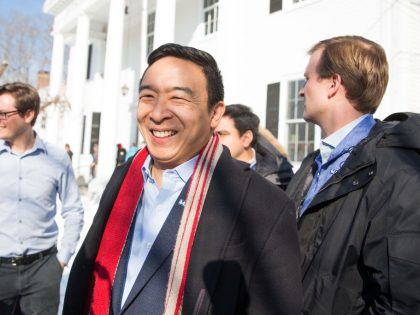
Andrew Yang might be gearing up to run for New York City’s mayor. But he’s more likely to be the pro-developer, pro-cop second coming of Mike Bloomberg than a real alternative.

Mckayla Wilkes is a first-time candidate for Maryland’s 5th congressional district. In an interview with Jacobin, she talks about her experiences with incarceration, how Bernie Sanders inspired her to run, and what it means to run a working-class campaign against a corporate-funded incumbent.
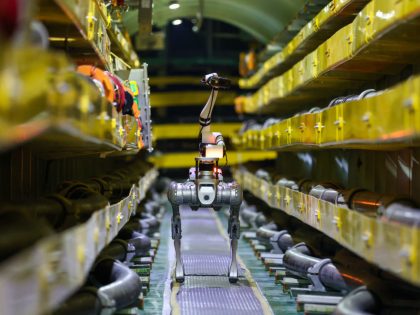
From the smokestacks of the Industrial Revolution to today’s neural nets, technology has always been a double-edged sword that carries the promise of liberation for workers. But cashing in on that promise requires control over how technology is deployed.
Our challenge is to see in technology both today's instruments of employer control and the preconditions for a post-scarcity society.
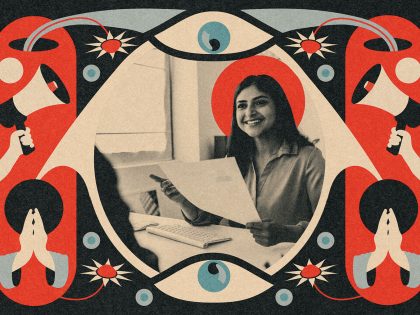
For some, capitalism’s failures are to be redeemed not by political action but by civilization-scale moral projects under the remit of a new clergy: human resources.
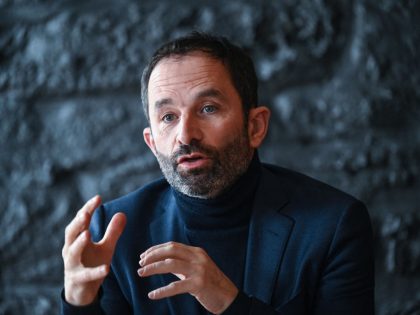
Next year’s French election looks like it’ll be dominated by right-wing discourses around identity and immigration. Former Socialist candidate Benoît Hamon tells Jacobin how the Left can put inequality back on the agenda and win.
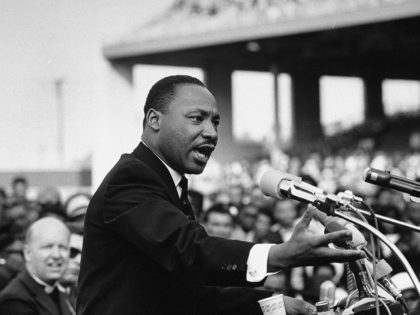
Martin Hägglund’s This Life deftly weaves religion, philosophy, and political economy to produce a moving vision of a socialist ethos. But it fails to grapple with the problems that will attend the journey beyond capitalism.
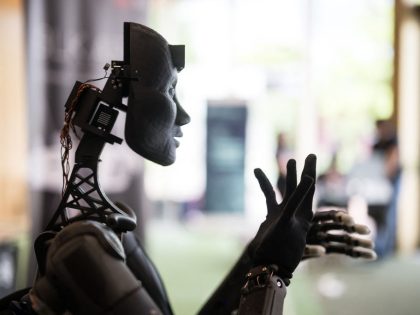
Artificial intelligence technologies are leading us to a critical juncture, forcing a fundamental rethinking of both work and the welfare state. This is a field where early surrender, allowing capital to shape the future, is not an option.
Naomi Klein's This Changes Everything is a vital book whose limitations should spark discussion about where we go from here.
The difficulties facing Benoît Hamon’s campaign reveal a French Socialist Party being outflanked on its right and left.
Andrew Yang is a capitalist. But unlike many liberals, he tried to come up with concrete, material solutions to inequality.
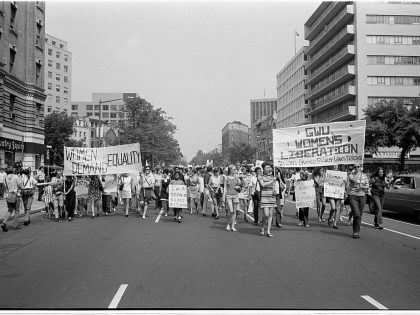
Women are forced to take on both wage and social reproductive labor, then made to negotiate this contradiction individually. Second-wave feminism tried to change that.