Second-Wave Feminism’s Unfinished Business
Women are forced to take on both wage and social reproductive labor, then made to negotiate this contradiction individually. Second-wave feminism tried to change that.
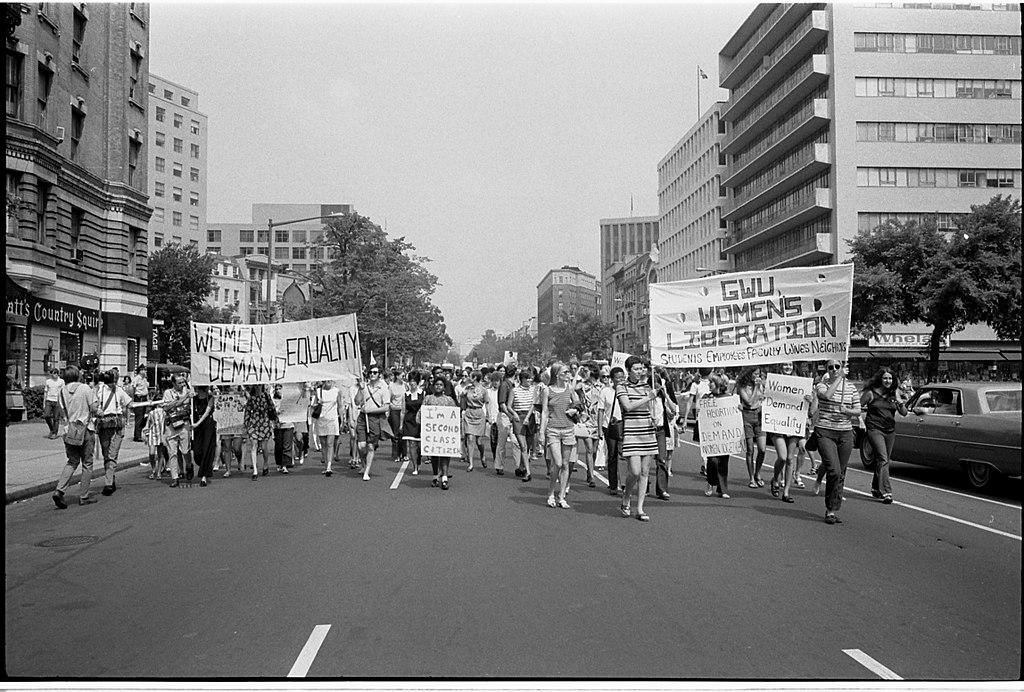
Women’s liberation march from Farrugut Square to Lafayette Park, August 26, 1970.Library of Congress
The “women’s wage gap,” the 80 cents that American women make for every dollar made by men, has long been a subject of debate for feminists, with each proposed contributing factor begging its own set of policy fixes.
Those who argue that women’s lagging wages are rooted in gendered prejudice might support equal pay laws mandating salary parity or encourage women to negotiate aggressively. If the demands of motherhood are holding women back professionally, potential salves include subsidizing childcare, pushing fathers to assume a more active parenting role, or having more flexible, family-friendly workplaces. If women earn less because they make different professional choices, they may be advised to enter higher-paying STEM fields, “lean in” like a man would, or simply accept that women’s lower earning power reflects different wishes and is far less insidious than they claim.
But a new study released by the Institute for Women’s Policy Research complicates the picture, arguing that women actually earn only 49 cents for every dollar men do. These wildly different numbers were derived by two different methodologies which get to the heart of gender inequality: the 80-cent figure compares pay between men and women with full-time jobs, whereas the 49-cent figure compares total earnings for women over a fifteen-year period. The latter is a more comprehensive look at gendered wage disparity, because it includes periods of part-time and flexible work, or even opting out entirely — all of which women are more likely than men to do, largely because they disproportionately perform care work that make such arrangements necessary.