A Better Future Depends on Reversing Class Dealignment
There’s no forging a durable working-class progressive coalition without winning back the blue-collar working class.

There’s no forging a durable working-class progressive coalition without winning back the blue-collar working class.

Cold War hysteria meant that Communist writer Mike Gold has been universally denounced in life and death. But Gold’s pioneering work created a working-class literature written for, by, and about working-class people — and it should be celebrated today.

British class society had a dress code: the rich could be flashy, but workers were expected to wear a drab uniform. In the 1950s, England’s working-class Teddy Boys and Girls boldly donned pompadours and velvet, giving birth to modern British subculture.

Working-class American men are getting lonelier and sicker, and their lives are getting shorter. It’s not just a sad state of affairs; it’s a full-blown crisis that demands policy solutions.

Socialist candidates in recent years have tended to struggle with poor and working-class black voters. But new data from the New York City election shows that’s not inevitable: we can build a base that draws in the entire working class.

After taking part in Italy’s radical left-wing upsurge, Franco Ramella turned to writing about the early history of Italian capitalism and working-class resistance. His brilliant work has strong echoes of E. P. Thompson’s Making of the English Working Class.
Socialists focus on the working class because of our diagnosis of what's wrong with society and our prognosis of how to fix it.

There is no “end of the working class.”

Class isn’t just about how much money you make, and it’s certainly not about cultural traits or your level of education. Marxists argue that anyone who must sell their ability to work for a wage and can’t produce their life necessities for themselves is part of the working class.

Neither mainstream American political party has a compelling message for working-class voters. As a result, voters are starting to vote in line with their cultural opinions, not their class interests. Unfortunately, that’s good news for the Right.

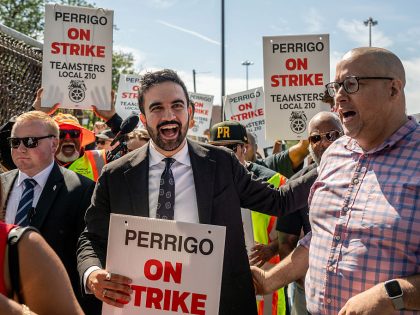
Labor organizing can’t succeed at scale without a supportive legal and political environment, created by majoritarian coalitions that can win reforms, confront corporate power, and prove to skeptical workers that progressive governance delivers.

Ozzy Osbourne’s working-class roots were central to the invention of heavy metal. But the world that birthed Black Sabbath is gone — and the conditions created by Britain’s postwar welfare state are long out of reach for today’s musicians.

The meeting of New England’s newer low-wage immigrant working class and its older industrial working class is beautifully rendered, warts and all, by Ocean Vuong in his new novel, The Emperor of Gladness.

The decline of Swedish social democracy is an illuminating case study in why the Left is losing the working class. It also offers clues as to how the Left might win workers back.

Class rage informs the anger found across Nirvana’s studio albums. Thirty years after Kurt Cobain’s death, we should remember his critique of the corporate mainstream — a political stance shaped by his working-class background.

The US working class has a long tradition of standing up against immigrant repression. This history is a reservoir of inspiration and strategic thinking — and it can help immigrant workers and communities confront Donald Trump’s promised wave of repression.

Reinvigorating class-based politics in the US depends on more than inspiring candidates like Bernie Sanders: it requires durable working-class political organization. Here’s what one group learned about organizing working people around bread-and-butter issues.

Third Way Democrats are right to obsess over the Democrats’ increasing troubles with working-class voters. But their solution is more of the Clintonian economic centrism that drove away working-class voters in the first place.

UAW Region 9a leader Brandon Mancilla says in an interview with Jacobin that he and his union are not impressed with Republicans’ supposed pro-worker turn — and he explains what a real progressive, working-class agenda would look like.

Class dealignment posits that Democrats have been losing working-class voters in favor of middle- and upper-class voters. Is this actually happening? And to what extent is it a problem?