Metal Was Born in Britain’s Urban Working Class
Ozzy Osbourne’s working-class roots were central to the invention of heavy metal. But the world that birthed Black Sabbath is gone — and the conditions created by Britain’s postwar welfare state are long out of reach for today’s musicians.
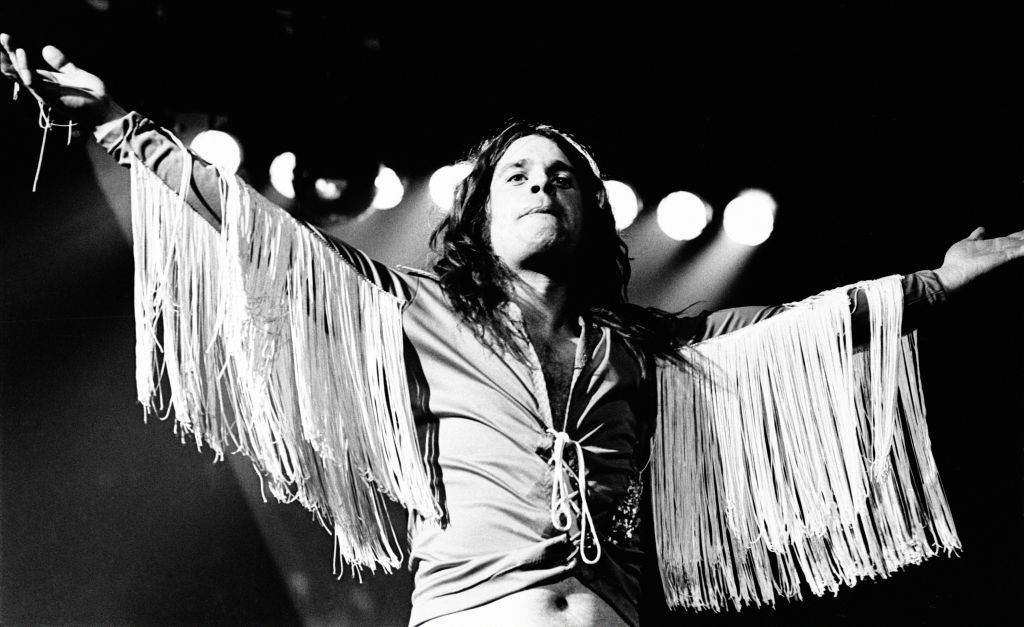
Ozzy Osbourne of Black Sabbath performs on stage at Lewisham Odeon, London, on May 27, 1978. (Gus Stewart / Redferns)
In the 2020s, a cursory search about the latest hot new band that has seemingly arrived from nowhere usually uncovers a private school education or the Wikipedia entry of some parent. Ozzy Osbourne, who died on July 22, 2025, following a long battle with Parkinson’s disease and mere weeks after Black Sabbath’s farewell concert in their native Birmingham, had an early biography that is uncommon among successful musicians in modern Britain. The self-styled “Prince of Darkness,” who was part of the conception of heavy metal as it became a genre, was a working-class innovator.
John Michael Osbourne was born in Aston, Birmingham, in 1948, the son of a father and mother who were both factory workers, at General Electric Company and Lucas Automotive, respectively. Growing up in relative poverty in a crowded terraced house, aged eleven the preadolescent Osbourne was repeatedly sexually abused by two boys, the emotional fallout from which led to the first of several teenage suicide attempts.
Like his Black Sabbath bandmates Tony Iommi and Bill Ward, their previous work in sheet metal factories is not just biographical trivia but the key to understanding the sound they produced together, which still resonates half a century later.