
Solidarity Will See Us Through the Second Trump Term
Donald Trump’s return is a massive blow, but we can’t allow ourselves to wallow in despair. Getting through his second term will require more than therapy — it will require solidarity and action.
Donald Trump’s return is a massive blow, but we can’t allow ourselves to wallow in despair. Getting through his second term will require more than therapy — it will require solidarity and action.

Elon Musk’s appearances at the Trump inauguration and a rally for Germany’s Alternative für Deutschland don’t just hark back to the past. They fuse authoritarian nationalism with a distinctive postmodern, libertarian streak.

Donald Trump’s executive orders draw from a previous, dark period of American history pairing ethnic exclusion through mass deportations and ideological exclusion through political repression.

Donald Trump is rolling out a blitz of attacks on workers in hopes of paralyzing organized labor’s energy to fight back. But unions can only survive this onslaught by fighting, not by burying their heads in the sand.

Benjamin Netanyahu owes his political fortunes to the support of the far-right Jewish Power and Religious Zionist parties. Both vehemently oppose the cease-fire and insist that Israel continue its war once the hostages are free.

Months before last night’s fatal aircraft collision, lawmakers dismissed safety warnings and approved an airline-backed measure that increased flight traffic at Washington, DC’s already overstressed airport — the site of the disaster.

Many assumed Donald Trump would be governing in a second term with no guardrails. But guardrails are in fact still there. Understanding these constraints is key to defeating him.

In his confirmation hearing, Robert F. Kennedy Jr told Bernie Sanders that he opposes health care as a human right. His reasoning reveals how libertarian talking points are being used to defend a cruel and irrational health care system.

Economics departments across the United States slavishly adhere to the mainstream consensus on austerity and the free market. The Center for Heterodox Economics thinks there’s a better way.

Looking forward to 2021? Read this horoscope first.

The problem of case backlogs at the National Labor Relations Board goes deeper than budget shortfalls. Without serious penalties for employers who break the law, the board will continue to be hampered by a pileup of charges.

Last night’s socialist sweep in New York was built on the organizing power of the Democratic Socialists of America, which has now established itself as the leading political power in the city.
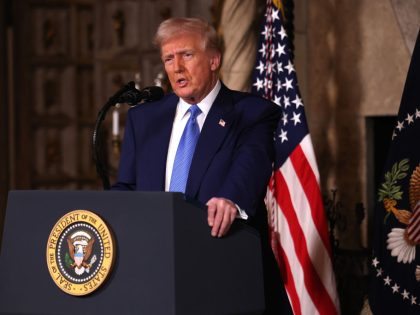
America’s belief that it can be militarily dominant in every major region appears to be wavering. But without challengers, the Republicans’ loss of conviction in liberal internationalism will harden into a more dangerous global authoritarianism.

Some scientists think we should slow climate change through carbon capture and solar geoengineering. Is that a gamble worth taking?

Donald Trump’s speech last night sounded like a deranged remix of Ronald Reagan. Instead of slamming him where it hurts, Democrats responded by claiming Reagan’s poisonous legacy for themselves.

At the dawn of a second Trump era, American Hindu supremacists are increasingly aligning themselves with the MAGA far right.
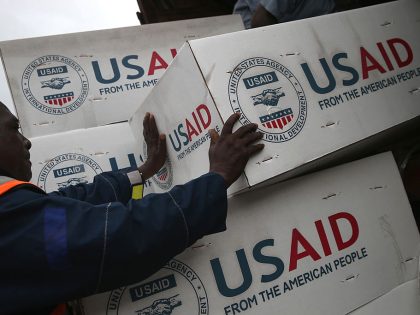
In an era when power is increasingly defined by digital infrastructure and platform dominance, USAID was already losing relevance to the high-tech actors shaping US foreign influence, even before the recent attacks by the Trump administration.

Even as part of a mayoralty characterized by attacking public services, scapegoating of migrants, and raising housing costs, New York City mayor Eric Adams’s pandering to Donald Trump in an effort to escape federal corruption charges is particularly brazen.

Yesterday an immigration judge ruled that Mahmoud Khalil can be lawfully deported for his pro-Palestinian political speech. It sets a dangerous precedent for the future of free speech in America.
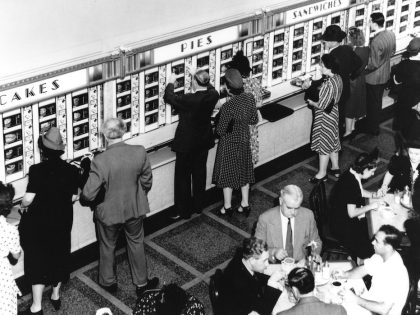
Today no one on either side of the political spectrum would present themselves as an enemy of choice. The historian and author of The Age of Choice, Sophia Rosenfeld, spoke to Jacobin about the complex legacy of an idea that helped forge the modern world.