
Stephanie Kelton Thinks the Conventional Wisdom Is Changing
In an interview with Jacobin, economist Stephanie Kelton argues that we're seeing a paradigm shift away from free-market dogmas and austerity.
In an interview with Jacobin, economist Stephanie Kelton argues that we're seeing a paradigm shift away from free-market dogmas and austerity.

Four years ago, Ulf Kristersson promised a Holocaust survivor he’d never cooperate with the anti-immigrant Sweden Democrats. Now he’s prime minister of a government dependent on their support — an unholy alliance of liberals and the far right.
Few forces are better positioned to fight the corporate university than graduate student workers.

In the best moments of Jeremy Corbyn’s leadership, the Labour left captured an insurgent, democratizing spirit. Yet two years after the Left’s defeat, the top-down approach that led to the fatal “second referendum” policy continues to hamper its recovery.

It’s still difficult organizing as a socialist in the United States. But in the last decade since Occupy Wall Street, there are signs more people are open to egalitarian politics.
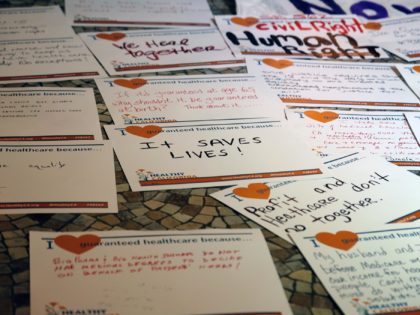
Socialists have played a key role in the fight for single payer in California. Their campaign has lessons for organizers everywhere.

Mark Levin’s American Marxism is full of absurd inaccuracies about socialists. But accuracy isn’t his aim — Levin wants a sweep of “Marxists” from every layer of American society, a 21st-century rerun of McCarthyist authoritarianism to attack the Left.
Nothing is more crucial to the success of BDS than the movement’s relationship with organized labor.
The radical teamsters of Minneapolis showed what democratic unionism looks like.
It’s clear that the GOP is capturing new parts of the working class. It’ll take credible appeals to workers’ frustrations and economic interests to win them back.

Before their illiberal turn, Poland and Hungary were lauded as postcommunist poster children. Both nations have combined moderately redistributive welfare states with attacks on civil liberties — but inflation is putting their growth model to the test.
Social impact bonds offer private interests yet another opportunity to enrich themselves at public expense.
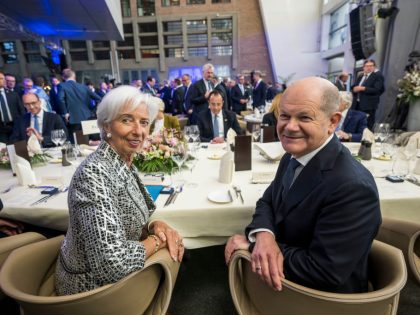
Germany is blocking billions of euros in investment domestically and across the EU because of the country’s commitment to low budget deficits. This “fiscal discipline” is undermining economic growth and decarbonization goals across the continent.

After years of moralizing rhetoric, Keir Starmer couldn’t find a single credible accusation of misconduct to block his predecessor from running as a Labour candidate. All that’s left is a shrill campaign to exclude socialist ideas from public life.

The US nuclear arsenal gobbles up massive resources for death that should be used for human life. For decades, Catholic activists have put their bodies on the line to insist we dismantle that arsenal.

Norway often presents itself as a defender of human rights around the globe. Yet its treatment of indigenous people within its own borders tells a quite different story, as the Sámi population struggles to defend its way of life.

Most novels today allow little room for moral ambiguity and take great pains to avoid even considering the inner lives and motivations of people whose politics we find abhorrent. Thankfully, Lauren Oyler’s Fake Accounts doesn’t.

A new book, Carmageddon, reveals how the automobile has made our lives more dangerous and less democratic. The alternative — reliable and publicly funded transport — must be at the heart of any progressive vision for the future.