Germany’s Commitment to “Fiscal Discipline” Is Disastrous for Europe and the Planet
Germany is blocking billions of euros in investment domestically and across the EU because of the country’s commitment to low budget deficits. This “fiscal discipline” is undermining economic growth and decarbonization goals across the continent.
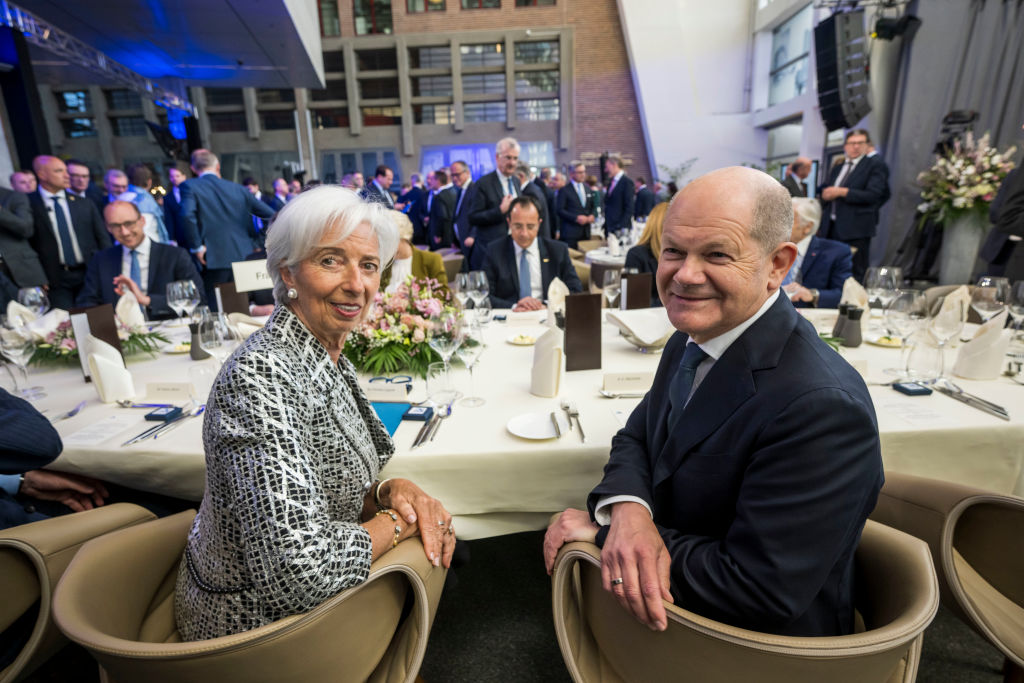
German Chancellor Olaf Scholz and European Central Bank president Christine Lagarde celebrate the anniversary of the European Central Bank’s founding, May 24, 2023. (Thomas Lohnes / Getty Images)
The late Tony Benn once observed that there always seems to be money for war, but never enough to meet people’s basic needs. “If we can find the money to kill people,” he argued, “we can find the money to help people.”
Recent events in the European Union seem to be proving him right. The German government recently rejected a request for a €100 billion top up to the EU’s annual budget, half of which was earmarked for Ukraine. Berlin has approved the request for extra funding for Ukraine but rejected the rest.
This move comes in the wake of a decision by the German Constitutional Court to cancel €60 billion worth of planned investment — including several green energy projects designed to support decarbonization. The court determined that extra spending was unconstitutional, as the government had already breached the limits imposed by the “debt brake.”