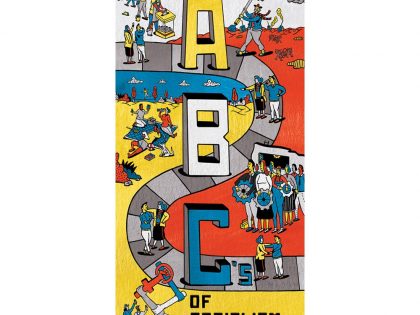
The ABCs of Socialism
Don't study collective action alone.
Don't study collective action alone.
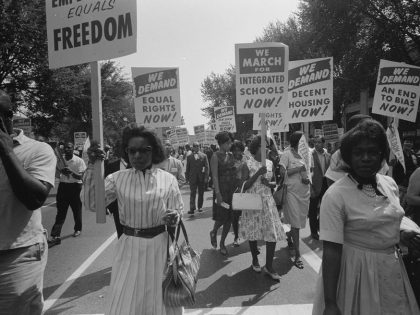
Defenders of capitalism say that socialism will squelch minority rights. But the only minority groups we seek to unseat are those who trample the rights of others.

Karl Marx didn't believe the working class would automatically end capitalism. He believed that actively engaging in class struggle can change workers' consciousness — and change the world.

The son of Nigerian immigrants, Giannis Antetokounmpo has won acclaim in Greece, being named the NBA’s most valuable player. But Giannis’s story doesn’t prove that anyone who works hard can make it — rather, it shows how insane it is to let our parents’ nationality determine our life chances.
When it comes to workplace organizing, there's no such thing as a “privileged” worker. You’re either with your coworkers or you’re against them.

Blending Kierkegaard with Hegel and Marx, Martin Hägglund’s This Life offers a new generation of socialists a guide to living a life of radical political commitment.

The socialist emphasis on the centrality of class isn't about ignoring racial inequalities, but about crafting a politics capable of ending them.

Small business owners, who feature prominently in the anti-shutdown protests, occupy a unique place in capitalism’s class hierarchy — although many share the same kinds of struggles experienced by wage workers, as a class, they’re often drawn to the far right.

Perry Anderson’s essays on the history of Marxism show his dazzling erudition and breadth of historical vision. But the British Marxist’s work has also been deeply shaped by his changing political outlook, as his 1960s hopes in socialist revolution have given way to a more sober reading of capitalism’s crises.

The critique of capitalism was central to William Morris’s vision of an arts and crafts movement in the Victorian era. Against the alienation and exploitation of a rapacious industrialism, he advocated for a conception of art capable of restoring creativity to everyday life.

The Institute for Christian Socialism is trying to build left-wing solidarity within religious communities. For these Christians, a commitment to socialism is inherent in the Gospel.

In Britain, even as the Labour Party is in turmoil at the national level, left-wing city councils in places like Preston are bringing socialist policies to life at the local level.

Throughout decades of neoliberal counterreforms, the most resilient parts of the Nordic welfare state have been the ones under direct popular control. Their experience shows that the best way to push back against capital is to democratize power in society.

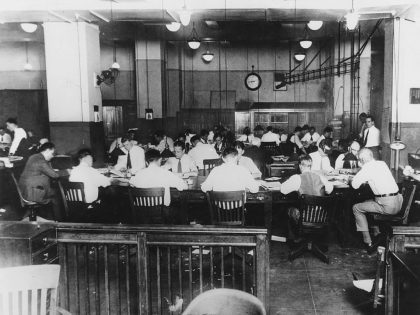
Designed to discipline workers into producing clickable and profitable content, newsroom analytics are radically changing the nature of media work — and hastening journalism’s ugly decline.

Talk of a great technological replacement suggests that automation is rendering most workers obsolete. But innovation isn’t simply replacing human workers — rather, it’s created a battle over whose interests the new technologies will serve.