The Equality That Socialists Care About Most Is Equality of Power
When socialists talk about creating a more equal society, we don’t mean a society where everyone has an exactly equal share of everything. We mean a society where power has been equalized by extending democracy into the economy.
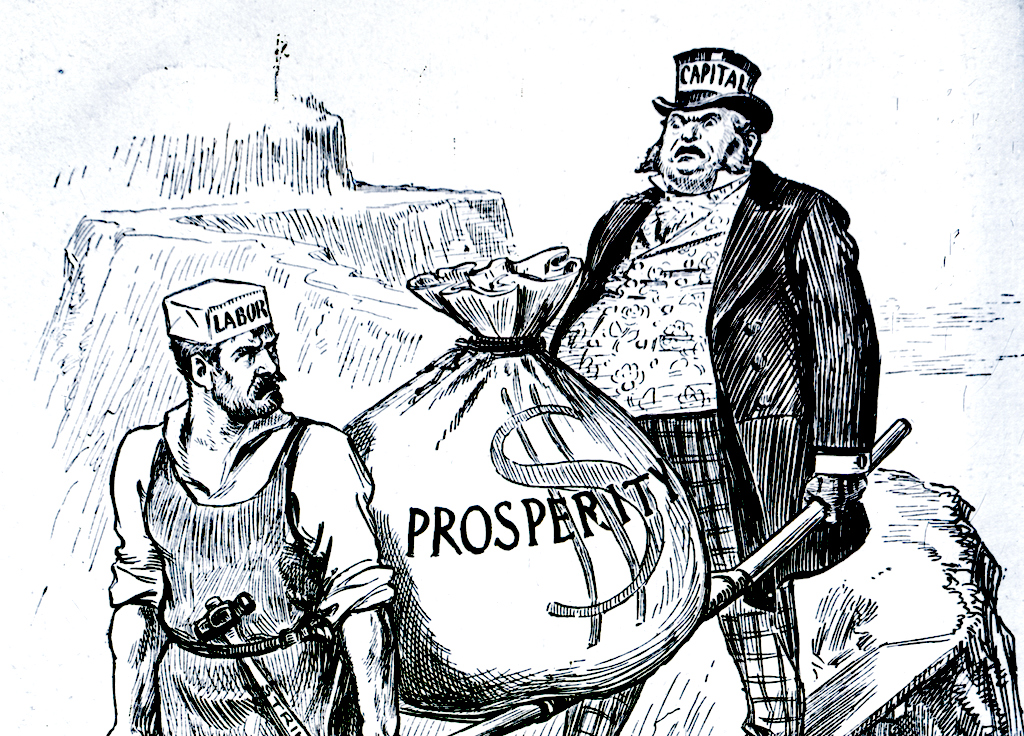
Equality of power at the workplace is also a precondition for equality of power in society as a whole. (Undated political cartoon / Getty Images)
In Martin Scorsese’s 1995 film Casino, Robert De Niro plays mafia-connected casino boss Ace Rothstein. Ace tries to make sure every aspect of his operation is perfect. In one particularly funny scene, he’s eating a blueberry muffin during a business meeting in the casino restaurant. When he notices there are fewer blueberries in his muffin than in his associate’s, he storms back to the kitchen and lays down the law. “From now on I want you to put an equal amount of blueberries in each muffin!” The chef stares at him in disbelief and asks, “Do you know how long that would take?”
When socialists talk about overcoming economic inequality, conservatives and libertarians sometimes react as if this as absurd and unrealistic as making sure every muffin has an exactly equal number of blueberries. How could we possibly enforce perfect equality? Even if everyone started with equal shares of society’s resources, wouldn’t some people inevitably gain assets over time as other people lost them? How could we ever prevent such inequalities from naturally arising?
What Kind of Equality?
Imagine that Jane sets aside some of every paycheck so she can buy a house while her coworker James spends the same amount on expensive scotch. Eventually Jane will be a homeowner. Perhaps the value of the house will increase over time, and she’ll eventually be able to sell it for more than she paid. James, meanwhile, has nothing to show for his decisions but happy memories and a liver that’s a little worse for wear. Is this inequality somehow objectionable or unjust?