Joe Biden Can’t Cure Cancer
Once again, Joe Biden has pledged to cure cancer. At the same time, his campaign is being bankrolled by the very industries that profit from keeping treatment prohibitively expensive.
PreviousPage 25 of 25

Once again, Joe Biden has pledged to cure cancer. At the same time, his campaign is being bankrolled by the very industries that profit from keeping treatment prohibitively expensive.

After his narrow election as mayor, the fight for Bernie Sanders to carry out a progressive agenda in Burlington, Vermont was just beginning. Sanders and his allies had to fight through a recount, grapple with a looming fiscal crisis, and overcome incessantly hostile opponents in the city who refused to give Bernie an inch.

Joe Biden is now pledging to “spend whatever it takes” to overcome this pandemic. But he’s spent his career putting public health programs on the chopping block as part of a decades-long crusade against government spending.

Whatever happens in today’s primaries, Latino voters have made clear they have a strong appetite for leftist policies. By following Bernie Sanders’s lead and focusing on the pressing needs of rank-and-file Latino workers, democratic socialists can continue to unleash the power of this potent voting bloc.

Toni Van Pelt, the president of the National Organization for Women, recently warned that Bernie Sanders had done “next to nothing for women.” Which is strange, because NOW has praised Sanders as a staunch feminist ally throughout his career.

The COVID-19 pandemic should be a time to reduce the military's deadly footprint at home and abroad. We can't let the military use this crisis to expand its powers.

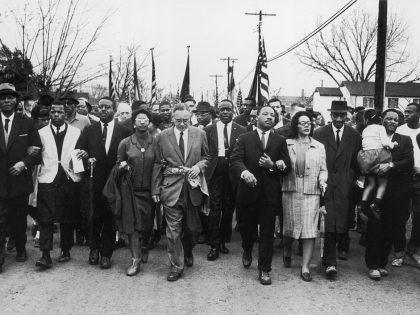
Martin Luther King Jr died supporting striking black sanitation workers in the South. Less than a decade later, a black Atlanta mayor and King’s own father were attacking that same group of workers and breaking their strike. Black urban governance is meaningless without a commitment to strengthening the public sector and rejecting the logic of austerity.

The Bernie Sanders campaign fell short. But it assembled a coalition that, if expanded only slightly, can reshape American politics for generations to come.

Gary Shteyngart’s novel Super Sad True Love Story was published a decade ago, and it offers a portrait of a near-future, dystopian United States that might suddenly be upon us. It’s perfect reading for the pandemic lockdown.

European leaders won’t consider debt cancellation or abandon the dogma of neoliberal austerity. Coronavirus shows that well-funded public services are essential for our survival — austerity is a matter of life and death. We need an alternative.

As the war in Afghanistan slowly grinds to an end, many in the foreign policy establishment want to tell you it was a “good war gone bad.” That’s false. The war in Afghanistan never should have been waged in the first place.

The COVID-19 crisis, like the subprime mortgage crisis a decade ago, has sparked major public interventions to stabilize the financial markets. But the Fed isn’t stepping in to bail out the real estate sector — and the big losers are set to be ordinary households.

In the years immediately following World War II, the movement for black equality, rooted in the militancy of black workers, was making massive strides. The McCarthyist anticommunist campaign of the late 1940s dealt a hammer blow to that project, attacking its unions and scattering its activists, ultimately narrowing the ambitions of the black freedom movement.

From the Black Panthers to the Communist Party, radical Los Angeles in the ’60s was a seething cauldron of unrest, united by the brutal, lawless repression of the LAPD. In a rollicking new book, Mike Davis and Jon Wiener tell the story of a decade of explosions.

The brutality we have repeatedly seen meted out by American police all over the country isn’t a bug of our political-economic system — it’s a feature.

The police were first created to suppress labor militancy and the Left, before becoming a tool to bludgeon the most marginalized in society, particularly poor black people. We must dismantle this brutal instrument of social control.

Rising from the ruins of World War I, in the 1920s Vienna’s socialist administration was famous for its innovative housing and public health programs. But at the heart of “Red Vienna” were its services for children, guaranteeing that even the poorest young people could share in the joys of childhood — and the foundations of a fulfilling life.

Mike Davis and Jon Wiener's chronicle of Los Angeles in the 1960s, Set the Night on Fire, isn't just a stunning portrait of a city in upheaval half a century ago. It's a history of uprisings for civil rights, against poverty, and for a better world that speaks directly to our current moment of mass protest.

Throughout the 1860 election, the Wide Awakes, a novel paramilitary-style organization, held mass rallies, marches, and demonstrations to combat slave power. These “young working-men for Lincoln” successfully combined new media and unrepentant partisanship to mobilize hundreds of thousands against the Southern planter class.

Journalism on national conflicts from Belfast to the Balkans often speaks of ancient hatreds and ancestral sectarianism. But a closer look at the Irish conflict shows that questions of nationhood and identity are very modern phenomena — and have to be integrated into any serious analysis of class.