Ireland’s National Conflict Is About Imperialism as Well as Sectarianism
Journalism on national conflicts from Belfast to the Balkans often speaks of ancient hatreds and ancestral sectarianism. But a closer look at the Irish conflict shows that questions of nationhood and identity are very modern phenomena — and have to be integrated into any serious analysis of class.
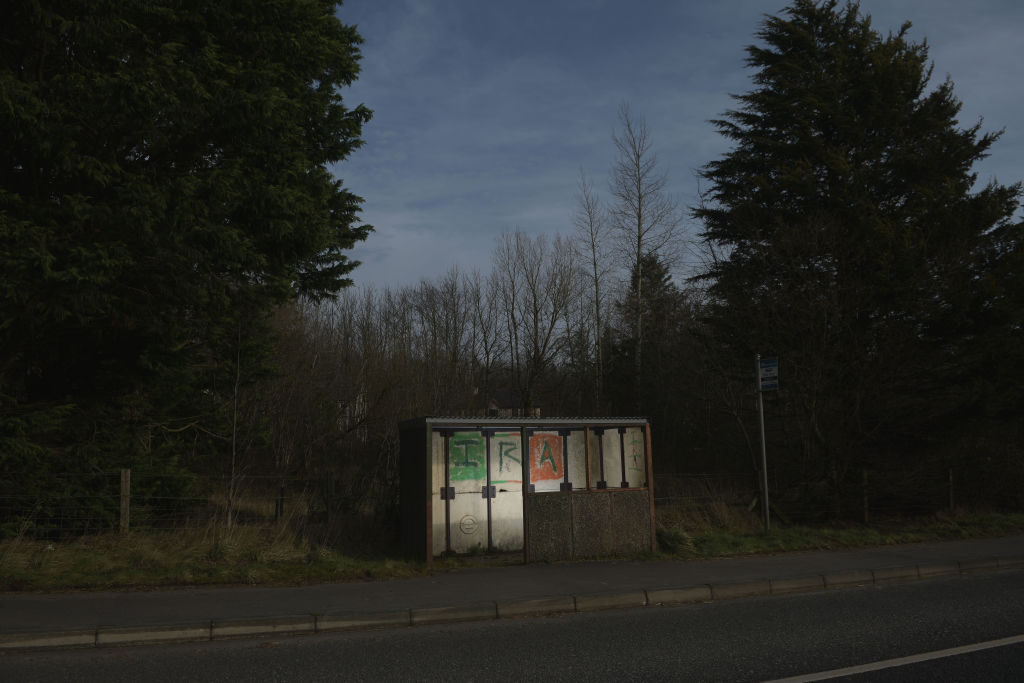
Pro-IRA graffiti is displayed on a bus stop on February 15, 2019 in Londonderry, Northern Ireland along the winding 499 kilometers of the Irish border. (Charles McQuillan / Getty Images)
In February’s Irish election, Sinn Féin took 24 percent of the vote — its best score since independence, aided by a voter revolt over housing and Ireland’s neoliberal model. While the coronavirus crisis helped the establishment parties stop Sinn Féin entering government, both its hopes of taking office and its core aim of Irish unity today seem much more plausible than even a few years ago.
Yet Sinn Féin remains deeply contradictory, given both its hierarchy of priorities — subordinating its social policies to its focus on the national question — and its participation in political structures in the North which it long repudiated on principle. It is also deeply entangled in the political history of the Irish Republican Army (IRA), and the Troubles which took over 3,000 lives in a country of just 1.5 million people.
Daniel Finn recently published One Man’s Terrorist: A Political History of the IRA. George Souvlis interviewed him about the legacy of the conflict in the North of Ireland, the importance of the unresolved national question, and Sinn Féin’s prospects today.