How McCarthyism and the Red Scare Hurt the Black Freedom Struggle
In the years immediately following World War II, the movement for black equality, rooted in the militancy of black workers, was making massive strides. The McCarthyist anticommunist campaign of the late 1940s dealt a hammer blow to that project, attacking its unions and scattering its activists, ultimately narrowing the ambitions of the black freedom movement.
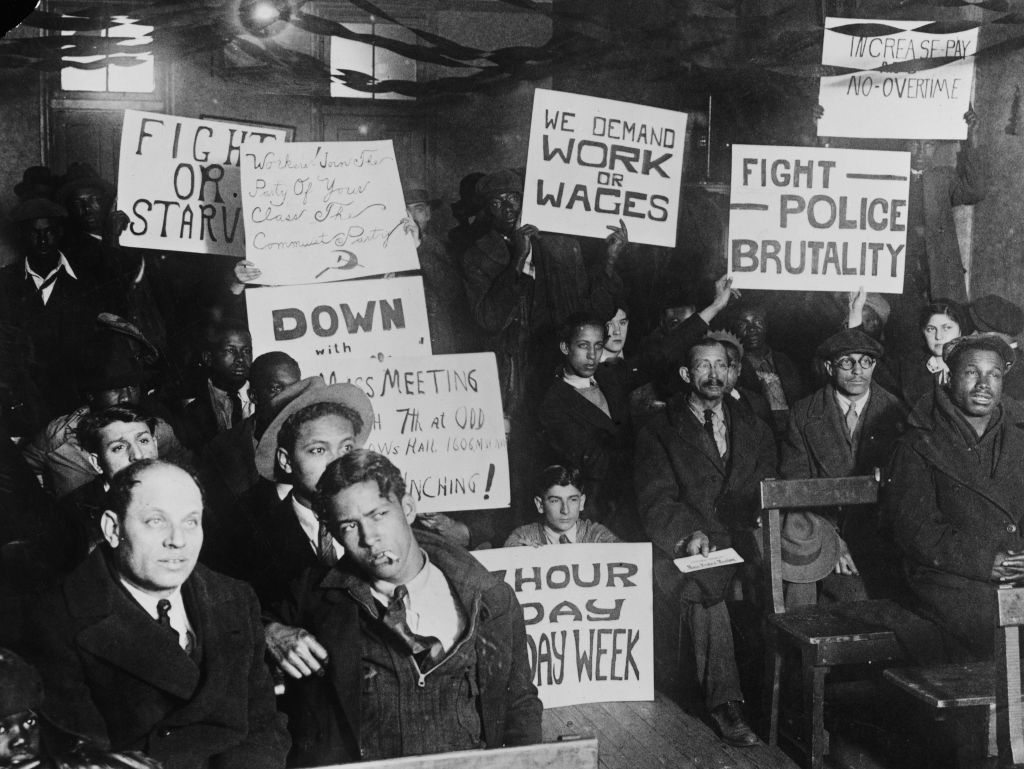
A group of men gather at a headquarters of the Communist Party USA following a protest demanding pay raise and an end to police brutality, US, circa 1920.Hirz / Archive Photos / Getty
The line between race and class is one of the most potent fault lines in left politics today. There’s a sense that a contradiction exists between fighting class inequality and fighting racial inequality. Among liberals, this has become almost an article of faith. Even among leftists, there’s a sense that these are dangerous waters, and that special theoretical acumen is necessary to navigate them successfully.
It wasn’t always like this. In fact, the split between race and class can be traced to a specific moment in American history, when the causes of racial and class equality were sundered. That moment was the Red Scare in the middle of the twentieth century.
Before the Red Scare, there was a potent movement for black equality that included the Left, most centrally the Communist Party. Based in the new industrial unions, this movement fought for black equality in housing, employment, and at the ballot box, and linked that fight to the broader struggle against capitalist domination. The anticommunist campaign of the late 1940s, however, beginning under the Truman administration, crippled this movement, delaying the fall of Jim Crow by a decade or more and narrowing the movement’s focus to legal equality, leaving its larger ambitions unfulfilled.