The “Good War” in Afghanistan Was Never Good
As the war in Afghanistan slowly grinds to an end, many in the foreign policy establishment want to tell you it was a “good war gone bad.” That’s false. The war in Afghanistan never should have been waged in the first place.
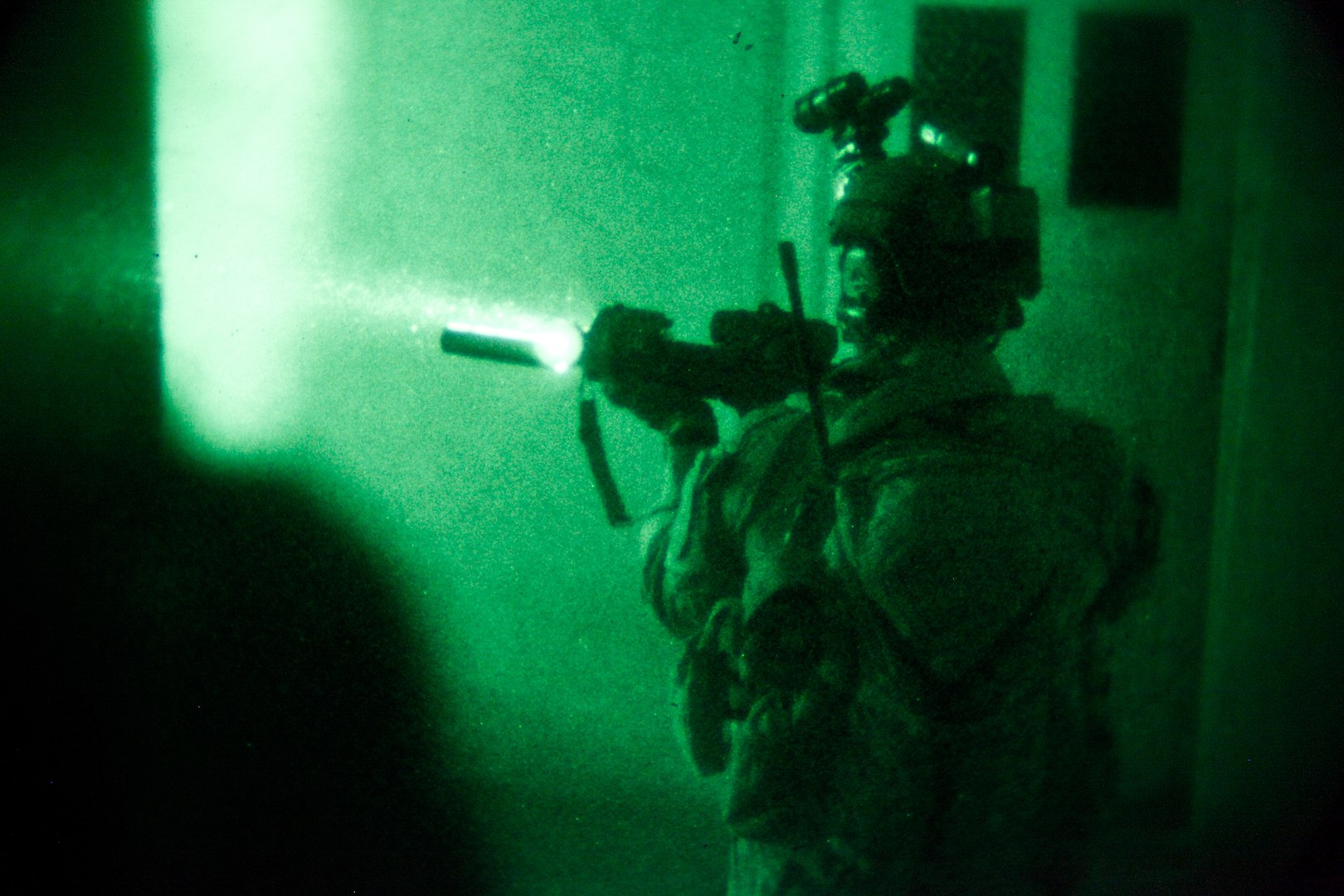
A coalition Special Operations Forces member searches a compound during a clearing operation in Chak district, Wardak province, Afghanistan, Oct. 13, 2011. Staff Sgt. Kaily Brown, US Army / Wikimedia Commons
As America’s longest war inches closer to an end — pending coronavirus — as a result of Donald Trump’s deal with the Taliban in March, commentators are furnishing autopsies of how the so-called “good war” in Afghanistan hasn’t lived up to its moniker after nearly two decades of stalemate. The problem with these narratives isn’t so much their content, but their premise. Not one challenges the conflict’s “good war” status — a label developed by public relations experts in the Pentagon to shore up the US war state’s legitimacy at a time when the war’s counterpart in Iraq was turning into chaos.
Carter Malkasian, a Pashto-speaking historian who served as a State Department representative in Helmand Province and special assistant to the Chairman of the Joint Chiefs of Staff, devotes five thousand words in a recent issue of Foreign Affairs to laying out a familiar case for “how the good war went bad”: Hamid Karzai’s government in Kabul was too corrupt, Pakistan meddled too much, US officials took their eyes off the ball by going to war in Iraq, and the Taliban shouldn’t have been excluded from the political process.
These are valid critiques. But what Malkasian doesn’t address is far more revealing than what he does. The crux of his argument is not that the United States could have avoided war in the first place, but rather that the war could have been won if only Washington had done X, Y, and Z. This missed opportunities analysis — so popular with proponents of counterinsurgency theory, Malkasian among them — criticizes a war’s tactics and procedures but stops short of questioning its initial premise or conception.