
Christopher Nolan’s Martyrdom of Saint Oppenheimer
Oppenheimer ignores the darker sides of the life and work of J. Robert Oppenheimer in order to deliver a crowd-pleasing, blockbuster spectacle.
Oppenheimer ignores the darker sides of the life and work of J. Robert Oppenheimer in order to deliver a crowd-pleasing, blockbuster spectacle.

Christopher Nolan’s Oppenheimer is an evocative exploration of the contrasting dimensions of modernity. The film probes the potential horrors cast by advancing technology alongside the exhilarating heights of human achievement.
Joshua Oppenheimer's films on the massacre of Indonesian communists poignantly capture the slaughter's lasting scars.

With a clever opening sequence and an excellent cast, Barbie manages to overcome cumbersome plotting and feminist pieties to provide a delightful spectacle of funny moments that add up to something pretty good.
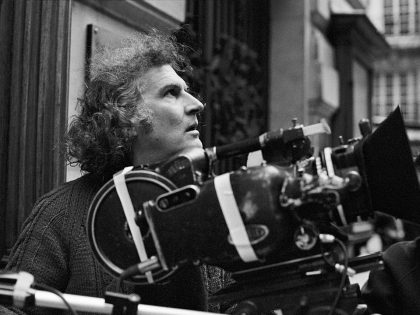
During the late 1960s, two leftist Argentine filmmakers wrote a manifesto that called for a new type of filmmaking known as “Third Cinema.” This movement led to the creation of some of the most radical and anti-colonial films in the history of cinema.

For years, Big Tech’s growing dominance over Hollywood has meant lower-quality movies and TV shows. Now, with Netflix and Paramount Skydance fighting over Warner Bros. Discovery, audiences are left with little say in the matter.
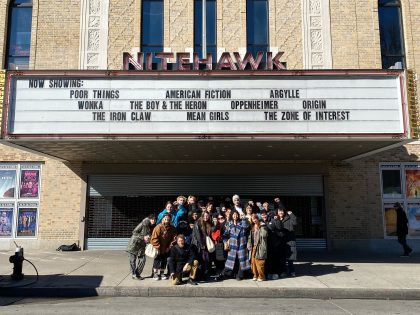
Unpredictable schedules, hazardous working conditions, and the crushing workload of Barbenheimer combined to lead workers at the Prospect Park location of independent Brooklyn theater Nitehawk Cinema to organize a union.

Our male protagonists — or perhaps men more broadly — are searching for meaning, solace, or glory anywhere but in the workplace. The trend represents a collective ambiguity about the point of work.

The “Barbie snub” has kicked off an online kerfuffle about the 2024 Academy Award nominations. The decisions of the Academy are generally cynical and silly — but perhaps we should appreciate the fighting spirit awakened annually by the nominations.

Yet another “return to normal” Oscars — briefly disrupted by a statement from Zone of Interest director Jonathan Glazer criticizing Israel’s assault on Gaza — only demonstrates just how boring even a “good one” can be.

Charting the political orientation of recent blockbuster cinema.

Don’t fight the arrival of Wicked and Gladiator II. Accept them, allow them both to wash over you and leave no trace.

Despite Emilia Pérez’s mixed reviews and poor audience reactions, Hollywood handed the musical 13 Oscar nominations in the hopes of proving its progressive bona fides. Then old tweets from its star surfaced.

Firms like OpenAI are developing AI in a way that has deeply ominous implications for workers in many different fields. The current trajectory of AI can only be changed through direct confrontation with the overweening power of the tech giants.

Netflix is after far more than the Warner Bros. movie studio — it wants to destroy cinema as we know it.

Kathryn Bigelow’s new film, A House of Dynamite, captures the horror and insanity of nuclear war. But by portraying the US atomic arsenal as an inheritance from the past rather than a product of our own time, it lets our political leaders off the hook.

When it came to movies this year, the junk outstripped the gems. But three films rose above the muck.
Puerto Rico is mired in debt and facing default. And US colonialism is one of the main culprits.

The US-backed Indonesian dictator Suharto was responsible for some of the twentieth century’s worst crimes. More than two decades after Suharto’s death, his regime’s brutal legacy is still holding back democracy in Indonesia.
Today's elite lacks the patience and culture for classical music.